
作为研究核纤层蛋白在正常组织和核纤层蛋白病中作用的模型。
as a Model for Studying the Roles of Lamins in Normal Tissues and Laminopathies.
作者信息
Zielińska Aleksandra, Rowińska Marta, Tomczak Aleksandra, Rzepecki Ryszard
机构信息
Laboratory of Nuclear Proteins, Faculty of Biotechnology, University of Wroclaw, Fryderyka Joliot-Curie 14a, 50-383 Wroclaw, Poland.
出版信息
Cells. 2025 Aug 22;14(17):1303. doi: 10.3390/cells14171303.
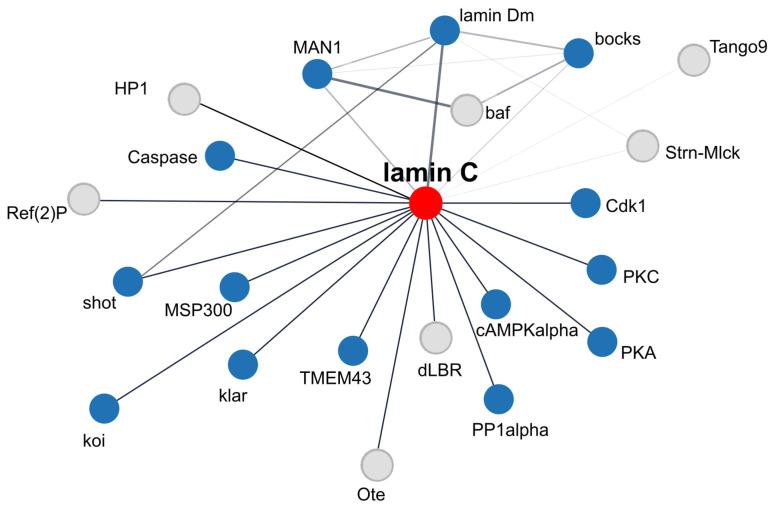
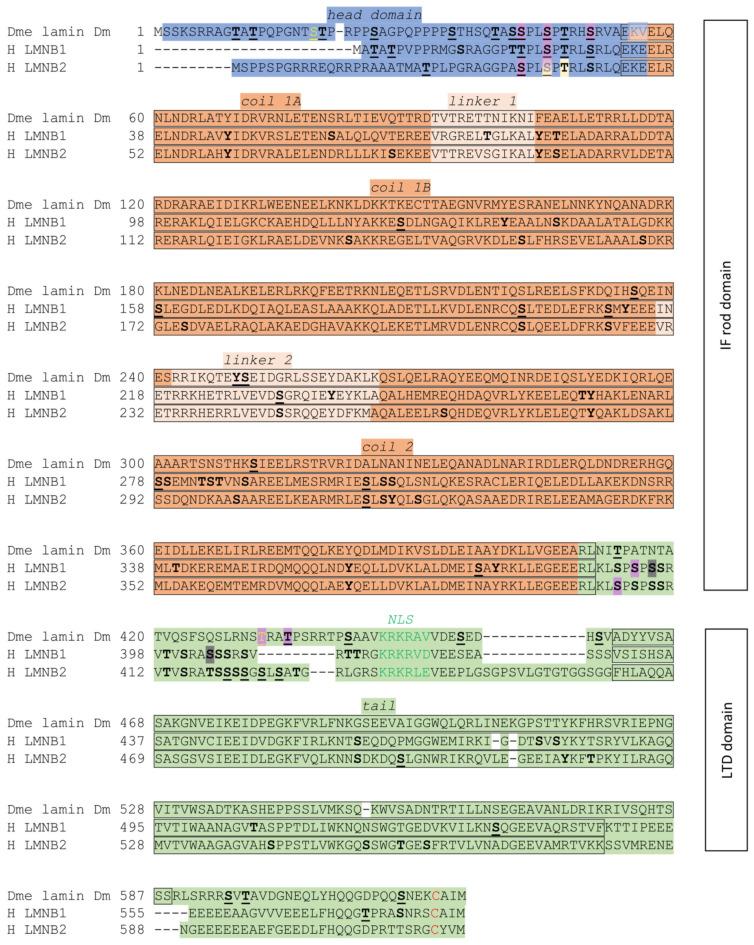
Nuclear processes are fundamental to the regulation of cellular, tissue, and organismal function, especially in complex multicellular systems. Central to these processes are lamins and lamin-associated proteins, which contribute to nuclear structure, gene expression, and chromatin organization. The discovery that mutations in genes coding for lamins and lamina-associated proteins give rise to rare disorders-collectively called laminopathies-has intensified interest in this field among cell biologists and medical scientists. While many practical and clinically relevant questions about phenotype development and potential treatments require mammalian models, key molecular mechanisms and interactions have also been effectively studied in both vertebrate and invertebrate systems. This review focuses on a discussion of lamins, their major properties, functions, interactions and post-translational modifications, with comparison to mammalian lamins, and a discussion of the value of fly models in studies of lamins in muscle tissue development and function in comparison to mammalian lamin B-type and A/C-type. In this paper, we have discussed the overall impact of lamin Dm and lamin C level manipulations on overall phenotype, especially on larval and adult muscles. We have thoroughly discussed the conclusions, which may have been drawn from experiments with overexpression of lamin C mutants mimicking lamin A laminopathy mutations. We have presented and discussed the suggestion that the mechanisms underlying muscle phenotype development are similar not only to human dystrophic laminopathies but also to classical human muscular dystrophies such as Duchenne muscular dystrophy and Hutchison-Gilford Progeria syndrome. We suggest that the activation of the stress response contributes to the laminopathic phenotype detected in . Finely, this review discusses in depth the lamin Dm and lamin C interactomes, discrepancies between String-based interactome networks, and our map of interactomes based on manual verification of experimental data on lamin interactions.
核过程是细胞、组织和机体功能调节的基础,在复杂的多细胞系统中尤为如此。这些过程的核心是核纤层蛋白和核纤层相关蛋白,它们对核结构、基因表达和染色质组织有重要作用。编码核纤层蛋白和核纤层相关蛋白的基因突变会引发罕见疾病——统称为核纤层蛋白病,这一发现激发了细胞生物学家和医学科学家对该领域的浓厚兴趣。虽然许多关于表型发展和潜在治疗方法的实际且与临床相关的问题需要哺乳动物模型,但关键的分子机制和相互作用也已在脊椎动物和无脊椎动物系统中得到有效研究。本综述重点讨论核纤层蛋白、它们的主要特性、功能、相互作用和翻译后修饰,并与哺乳动物核纤层蛋白进行比较,还讨论了果蝇模型在肌肉组织发育和功能中核纤层蛋白研究的价值,以及与哺乳动物B型和A/C型核纤层蛋白的比较。在本文中,我们讨论了核纤层蛋白Dm和核纤层蛋白C水平调控对整体表型的总体影响,特别是对幼虫和成虫肌肉的影响。我们深入讨论了可能从模拟核纤层蛋白A致病突变的核纤层蛋白C突变体过表达实验中得出的结论。我们提出并讨论了这样的观点,即肌肉表型发展的潜在机制不仅与人类营养不良性核纤层蛋白病相似,而且与经典的人类肌肉营养不良症如杜兴氏肌肉营养不良症和哈钦森 - 吉尔福德早衰综合征相似。我们认为应激反应的激活导致了在[此处未提及具体内容]中检测到的核纤层蛋白病表型。最后,本综述深入讨论了核纤层蛋白Dm和核纤层蛋白C的相互作用组、基于String的相互作用组网络之间的差异,以及我们基于对核纤层蛋白相互作用实验数据的人工验证绘制的相互作用组图谱。


 Zotero 插件