
端粒和端粒酶在斑马鱼衰老和再生过程中的行为。
Behaviour of telomere and telomerase during aging and regeneration in zebrafish.
机构信息
Telomerase, Aging and Cancer Group, Research Unit, Department of Surgery, CIBERehd, University Hospital Virgen de la Arrixaca, Murcia, Spain.
出版信息
PLoS One. 2011 Feb 9;6(2):e16955. doi: 10.1371/journal.pone.0016955.
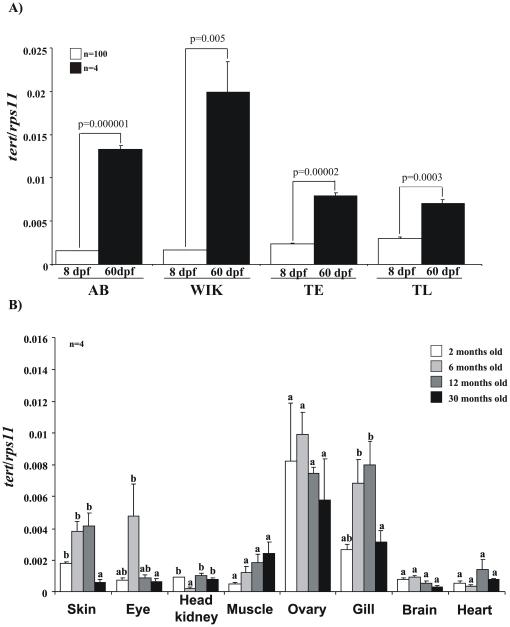
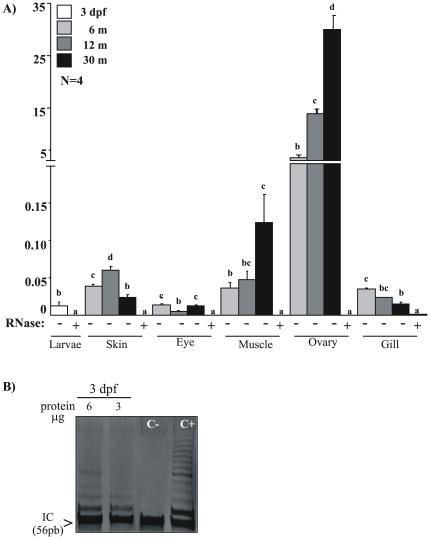
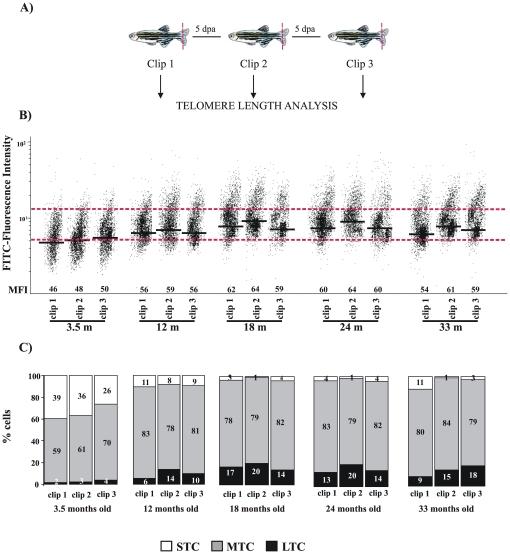
Telomere length and telomerase activity are important factors in the pathobiology of human diseases. Age-related diseases and premature aging syndromes are characterized by short telomeres, which can compromise cell viability, whereas tumour cells can prevent telomere loss by aberrantly upregulating telomerase. The zebrafish (Danio rerio) offers multiple experimental manipulation advantages over other vertebrate models and, therefore, it has been recently considered as a potential model for aging, cancer, and regeneration studies. However, it has only partially been exploited to shed light on these fundamental biological processes. The aim of this study was, therefore, to investigate telomere length and telomerase expression and activity in different strains of zebrafish obtained from different stock centres to determine whether they undergo any changes during aging and regeneration. We found that although both telomerase expression and telomere length increased from embryo to adulthood stages, they drastically declined in aged fish despite telomerase activity was detected in different tissues of old fish. In addition, we observed a weaker upregulation of telomerase expression in regenerating fins of old fish, which well correlates with their impaired regeneration capacity. Strikingly, telomeres were elongated or maintained during the fin regeneration process at all ages and after repeated amputations, likely to support high cell proliferation rates. We conclude that the expression of telomerase and telomere length are closely related during the entire life cycle of the fish and that these two parameters can be used as biomarkers of aging in zebrafish. Our results also reveal a direct relationship between the expression of telomerase, telomere length and the efficiency of tissue regeneration.
端粒长度和端粒酶活性是人类疾病病理生物学的重要因素。与年龄相关的疾病和早衰综合征的特征是端粒较短,这可能会损害细胞活力,而肿瘤细胞可以通过异常地上调端粒酶来防止端粒丢失。斑马鱼(Danio rerio)相对于其他脊椎动物模型具有多种实验操作优势,因此,它最近被认为是衰老、癌症和再生研究的潜在模型。然而,它在阐明这些基本生物学过程方面的应用仅部分得到了开发。因此,本研究旨在研究来自不同品系中心的不同斑马鱼品系的端粒长度和端粒酶表达和活性,以确定它们在衰老和再生过程中是否发生任何变化。我们发现,尽管端粒酶表达和端粒长度从胚胎期到成年期都增加,但在老年鱼中它们急剧下降,尽管在老年鱼的不同组织中都检测到了端粒酶活性。此外,我们观察到老年鱼再生鳍中的端粒酶表达上调较弱,这与其受损的再生能力很好地相关。值得注意的是,在所有年龄段和多次截肢后,端粒在鳍再生过程中被延长或维持,这可能支持高细胞增殖率。我们得出的结论是,端粒酶和端粒长度的表达在鱼的整个生命周期中密切相关,这两个参数可以作为斑马鱼衰老的生物标志物。我们的结果还揭示了端粒酶表达、端粒长度和组织再生效率之间的直接关系。



 Zotero 插件