
Hsp90 调控真菌生物膜的分散和耐药性。
Hsp90 governs dispersion and drug resistance of fungal biofilms.
机构信息
Department of Molecular Genetics, University of Toronto, Toronto, Ontario, Canada.
出版信息
PLoS Pathog. 2011 Sep;7(9):e1002257. doi: 10.1371/journal.ppat.1002257. Epub 2011 Sep 8.
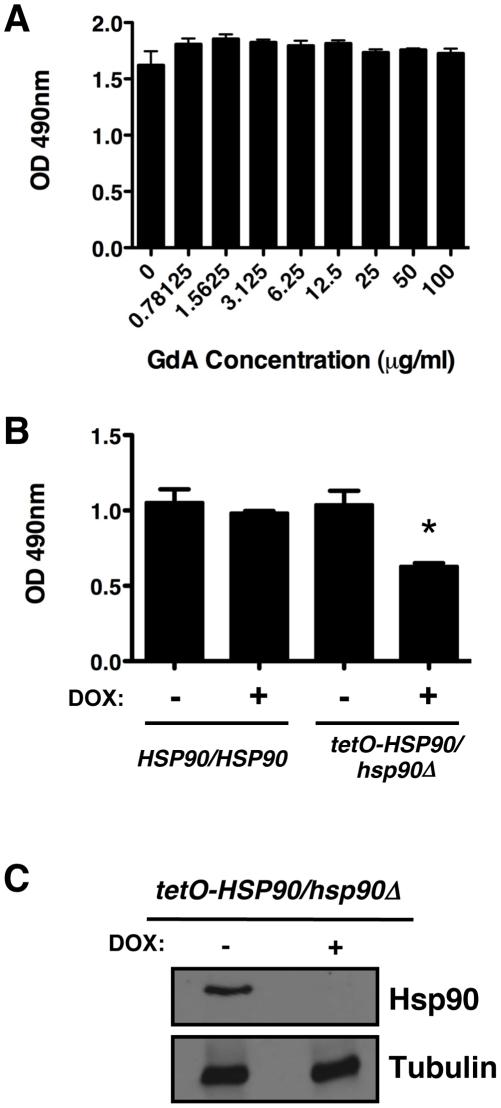
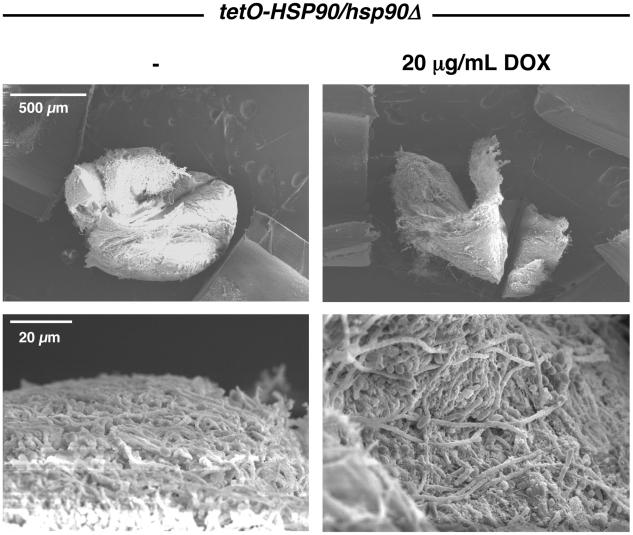
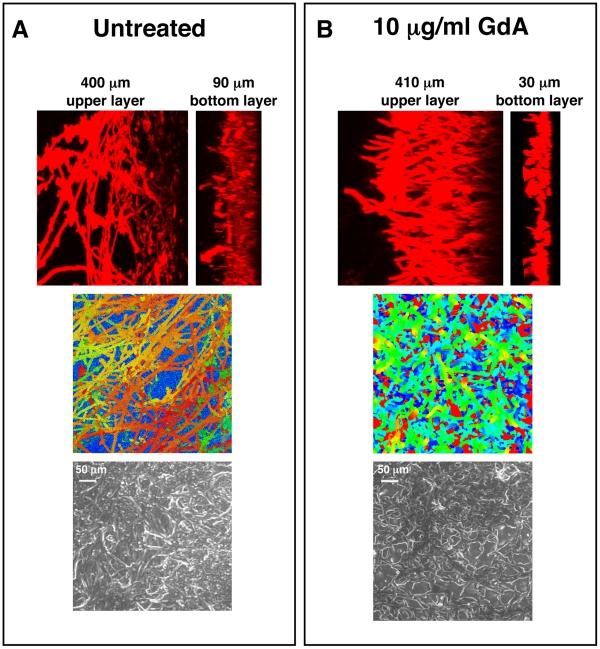
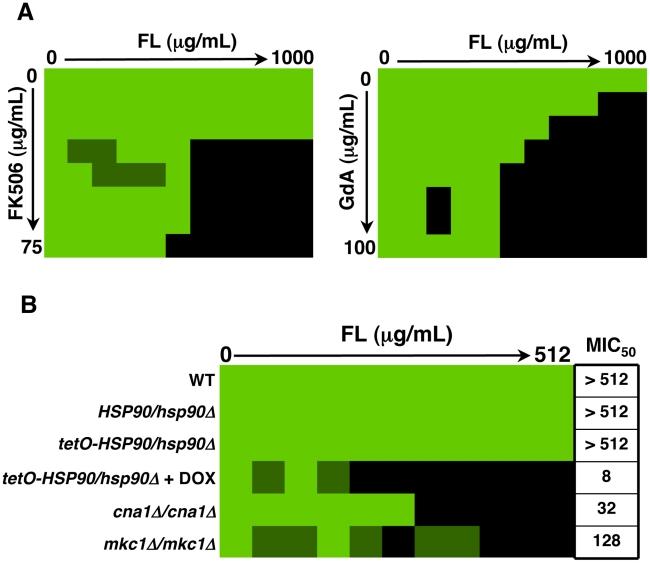
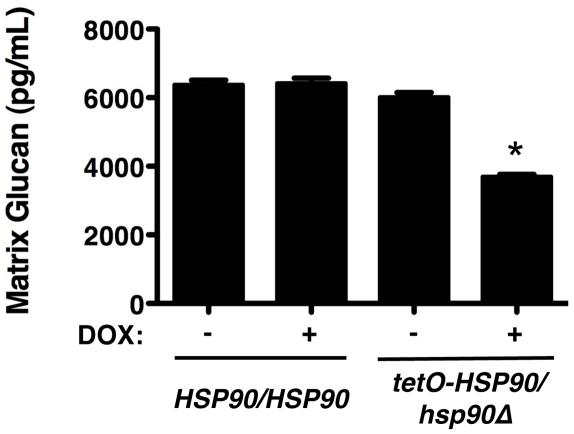
Fungal biofilms are a major cause of human mortality and are recalcitrant to most treatments due to intrinsic drug resistance. These complex communities of multiple cell types form on indwelling medical devices and their eradication often requires surgical removal of infected devices. Here we implicate the molecular chaperone Hsp90 as a key regulator of biofilm dispersion and drug resistance. We previously established that in the leading human fungal pathogen, Candida albicans, Hsp90 enables the emergence and maintenance of drug resistance in planktonic conditions by stabilizing the protein phosphatase calcineurin and MAPK Mkc1. Hsp90 also regulates temperature-dependent C. albicans morphogenesis through repression of cAMP-PKA signalling. Here we demonstrate that genetic depletion of Hsp90 reduced C. albicans biofilm growth and maturation in vitro and impaired dispersal of biofilm cells. Further, compromising Hsp90 function in vitro abrogated resistance of C. albicans biofilms to the most widely deployed class of antifungal drugs, the azoles. Depletion of Hsp90 led to reduction of calcineurin and Mkc1 in planktonic but not biofilm conditions, suggesting that Hsp90 regulates drug resistance through different mechanisms in these distinct cellular states. Reduction of Hsp90 levels led to a marked decrease in matrix glucan levels, providing a compelling mechanism through which Hsp90 might regulate biofilm azole resistance. Impairment of Hsp90 function genetically or pharmacologically transformed fluconazole from ineffectual to highly effective in eradicating biofilms in a rat venous catheter infection model. Finally, inhibition of Hsp90 reduced resistance of biofilms of the most lethal mould, Aspergillus fumigatus, to the newest class of antifungals to reach the clinic, the echinocandins. Thus, we establish a novel mechanism regulating biofilm drug resistance and dispersion and that targeting Hsp90 provides a much-needed strategy for improving clinical outcome in the treatment of biofilm infections.
真菌生物膜是导致人类死亡的主要原因,由于内在的药物耐药性,它们对大多数治疗方法都有抵抗力。这些由多种细胞类型组成的复杂群落会在留置的医疗设备上形成,要消除它们通常需要手术切除受感染的设备。在这里,我们将分子伴侣 Hsp90 作为生物膜分散和耐药性的关键调节剂。我们之前已经确定,在主要的人类真菌病原体白色念珠菌中,Hsp90 通过稳定蛋白磷酸酶钙调神经磷酸酶和 MAPK Mkc1,使浮游条件下的耐药性出现和维持。Hsp90 还通过抑制 cAMP-PKA 信号通路来调节温度依赖性白色念珠菌形态发生。在这里,我们证明 Hsp90 的遗传缺失减少了体外白色念珠菌生物膜的生长和成熟,并损害了生物膜细胞的分散。此外,体外破坏 Hsp90 功能会消除白色念珠菌生物膜对最广泛使用的一类抗真菌药物——唑类药物的耐药性。Hsp90 的耗竭导致浮游状态下的钙调神经磷酸酶和 Mkc1 减少,但生物膜状态下没有减少,这表明 Hsp90 通过不同的机制在这些不同的细胞状态下调节耐药性。Hsp90 水平的降低导致基质葡聚糖水平的显著降低,为 Hsp90 可能通过何种机制调节生物膜唑类耐药性提供了一个令人信服的机制。Hsp90 功能的遗传或药理学缺失使氟康唑从无效变为非常有效,从而在大鼠静脉导管感染模型中根除生物膜。最后,抑制 Hsp90 降低了最致命的霉菌烟曲霉生物膜对最新一类抗真菌药物——棘白菌素类药物的耐药性。因此,我们建立了一种新的机制来调节生物膜的耐药性和分散性,并且靶向 Hsp90 为改善生物膜感染治疗的临床结果提供了急需的策略。




 Zotero 插件