
Hsp90 共伴侣 Sgt1 调控白念珠菌形态发生和耐药性。
The Hsp90 co-chaperone Sgt1 governs Candida albicans morphogenesis and drug resistance.
机构信息
Department of Molecular Genetics, University of Toronto, Toronto, Ontario, Canada.
出版信息
PLoS One. 2012;7(9):e44734. doi: 10.1371/journal.pone.0044734. Epub 2012 Sep 6.
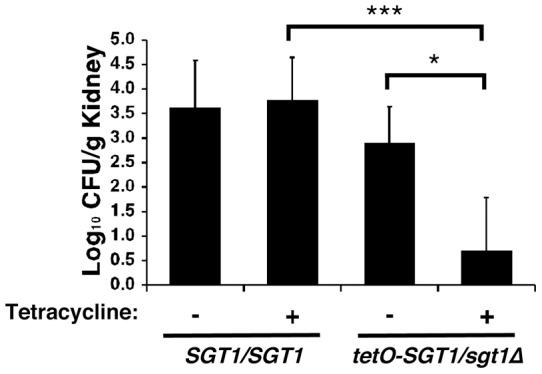
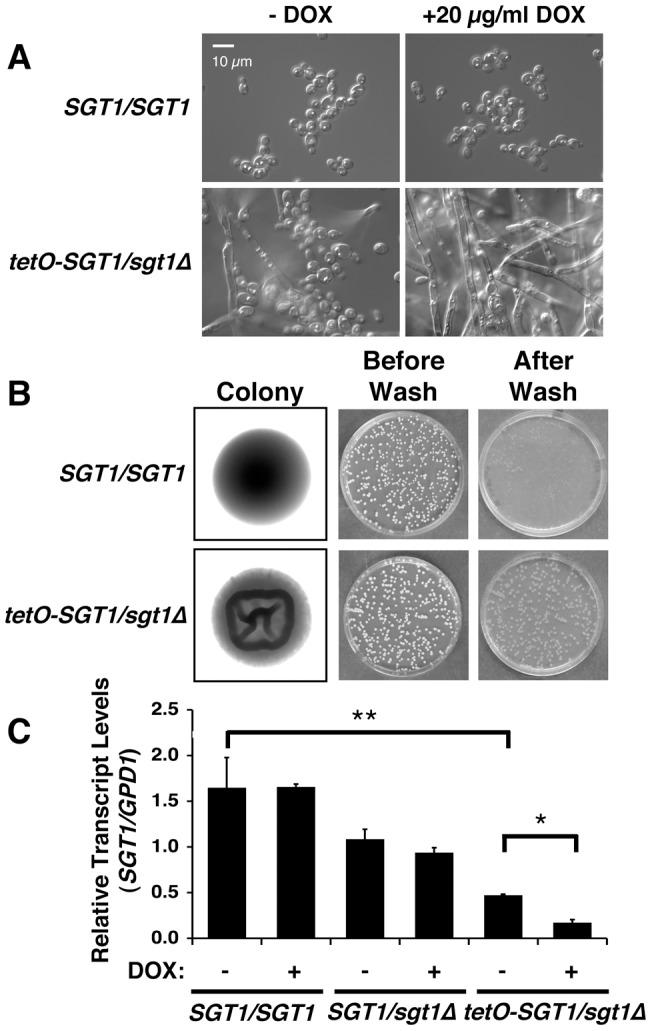
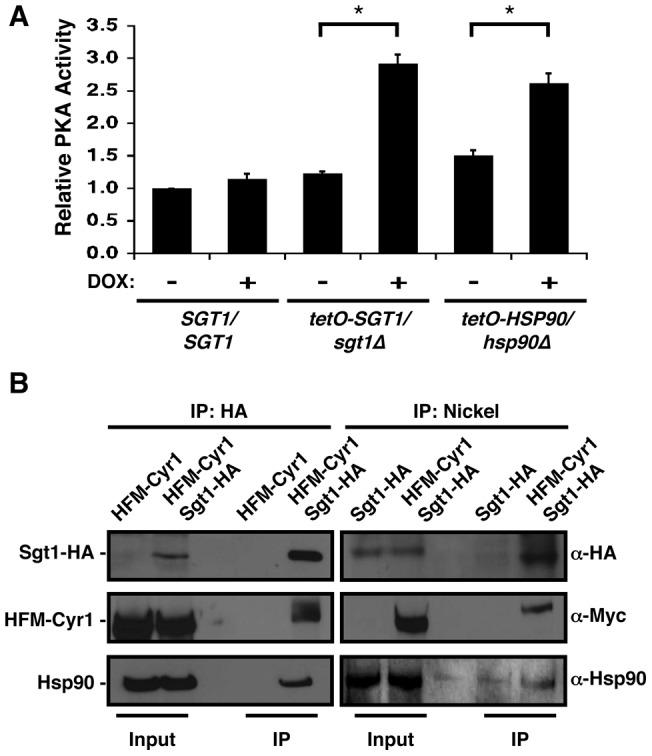
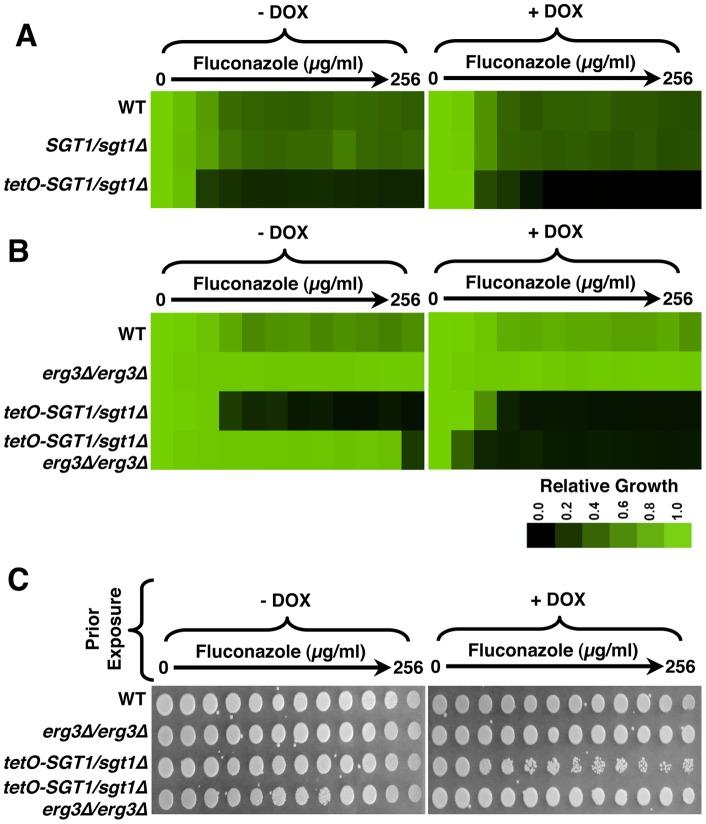
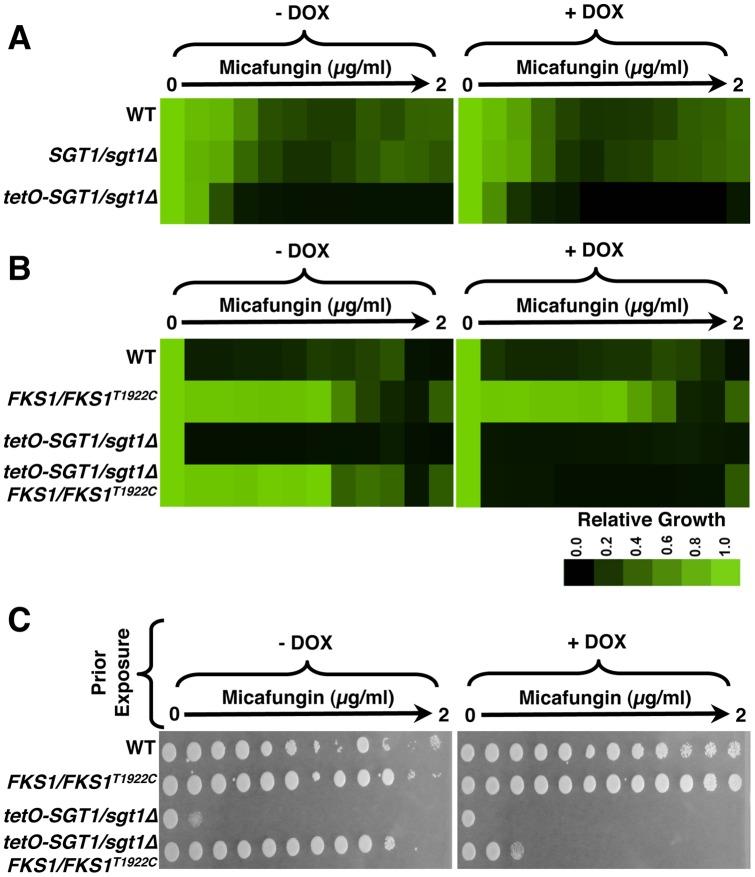
The molecular chaperone Hsp90 orchestrates regulatory circuitry governing fungal morphogenesis, biofilm development, drug resistance, and virulence. Hsp90 functions in concert with co-chaperones to regulate stability and activation of client proteins, many of which are signal transducers. Here, we characterize the first Hsp90 co-chaperone in the leading human fungal pathogen, Candida albicans. We demonstrate that Sgt1 physically interacts with Hsp90, and that it governs C. albicans morphogenesis and drug resistance. Genetic depletion of Sgt1 phenocopies depletion of Hsp90, inducing yeast to filament morphogenesis and invasive growth. Sgt1 governs these traits by bridging two morphogenetic regulators: Hsp90 and the adenylyl cyclase of the cAMP-PKA signaling cascade, Cyr1. Sgt1 physically interacts with Cyr1, and depletion of either Sgt1 or Hsp90 activates cAMP-PKA signaling, revealing the elusive link between Hsp90 and the PKA signaling cascade. Sgt1 also mediates tolerance and resistance to the two most widely deployed classes of antifungal drugs, azoles and echinocandins. Depletion of Sgt1 abrogates basal tolerance and acquired resistance to azoles, which target the cell membrane. Depletion of Sgt1 also abrogates tolerance and resistance to echinocandins, which target the cell wall, and renders echinocandins fungicidal. Though Sgt1 and Hsp90 have a conserved impact on drug resistance, the underlying mechanisms are distinct. Depletion of Hsp90 destabilizes the client protein calcineurin, thereby blocking crucial responses to drug-induced stress; in contrast, depletion of Sgt1 does not destabilize calcineurin, but blocks calcineurin activation in response to drug-induced stress. Sgt1 influences not only morphogenesis and drug resistance, but also virulence, as genetic depletion of C. albicans Sgt1 leads to reduced kidney fungal burden in a murine model of systemic infection. Thus, our characterization of the first Hsp90 co-chaperone in a fungal pathogen establishes C. albicans Sgt1 as a global regulator of morphogenesis and drug resistance, providing a new target for treatment of life-threatening fungal infections.
分子伴侣 Hsp90 协调调控真菌形态发生、生物膜发育、耐药性和毒力的调控回路。Hsp90 与共伴侣蛋白协同作用,调节客户蛋白的稳定性和激活,其中许多是信号转导物。在这里,我们描述了人类主要真菌病原体白色念珠菌中的第一个 Hsp90 共伴侣。我们证明 Sgt1 与 Hsp90 物理相互作用,并控制白色念珠菌的形态发生和耐药性。Sgt1 的遗传耗竭模拟了 Hsp90 的耗竭,诱导酵母发生丝状形态发生和侵袭性生长。Sgt1 通过桥接两种形态发生调节剂来控制这些特征:Hsp90 和 cAMP-PKA 信号级联的腺苷酸环化酶 Cyr1。Sgt1 与 Cyr1 物理相互作用,Sgt1 或 Hsp90 的耗竭激活 cAMP-PKA 信号,揭示了 Hsp90 与 PKA 信号级联之间难以捉摸的联系。Sgt1 还介导对两种最广泛使用的抗真菌药物——唑类和棘白菌素类——的耐受和耐药性。Sgt1 的耗竭消除了唑类药物(靶向细胞膜)的基础耐受和获得性耐药。Sgt1 的耗竭也消除了棘白菌素类(靶向细胞壁)的耐受和耐药性,并使棘白菌素类具有杀真菌作用。虽然 Sgt1 和 Hsp90 对耐药性有保守的影响,但潜在的机制是不同的。Hsp90 的耗竭使钙调神经磷酸酶客户蛋白失稳,从而阻断了对药物诱导应激的关键反应;相比之下,Sgt1 的耗竭不会使钙调神经磷酸酶失稳,但会阻断钙调神经磷酸酶对药物诱导应激的激活。Sgt1 不仅影响形态发生和耐药性,还影响毒力,因为白色念珠菌 Sgt1 的遗传耗竭导致系统性感染的小鼠模型中肾脏真菌负担减少。因此,我们对真菌病原体中第一个 Hsp90 共伴侣的描述确立了白色念珠菌 Sgt1 作为形态发生和耐药性的全局调节剂,为治疗危及生命的真菌感染提供了新的靶标。


 Zotero 插件