
一种人多表位重组痘苗病毒作为通用流感病毒 T 细胞疫苗候选物。
A human multi-epitope recombinant vaccinia virus as a universal T cell vaccine candidate against influenza virus.
机构信息
Department of Cellular and Molecular Biology, Centro Nacional de Biotecnología, Consejo Superior de Investigaciones Científicas, Madrid, Spain.
出版信息
PLoS One. 2011;6(10):e25938. doi: 10.1371/journal.pone.0025938. Epub 2011 Oct 5.
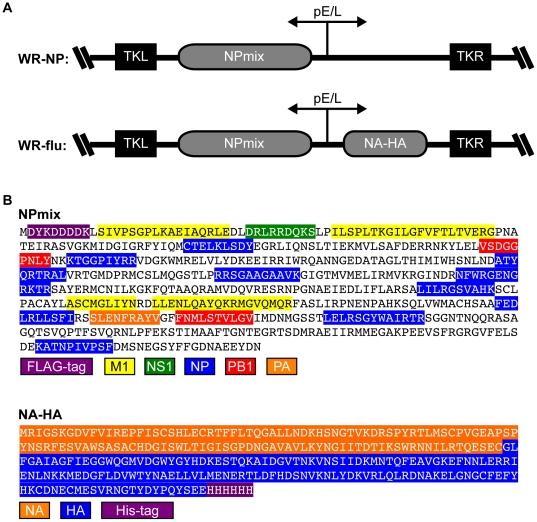
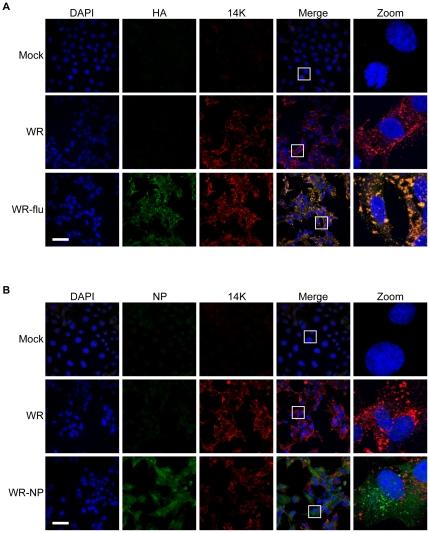
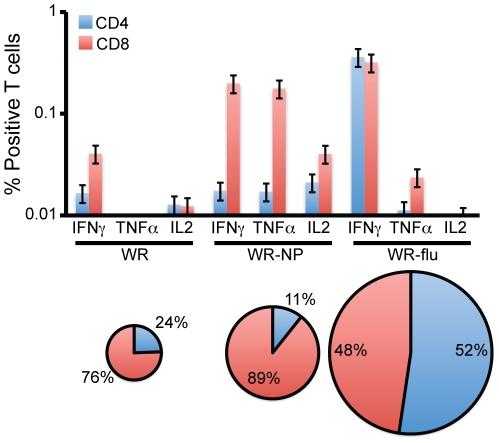
There is a need to develop a universal vaccine against influenza virus infection to avoid developing new formulations of a seasonal vaccine each year. Many of the vaccine strategies for a universal vaccine target strain-conserved influenza virus proteins, such as the matrix, polymerase, and nucleoproteins, rather than the surface hemagglutinin and neuraminidase proteins. In addition, non-disease-causing viral vectors are a popular choice as a delivery system for the influenza virus antigens. As a proof-of-concept, we have designed a novel influenza virus immunogen based on the NP backbone containing human T cell epitopes for M1, NS1, NP, PB1 and PA proteins (referred as NPmix) as well as a construct containing the conserved regions of influenza virus neuraminidase (N-terminal) and hemagglutinin (C-terminal) (referred as NA-HA). DNA vectors and vaccinia virus recombinants expressing NPmix (WR-NP) or both NPmix plus NA-HA (WR-flu) in the cytosol were tested in a heterologous DNA-prime/vaccinia virus-boost vaccine regimen in mice. We observed an increase in the number of influenza virus-specific IFNγ-secreting splenocytes, composed of populations marked by CD4(+) and CD8(+) T cells producing IFNγ or TNFα. Upon challenge with influenza virus, the vaccinated mice exhibited decreased viral load in the lungs and a delay in mortality. These findings suggest that DNA prime/poxvirus boost with human multi-epitope recombinant influenza virus proteins is a valid approach for a general T-cell vaccine to protect against influenza virus infection.
需要开发一种通用的流感病毒感染疫苗,以避免每年开发新的季节性疫苗配方。许多通用疫苗策略针对的是株系保守的流感病毒蛋白,如基质、聚合酶和核蛋白,而不是表面血凝素和神经氨酸酶蛋白。此外,非致病病毒载体是作为流感病毒抗原传递系统的热门选择。作为概念验证,我们设计了一种新型流感病毒免疫原,基于包含 M1、NS1、NP、PB1 和 PA 蛋白的人类 T 细胞表位的 NP 骨架(称为 NPmix),以及包含流感病毒神经氨酸酶(N 端)和血凝素(C 端)保守区的构建体(称为 NA-HA)。在异源 DNA 初免/痘苗病毒加强疫苗方案中,在细胞质中表达 NPmix(WR-NP)或 NPmix 加 NA-HA(WR-flu)的 DNA 载体和痘苗病毒重组体在小鼠中进行了测试。我们观察到流感病毒特异性 IFNγ 分泌的脾细胞数量增加,这些细胞由 CD4(+)和 CD8(+)T 细胞产生 IFNγ 或 TNFα的群体标记。在流感病毒攻击后,接种疫苗的小鼠肺部病毒载量减少,死亡率延迟。这些发现表明,用人类多表位重组流感病毒蛋白进行 DNA 初免/痘苗病毒加强是一种有效的通用 T 细胞疫苗方法,可预防流感病毒感染。





 Zotero 插件