
比较三种不同组蛋白去乙酰化酶抑制剂处理的恶性疟原虫基因表达谱。
Comparative gene expression profiling of P. falciparum malaria parasites exposed to three different histone deacetylase inhibitors.
机构信息
Eskitis Institute for Cell and Molecular Therapies, Griffith University, Queensland, Australia.
出版信息
PLoS One. 2012;7(2):e31847. doi: 10.1371/journal.pone.0031847. Epub 2012 Feb 27.
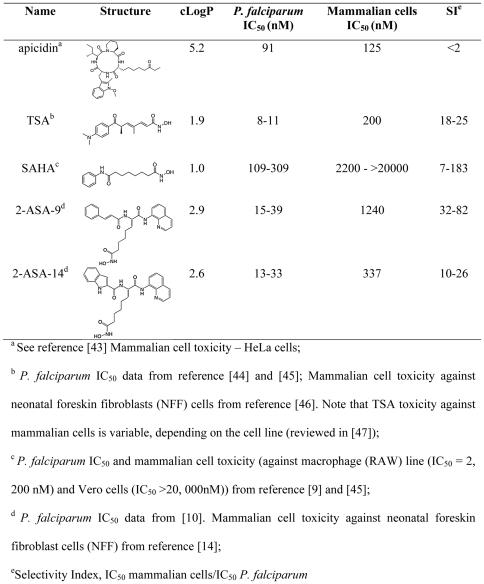
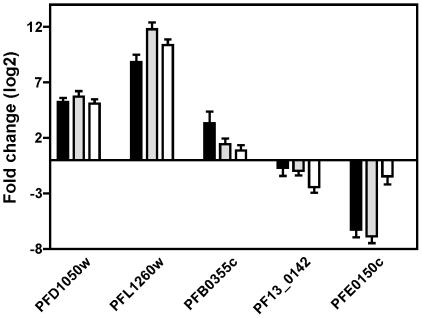
Histone deacetylase (HDAC) inhibitors are being intensively pursued as potential new drugs for a range of diseases, including malaria. HDAC inhibitors are also important tools for the study of epigenetic mechanisms, transcriptional control, and other important cellular processes. In this study the effects of three structurally related antimalarial HDAC inhibitors on P. falciparum malaria parasite gene expression were compared. The three hydroxamate-based compounds, trichostatin A (TSA), suberoylanilide hydroxamic acid (SAHA; Vorinostat®) and a 2-aminosuberic acid derivative (2-ASA-9), all caused profound transcriptional effects, with ~2-21% of genes having >2-fold altered expression following 2 h exposure to the compounds. Only two genes, alpha tubulin II and a hydrolase, were up-regulated by all three compounds after 2 h exposure in all biological replicates examined. The transcriptional changes observed after 2 h exposure to HDAC inhibitors were found to be largely transitory, with only 1-5% of genes being regulated after removing the compounds and culturing for a further 2 h. Despite some structural similarity, the three inhibitors caused quite diverse transcriptional effects, possibly reflecting subtle differences in mode of action or cellular distribution. This dataset represents an important contribution to our understanding of how HDAC inhibitors act on malaria parasites and identifies alpha tubulin II as a potential transcriptional marker of HDAC inhibition in malaria parasites that may be able to be exploited for future development of HDAC inhibitors as new antimalarial agents.
组蛋白去乙酰化酶 (HDAC) 抑制剂作为治疗一系列疾病(包括疟疾)的潜在新药正受到广泛关注。HDAC 抑制剂也是研究表观遗传机制、转录调控和其他重要细胞过程的重要工具。在这项研究中,比较了三种结构相关的抗疟 HDAC 抑制剂对疟原虫基因表达的影响。三种基于羟肟酸的化合物,曲古抑菌素 A (TSA)、丁酸钠 (SAHA; Vorinostat®) 和 2-氨基琥珀酸衍生物 (2-ASA-9),都引起了明显的转录效应,约 2-21%的基因在暴露于化合物 2 小时后表达水平增加了 2 倍以上。只有两个基因,α微管蛋白 II 和水解酶,在所有检查的生物学重复中,在暴露于三种化合物 2 小时后均被上调。暴露于 HDAC 抑制剂 2 小时后观察到的转录变化很大程度上是短暂的,在去除化合物并进一步培养 2 小时后,只有 1-5%的基因受到调控。尽管存在一些结构相似性,但三种抑制剂引起的转录效应却截然不同,这可能反映了作用模式或细胞分布的细微差异。该数据集为我们理解 HDAC 抑制剂对疟原虫的作用做出了重要贡献,并确定α微管蛋白 II 作为 HDAC 抑制在疟原虫中的潜在转录标志物,可能能够用于未来开发作为新型抗疟药物的 HDAC 抑制剂。



 Zotero 插件