
培养过程中温度变化时中国仓鼠卵巢细胞代谢重编程的¹H NMR光谱分析
¹H NMR spectroscopy profiling of metabolic reprogramming of Chinese hamster ovary cells upon a temperature shift during culture.
作者信息
Wagstaff Jane L, Masterton Rosalyn J, Povey Jane F, Smales C Mark, Howard Mark J
机构信息
Centre for Molecular Processing and School of Biosciences, University of Kent, Canterbury, Kent, United Kingdom.
出版信息
PLoS One. 2013 Oct 10;8(10):e77195. doi: 10.1371/journal.pone.0077195. eCollection 2013.
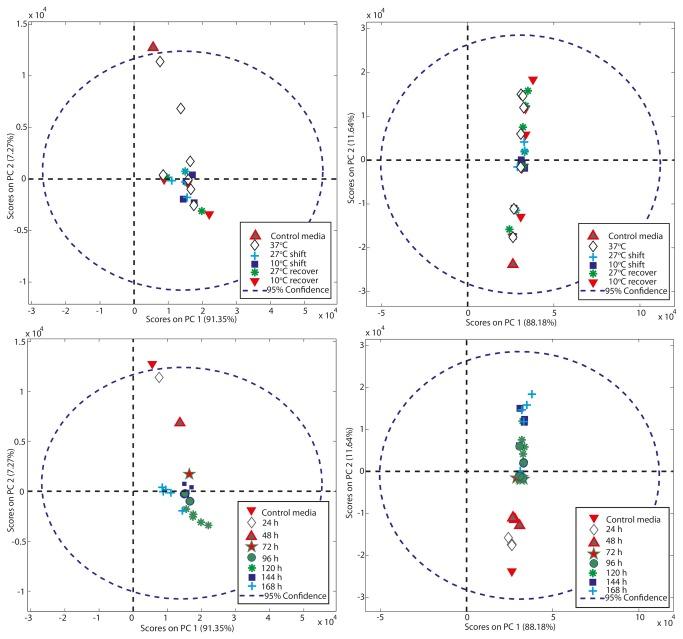
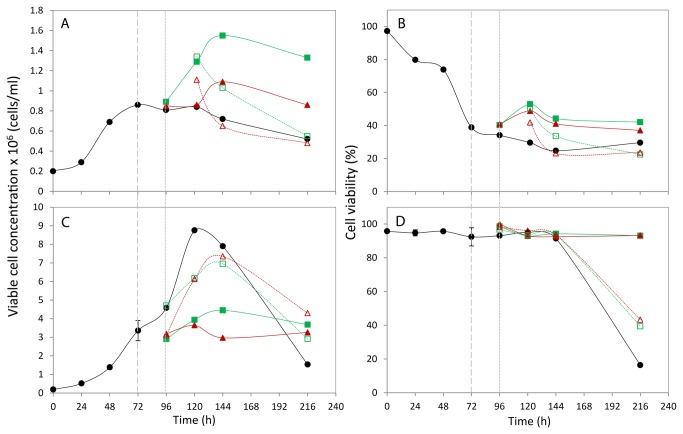
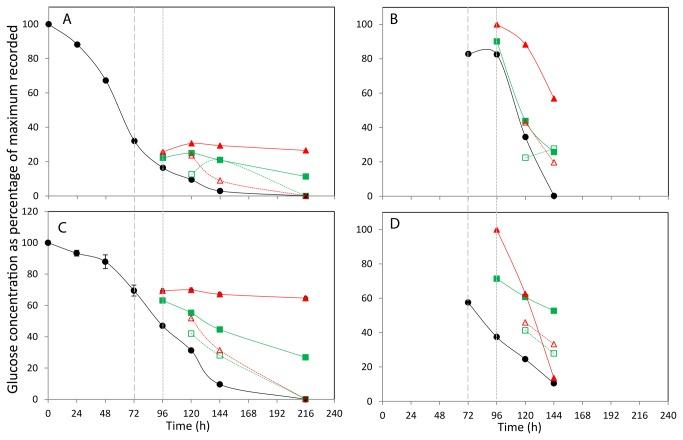
We report an NMR based approach to determine the metabolic reprogramming of Chinese hamster ovary cells upon a temperature shift during culture by investigating the extracellular cell culture media and intracellular metabolome of CHOK1 and CHO-S cells during culture and in response to cold-shock and subsequent recovery from hypothermic culturing. A total of 24 components were identified for CHOK1 and 29 components identified for CHO-S cell systems including the observation that CHO-S media contains 5.6 times the level of glucose of CHOK1 media at time zero. We confirm that an NMR metabolic approach provides quantitative analysis of components such as glucose and alanine with both cell lines responding in a similar manner and comparable to previously reported data. However, analysis of lactate confirms a differentiation between CHOK1 and CHO-S and that reprogramming of metabolism in response to temperature was cell line specific. The significance of our results is presented using principal component analysis (PCA) that confirms changes in metabolite profile in response to temperature and recovery. Ultimately, our approach demonstrates the capability of NMR providing real-time analysis to detect reprogramming of metabolism upon cellular perception of cold-shock/sub-physiological temperatures. This has the potential to allow manipulation of metabolites in culture supernatant to improve growth or productivity.
我们报告了一种基于核磁共振(NMR)的方法,通过研究中国仓鼠卵巢(CHO)K1和CHO-S细胞在培养过程中以及对冷休克和随后从低温培养恢复时的细胞外培养基和细胞内代谢组,来确定培养过程中温度变化时CHO细胞的代谢重编程。在CHO-K1细胞系统中总共鉴定出24种成分,在CHO-S细胞系统中鉴定出29种成分,包括观察到在零时刻CHO-S培养基中葡萄糖水平是CHO-K1培养基的5.6倍。我们证实,NMR代谢方法能够对葡萄糖和丙氨酸等成分进行定量分析,两种细胞系的反应方式相似,且与先前报道的数据相当。然而,乳酸分析证实了CHO-K1和CHO-S之间的差异,并且响应温度的代谢重编程具有细胞系特异性。我们使用主成分分析(PCA)展示了结果的重要性,该分析证实了代谢物谱随温度和恢复的变化。最终,我们的方法证明了NMR能够提供实时分析,以检测细胞感知冷休克/亚生理温度时的代谢重编程。这有可能允许对培养上清液中的代谢物进行调控,以提高生长或生产力。



 Zotero 插件