
在骨肉瘤细胞系中,依托泊苷诱导的DNA损伤后,p53依赖的微小RNA-34a激活不受显性负性p53表达的影响。
p53-dependent activation of microRNA-34a in response to etoposide-induced DNA damage in osteosarcoma cell lines not impaired by dominant negative p53 expression.
作者信息
Novello Chiara, Pazzaglia Laura, Conti Amalia, Quattrini Irene, Pollino Serena, Perego Paola, Picci Piero, Benassi Maria Serena
机构信息
Laboratory of Experimental Oncology, Rizzoli Orthopaedic Institute, Bologna, Italy.
Laboratory of Experimental Oncology, Rizzoli Orthopaedic Institute, Bologna, Italy; Centre for Molecular and Translational Oncology & Department of Life Sciences- University of Parma, Parma, Italy.
出版信息
PLoS One. 2014 Dec 9;9(12):e114757. doi: 10.1371/journal.pone.0114757. eCollection 2014.
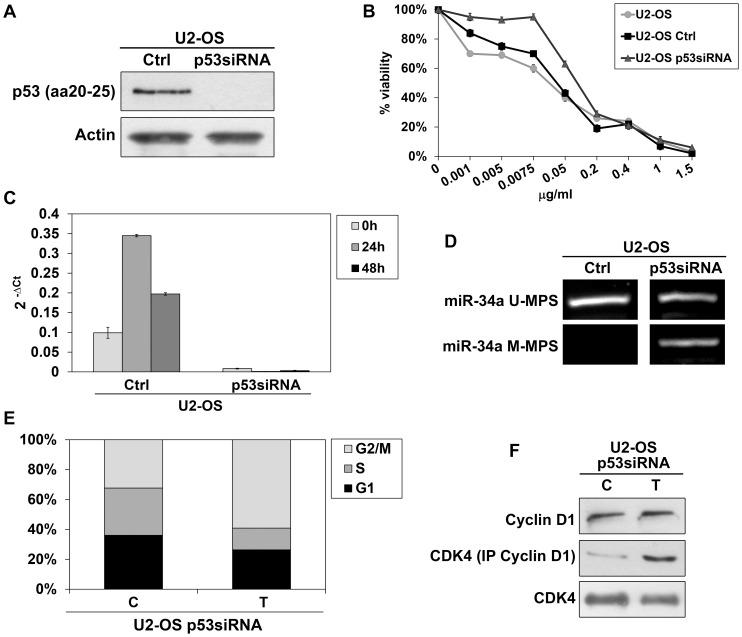
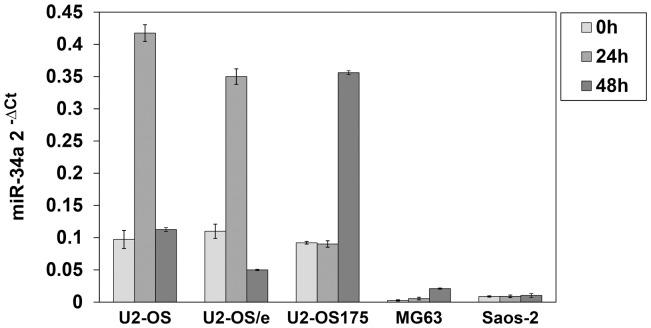
Osteosarcoma (OS) is the most common primary malignant bone tumor and prevalently occurs in the second decade of life. Etoposide, a chemotherapeutic agent used in combined treatments of recurrent human OS, belongs to the topoisomerase inhibitor family and causes DNA breakage. In this study we evaluated the cascade of events determined by etoposide-induced DNA damage in OS cell lines with different p53 status focusing on methylation status and expression of miR-34a that modulate tumor cell growth and cell cycle progression. Wild-type p53 U2-OS cells and U2-OS cells expressing dominant-negative form of p53 (U2- OS175) were more sensitive to etoposide than p53-deficient MG63 and Saos-2 cells, showing increased levels of unmethylated miR-34a, reduced expression of CDK4 and cell cycle arrest in G1 phase. In contrast, MG63 and Saos-2 cell lines presented aberrant methylation of miR-34a promoter gene with no miR-34a induction after etoposide treatment, underlining the close connection between p53 expression and miR-34a methylation status. Consistently, in p53siRNA transfected U2-OS cells we observed loss of miR-34a induction after etoposide exposure associated with a partial gain of gene methylation and cell cycle progress towards G2/M phase. Our results suggest that the open and unmethylated conformation of the miR-34a gene may be regulated by p53 able to bind the gene promoter. In conclusion, cell response to etoposide-induced DNA damage was not compromised in cells with dominant-negative p53 expression.
骨肉瘤(OS)是最常见的原发性恶性骨肿瘤,好发于生命的第二个十年。依托泊苷是一种用于复发性人类骨肉瘤联合治疗的化疗药物,属于拓扑异构酶抑制剂家族,可导致DNA断裂。在本研究中,我们评估了依托泊苷诱导的DNA损伤在不同p53状态的骨肉瘤细胞系中所引发的一系列事件,重点关注调节肿瘤细胞生长和细胞周期进程的miR-34a的甲基化状态和表达。野生型p53的U2-OS细胞和表达p53显性负性形式的U2-OS细胞(U2-OS175)比p53缺陷的MG63和Saos-2细胞对依托泊苷更敏感,表现出未甲基化的miR-34a水平升高、CDK4表达降低以及细胞周期停滞在G1期。相反,MG63和Saos-2细胞系呈现miR-34a启动子基因的异常甲基化,依托泊苷处理后无miR-34a诱导,这突出了p53表达与miR-34a甲基化状态之间的紧密联系。同样,在p53 siRNA转染的U2-OS细胞中,我们观察到依托泊苷暴露后miR-34a诱导缺失,伴有基因甲基化部分增加以及细胞周期向G2/M期进展。我们的结果表明,miR-34a基因的开放和未甲基化构象可能受能够结合基因启动子的p53调控。总之,具有显性负性p53表达的细胞对依托泊苷诱导的DNA损伤的细胞反应未受损。




 Zotero 插件