
Bcl-2抑制剂Obatoclax可克服患者来源的胶质母细胞瘤干细胞样细胞对组蛋白去乙酰化酶抑制剂SAHA和LBH589作为放射增敏剂的耐药性。
The Bcl-2 inhibitor Obatoclax overcomes resistance to histone deacetylase inhibitors SAHA and LBH589 as radiosensitizers in patient-derived glioblastoma stem-like cells.
作者信息
Berghauser Pont Lotte M E, Spoor Jochem K H, Venkatesan Subramanian, Swagemakers Sigrid, Kloezeman Jenneke J, Dirven Clemens M F, van der Spek Peter J, Lamfers Martine L M, Leenstra Sieger
机构信息
Department of Neurosurgery, Brain Tumor Center, Erasmus MC, Rotterdam, The Netherlands.
Department of Bio-informatics, Erasmus MC, Rotterdam, The Netherlands.
出版信息
Genes Cancer. 2014 Nov;5(11-12):445-59. doi: 10.18632/genesandcancer.42.
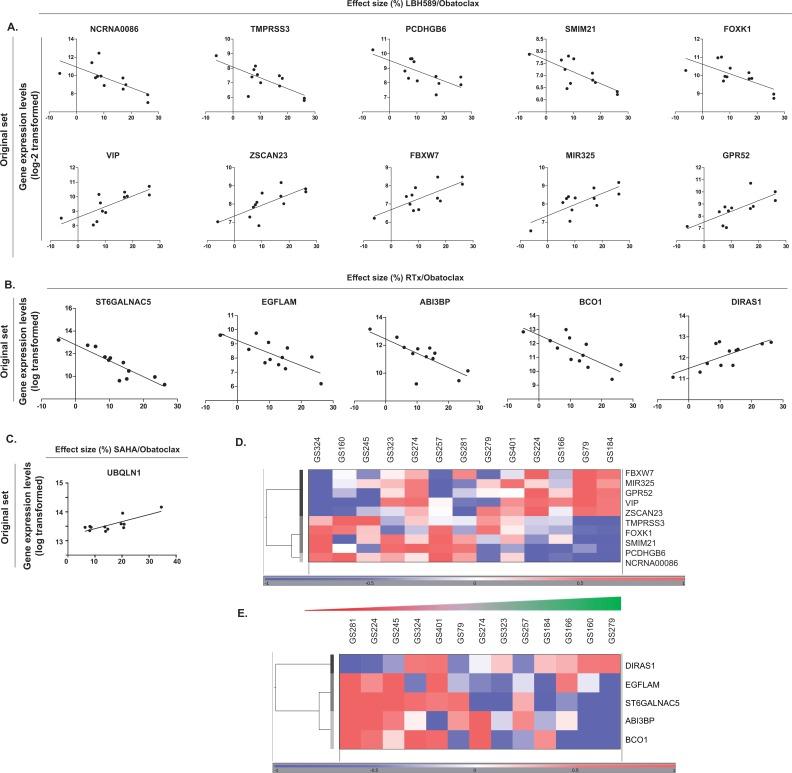
Glioblastoma has shown resistance to histone deacetylase inhibitors (HDACi) as radiosensitizers in cultures with Bcl-XL over-expression. We study the efficacy of SAHA/RTx and LBH589/RTx when manipulating Bcl-2 family proteins using the Bcl-2 inhibitor Obatoclax in patient-derived glioblastoma stem-like cell (GSC) cultures. GSC cultures in general have a deletion in phosphatase and tensin homolog (PTEN). Synergy was determined by the Chou Talalay method. The effects on apoptosis and autophagy were studied by measuring caspase-3/7, Bcl-XL, Mcl-1 and LC3BI/II proteins. The relation between treatment response and O6-methylguanine-DNA methyltransferase (MGMT) promoter methylation status, recurrence and gene expression levels of the tumors were studied. Obatoclax synergized with SAHA and LBH589 and sensitized cells to HDACi/RTx. Over 50% of GSC cultures were responsive to Obatoclax with either single agent. Combined with HDACi/RTx treatment, Obatoclax increased caspase-3/7 and inhibited Bcl-2 family proteins Bcl-XL and Mcl-1 more effectively than other treatments. Genes predictive for treatment response were identified, including the F-box/WD repeat-containing protein-7, which was previously related to Bcl-2 inhibition and HDACi sensitivity. We emphasize the functional relation between Bcl-2 proteins and radiosensitization by HDACi and provide a target for increasing responsiveness in glioblastoma by using the Bcl-2 inhibitor Obatoclax.
在Bcl-XL过表达的培养物中,胶质母细胞瘤对作为放射增敏剂的组蛋白去乙酰化酶抑制剂(HDACi)表现出抗性。我们在源自患者的胶质母细胞瘤干细胞样细胞(GSC)培养物中,使用Bcl-2抑制剂Obatoclax操纵Bcl-2家族蛋白时,研究了SAHA/放疗(RTx)和LBH589/RTx的疗效。一般来说,GSC培养物中磷酸酶和张力蛋白同源物(PTEN)存在缺失。协同作用通过Chou Talalay方法确定。通过测量半胱天冬酶-3/7、Bcl-XL、Mcl-1和LC3BI/II蛋白来研究对细胞凋亡和自噬的影响。研究了治疗反应与肿瘤的O6-甲基鸟嘌呤-DNA甲基转移酶(MGMT)启动子甲基化状态、复发及基因表达水平之间的关系。Obatoclax与SAHA和LBH589协同作用,使细胞对HDACi/RTx敏感。超过50%的GSC培养物对单独使用任一种药物的Obatoclax有反应。与HDACi/RTx联合治疗时,Obatoclax比其他治疗更有效地增加了半胱天冬酶-3/7并抑制了Bcl-2家族蛋白Bcl-XL和Mcl-1。确定了预测治疗反应的基因,包括含F-box/ WD重复蛋白-7,其先前与Bcl-2抑制和HDACi敏感性有关。我们强调了Bcl-2蛋白与HDACi放射增敏之间的功能关系,并通过使用Bcl-2抑制剂Obatoclax为提高胶质母细胞瘤的反应性提供了一个靶点。


 Zotero 插件