
一项全基因组规模的体内功能丧失筛选将Phf6鉴定为白血病细胞生长的谱系特异性调节因子。
A genome-scale in vivo loss-of-function screen identifies Phf6 as a lineage-specific regulator of leukemia cell growth.
作者信息
Meacham Corbin E, Lawton Lee N, Soto-Feliciano Yadira M, Pritchard Justin R, Joughin Brian A, Ehrenberger Tobias, Fenouille Nina, Zuber Johannes, Williams Richard T, Young Richard A, Hemann Michael T
机构信息
The Koch Institute for Integrative Cancer Research at MIT, Massachusetts Institute of Technology, Cambridge, Massachusetts 02139, USA;
Whitehead Institute for Biomedical Research, Cambridge, Massachusetts 02142, USA;
出版信息
Genes Dev. 2015 Mar 1;29(5):483-8. doi: 10.1101/gad.254151.114.
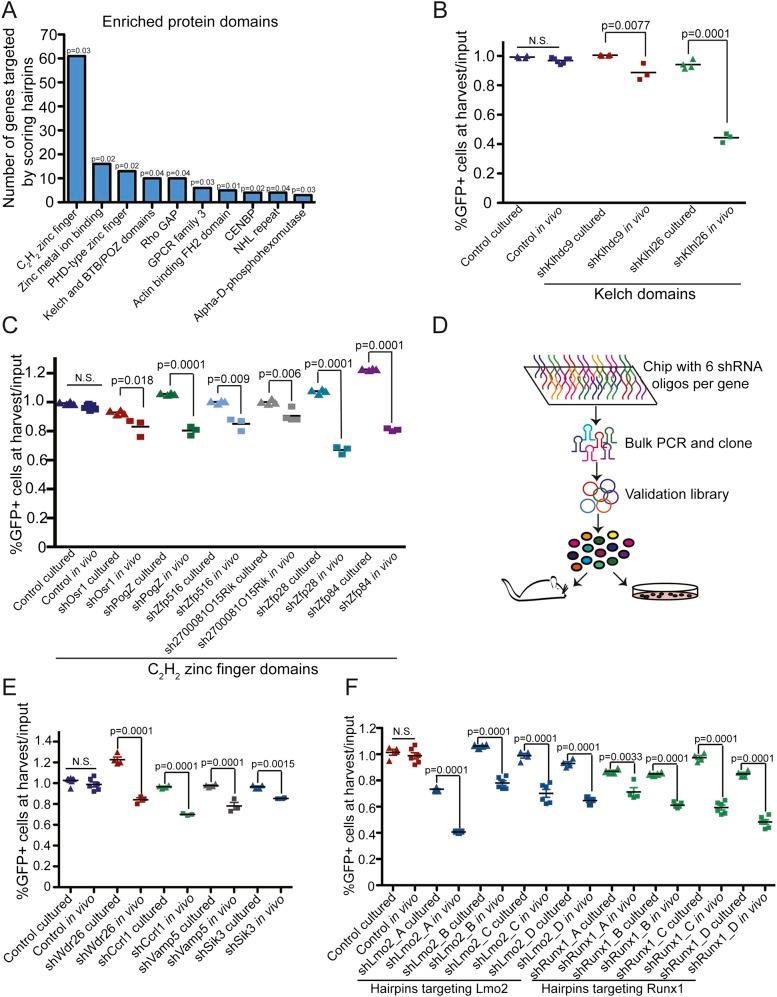
We performed a genome-scale shRNA screen for modulators of B-cell leukemia progression in vivo. Results from this work revealed dramatic distinctions between the relative effects of shRNAs on the growth of tumor cells in culture versus in their native microenvironment. Specifically, we identified many "context-specific" regulators of leukemia development. These included the gene encoding the zinc finger protein Phf6. While inactivating mutations in PHF6 are commonly observed in human myeloid and T-cell malignancies, we found that Phf6 suppression in B-cell malignancies impairs tumor progression. Thus, Phf6 is a "lineage-specific" cancer gene that plays opposing roles in developmentally distinct hematopoietic malignancies.
我们进行了一项全基因组规模的shRNA筛选,以寻找体内B细胞白血病进展的调节因子。这项工作的结果揭示了shRNA对培养中的肿瘤细胞生长与其天然微环境中的生长的相对影响之间的巨大差异。具体而言,我们鉴定出许多白血病发展的“背景特异性”调节因子。其中包括编码锌指蛋白Phf6的基因。虽然在人类髓系和T细胞恶性肿瘤中普遍观察到PHF6的失活突变,但我们发现B细胞恶性肿瘤中Phf6的抑制会损害肿瘤进展。因此,Phf6是一种“谱系特异性”癌症基因,在发育上不同的造血系统恶性肿瘤中发挥相反的作用。



 Zotero 插件