
作为胶质母细胞瘤治疗靶点的糖酵解酶的综合分析
Comprehensive analysis of glycolytic enzymes as therapeutic targets in the treatment of glioblastoma.
作者信息
Sanzey Morgane, Abdul Rahim Siti Aminah, Oudin Anais, Dirkse Anne, Kaoma Tony, Vallar Laurent, Herold-Mende Christel, Bjerkvig Rolf, Golebiewska Anna, Niclou Simone P
机构信息
NorLux Neuro-Oncology Laboratory, Department of Oncology, Luxembourg Institute of Health (L.I.H.), Luxembourg, Luxembourg.
Genomics Research Unit, Luxembourg Institute of Health (L.I.H.), Luxembourg, Luxembourg.
出版信息
PLoS One. 2015 May 1;10(5):e0123544. doi: 10.1371/journal.pone.0123544. eCollection 2015.
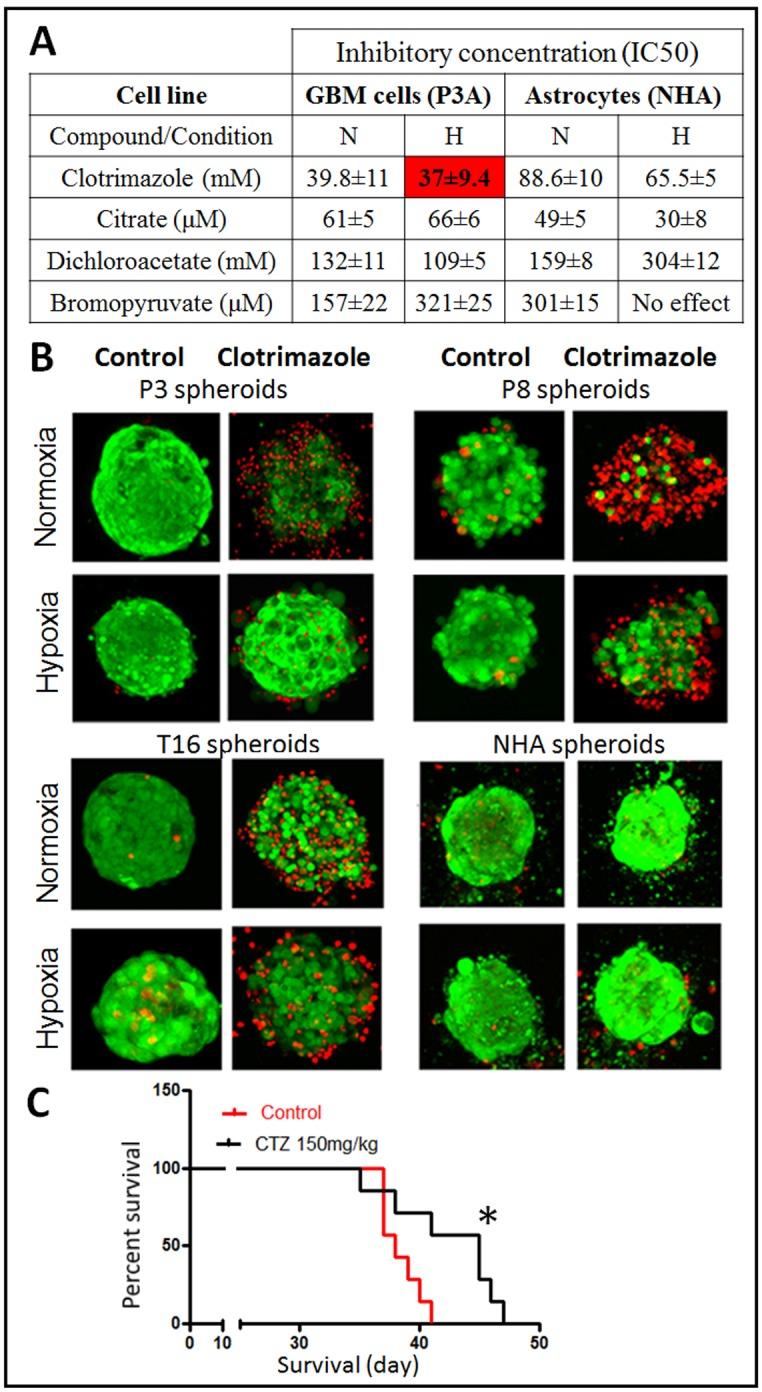
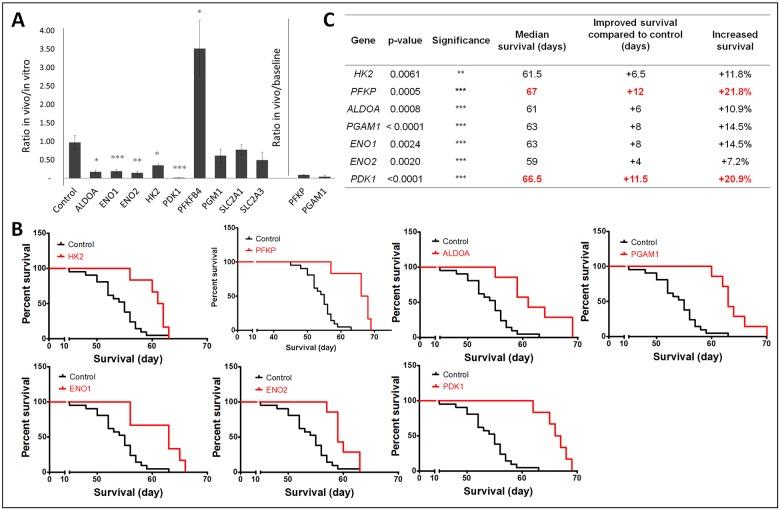
Major efforts have been put in anti-angiogenic treatment for glioblastoma (GBM), an aggressive and highly vascularized brain tumor with dismal prognosis. However clinical outcome with anti-angiogenic agents has been disappointing and tumors quickly develop escape mechanisms. In preclinical GBM models we have recently shown that bevacizumab, a blocking antibody against vascular endothelial growth factor, induces hypoxia in treated tumors, which is accompanied by increased glycolytic activity and tumor invasiveness. Genome-wide transcriptomic analysis of patient derived GBM cells including stem cell lines revealed a strong up-regulation of glycolysis-related genes in response to severe hypoxia. We therefore investigated the importance of glycolytic enzymes in GBM adaptation and survival under hypoxia, both in vitro and in vivo. We found that shRNA-mediated attenuation of glycolytic enzyme expression interfered with GBM growth under normoxic and hypoxic conditions in all cellular models. Using intracranial GBM xenografts we identified seven glycolytic genes whose knockdown led to a dramatic survival benefit in mice. The most drastic effect was observed for PFKP (PFK1, +21.8%) and PDK1 (+20.9%), followed by PGAM1 and ENO1 (+14.5% each), HK2 (+11.8%), ALDOA (+10.9%) and ENO2 (+7.2%). The increase in mouse survival after genetic interference was confirmed using chemical inhibition of PFK1 with clotrimazole. We thus provide a comprehensive analysis on the importance of the glycolytic pathway for GBM growth in vivo and propose PFK1 and PDK1 as the most promising therapeutic targets to address the metabolic escape mechanisms of GBM.
针对胶质母细胞瘤(GBM)这一侵袭性强、血管高度丰富且预后不佳的脑肿瘤,人们在抗血管生成治疗方面付出了巨大努力。然而,抗血管生成药物的临床疗效令人失望,肿瘤很快就会产生逃逸机制。在临床前GBM模型中,我们最近发现,贝伐单抗(一种针对血管内皮生长因子的阻断抗体)可诱导治疗后的肿瘤出现缺氧,同时伴有糖酵解活性增加和肿瘤侵袭性增强。对包括干细胞系在内的患者来源的GBM细胞进行全基因组转录组分析发现,在严重缺氧的情况下,糖酵解相关基因强烈上调。因此,我们研究了糖酵解酶在体外和体内GBM适应缺氧及存活过程中的重要性。我们发现,在所有细胞模型中,shRNA介导的糖酵解酶表达减弱会干扰常氧和缺氧条件下GBM的生长。利用颅内GBM异种移植模型,我们鉴定出7个糖酵解基因,其敲低可使小鼠的生存期显著延长。其中,PFKP(PFK1,延长21.8%)和PDK1(延长20.9%)的效果最为显著,其次是PGAM1和ENO1(各延长14.5%)、HK2(延长11.8%)、ALDOA(延长10.9%)和ENO2(延长7.2%)。使用克霉唑对PFK1进行化学抑制,证实了基因干扰后小鼠生存期的延长。因此,我们全面分析了糖酵解途径对体内GBM生长的重要性,并提出PFK1和PDK1是解决GBM代谢逃逸机制最有前景的治疗靶点。


 Zotero 插件