
TRIM21通过抗体调理的病毒在感染过程中促进cGAS和RIG-I对病毒基因组的识别。
TRIM21 Promotes cGAS and RIG-I Sensing of Viral Genomes during Infection by Antibody-Opsonized Virus.
作者信息
Watkinson Ruth E, McEwan William A, Tam Jerry C H, Vaysburd Marina, James Leo C
机构信息
Division of Protein and Nucleic Acid Chemistry, Medical Research Council Laboratory of Molecular Biology, Cambridge, United Kingdom.
出版信息
PLoS Pathog. 2015 Oct 27;11(10):e1005253. doi: 10.1371/journal.ppat.1005253. eCollection 2015 Oct.
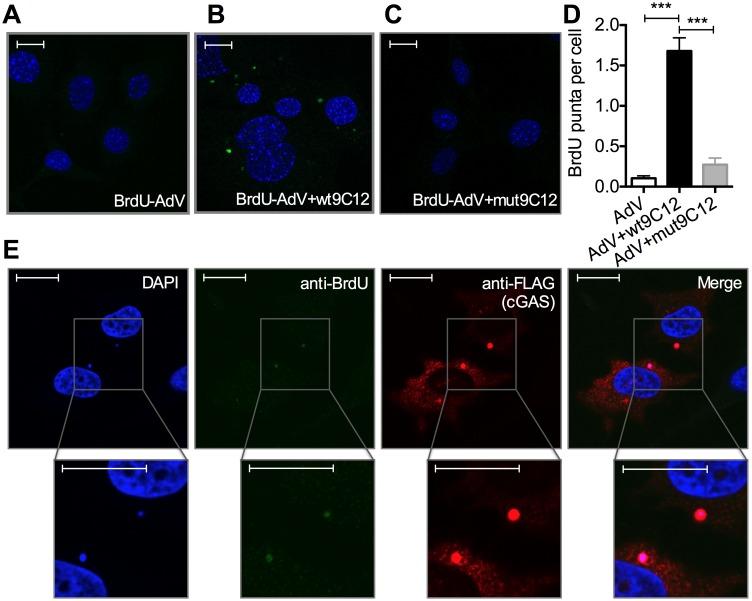
Encapsidation is a strategy almost universally employed by viruses to protect their genomes from degradation and from innate immune sensors. We show that TRIM21, which targets antibody-opsonized virions for proteasomal destruction, circumvents this protection, enabling the rapid detection and degradation of viral genomes before their replication. TRIM21 triggers an initial wave of cytokine transcription that is antibody, rather than pathogen, driven. This early response is augmented by a second transcriptional program, determined by the nature of the infecting virus. In this second response, TRIM21-induced exposure of the viral genome promotes sensing of DNA and RNA viruses by cGAS and RIG-I. This mechanism allows early detection of an infection event and drives an inflammatory response in mice within hours of viral challenge.
衣壳化是病毒几乎普遍采用的一种策略,用于保护其基因组不被降解以及不被天然免疫传感器识别。我们发现,TRIM21可靶向抗体调理的病毒体进行蛋白酶体降解,从而规避这种保护作用,使得病毒基因组在复制之前就能被快速检测和降解。TRIM21触发了由抗体而非病原体驱动的第一轮细胞因子转录。由感染病毒的性质决定的第二个转录程序增强了这种早期反应。在这第二种反应中,TRIM21诱导的病毒基因组暴露促进了cGAS和RIG-I对DNA病毒和RNA病毒的识别。这种机制能够在病毒攻击后数小时内实现对感染事件的早期检测,并在小鼠体内引发炎症反应。




 Zotero 插件