
转录、表观遗传和逆转录病毒特征可识别参与造血谱系定向分化的调控区域。
Transcriptional, epigenetic and retroviral signatures identify regulatory regions involved in hematopoietic lineage commitment.
作者信息
Romano Oriana, Peano Clelia, Tagliazucchi Guidantonio Malagoli, Petiti Luca, Poletti Valentina, Cocchiarella Fabienne, Rizzi Ermanno, Severgnini Marco, Cavazza Alessia, Rossi Claudia, Pagliaro Pasqualepaolo, Ambrosi Alessandro, Ferrari Giuliana, Bicciato Silvio, De Bellis Gianluca, Mavilio Fulvio, Miccio Annarita
机构信息
Department of Life Sciences, University of Modena and Reggio Emilia, Modena, Italy.
Center for Genomic Research, University of Modena and Reggio Emilia, Modena, Italy.
出版信息
Sci Rep. 2016 Apr 20;6:24724. doi: 10.1038/srep24724.
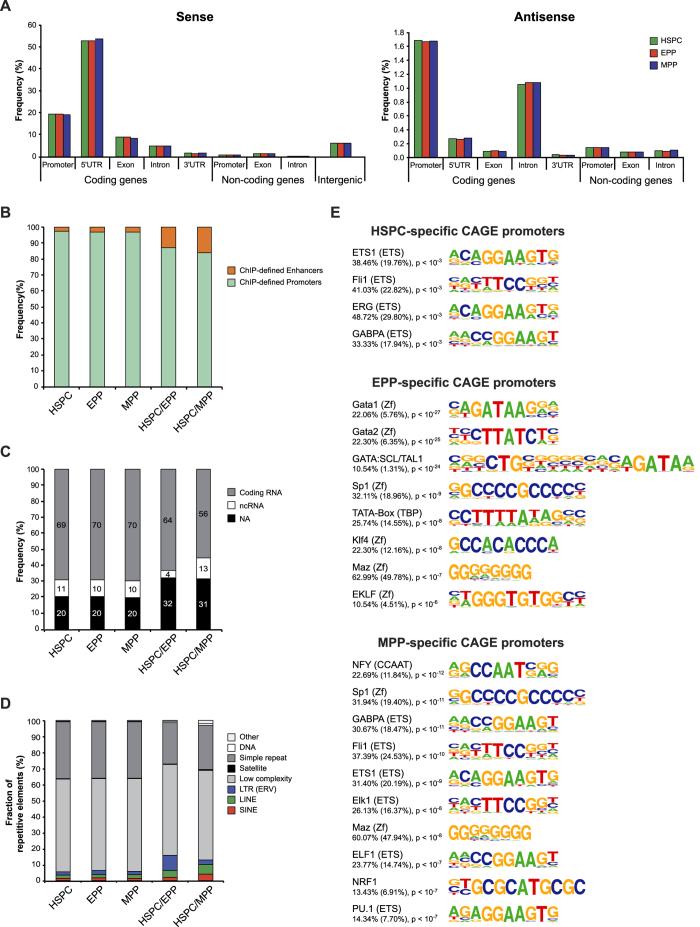
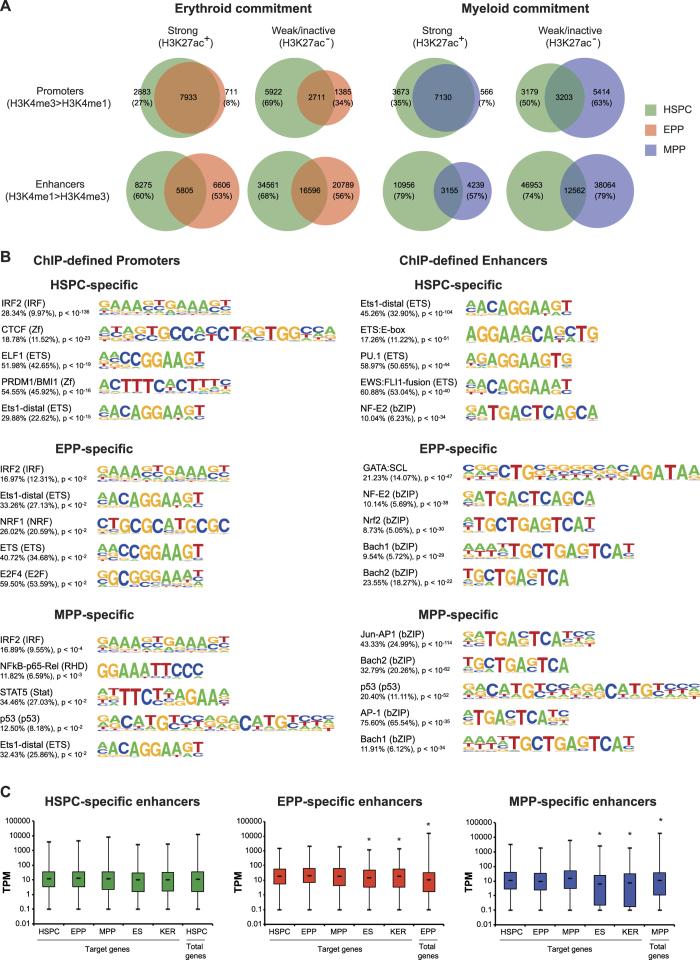
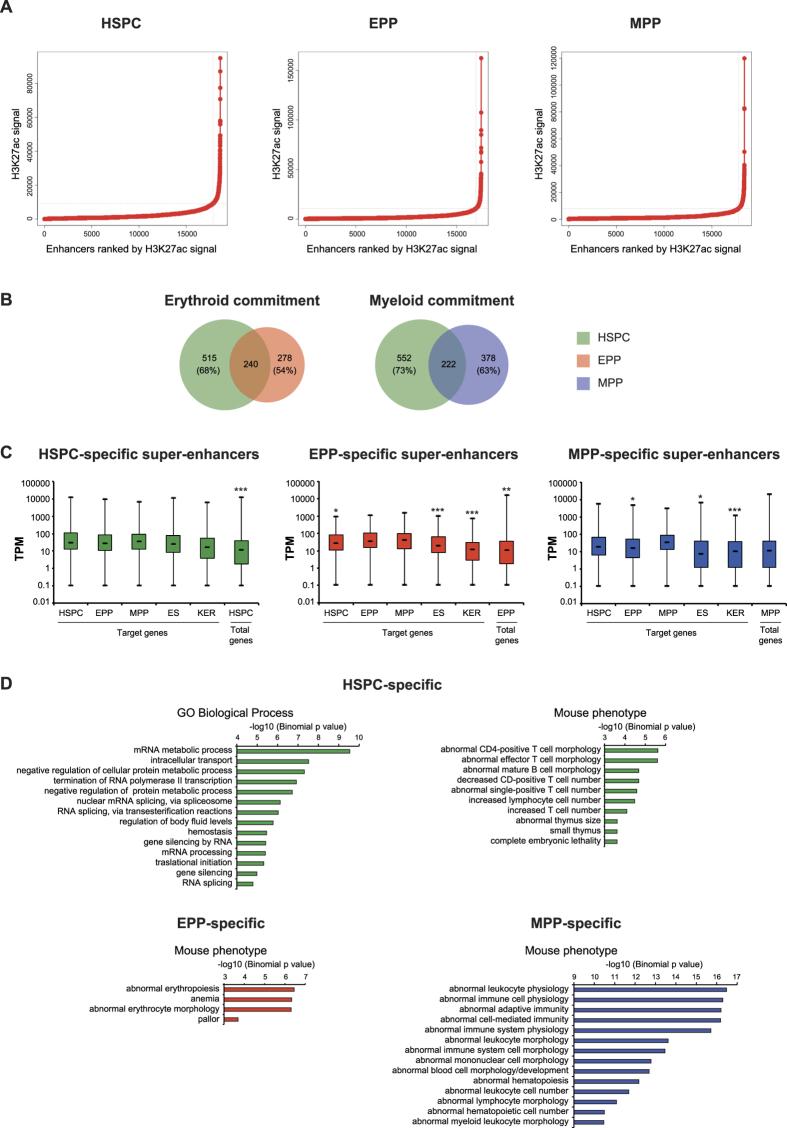
Genome-wide approaches allow investigating the molecular circuitry wiring the genetic and epigenetic programs of human somatic stem cells. Hematopoietic stem/progenitor cells (HSPC) give rise to the different blood cell types; however, the molecular basis of human hematopoietic lineage commitment is poorly characterized. Here, we define the transcriptional and epigenetic profile of human HSPC and early myeloid and erythroid progenitors by a combination of Cap Analysis of Gene Expression (CAGE), ChIP-seq and Moloney leukemia virus (MLV) integration site mapping. Most promoters and transcripts were shared by HSPC and committed progenitors, while enhancers and super-enhancers consistently changed upon differentiation, indicating that lineage commitment is essentially regulated by enhancer elements. A significant fraction of CAGE promoters differentially expressed upon commitment were novel, harbored a chromatin enhancer signature, and may identify promoters and transcribed enhancers driving cell commitment. MLV-targeted genomic regions co-mapped with cell-specific active enhancers and super-enhancers. Expression analyses, together with an enhancer functional assay, indicate that MLV integration can be used to identify bona fide developmentally regulated enhancers. Overall, this study provides an overview of transcriptional and epigenetic changes associated to HSPC lineage commitment, and a novel signature for regulatory elements involved in cell identity.
全基因组方法能够研究连接人类体细胞干细胞遗传和表观遗传程序的分子回路。造血干/祖细胞(HSPC)可分化为不同类型的血细胞;然而,人类造血谱系定向分化的分子基础仍不清楚。在此,我们通过基因表达的帽分析(CAGE)、染色质免疫沉淀测序(ChIP-seq)和莫洛尼白血病病毒(MLV)整合位点图谱分析相结合的方法,确定了人类HSPC以及早期髓系和红系祖细胞的转录和表观遗传特征。大多数启动子和转录本在HSPC和定向祖细胞中是共享的,而增强子和超级增强子在分化过程中持续发生变化,这表明谱系定向分化主要受增强子元件调控。在定向分化过程中差异表达的CAGE启动子中有很大一部分是新发现的,具有染色质增强子特征,可能鉴定出驱动细胞定向分化的启动子和转录增强子。MLV靶向的基因组区域与细胞特异性活性增强子和超级增强子共定位。表达分析以及增强子功能检测表明,MLV整合可用于鉴定真正受发育调控的增强子。总体而言,本研究概述了与HSPC谱系定向分化相关的转录和表观遗传变化,并为参与细胞身份的调控元件提供了新的特征。




 Zotero 插件