
人类衰老的深度生物标志物:深度神经网络在生物标志物开发中的应用。
Deep biomarkers of human aging: Application of deep neural networks to biomarker development.
作者信息
Putin Evgeny, Mamoshina Polina, Aliper Alexander, Korzinkin Mikhail, Moskalev Alexey, Kolosov Alexey, Ostrovskiy Alexander, Cantor Charles, Vijg Jan, Zhavoronkov Alex
机构信息
Pharma.AI Department, Insilico Medicine, Inc, Baltimore, MD 21218, USA.
Computer Technologies Lab, ITMO University, St. Petersburg 197101, Russia.
出版信息
Aging (Albany NY). 2016 May;8(5):1021-33. doi: 10.18632/aging.100968.
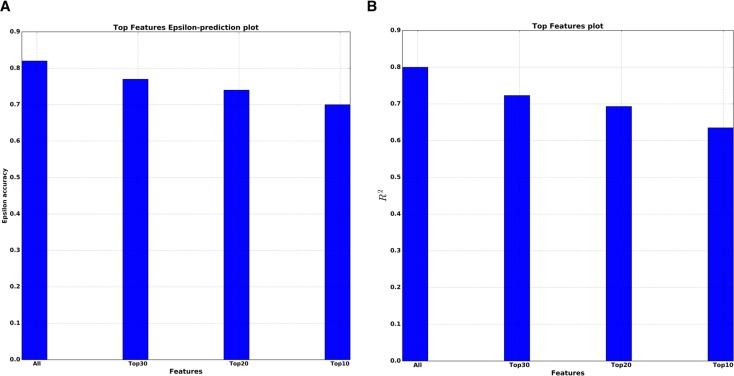
One of the major impediments in human aging research is the absence of a comprehensive and actionable set of biomarkers that may be targeted and measured to track the effectiveness of therapeutic interventions. In this study, we designed a modular ensemble of 21 deep neural networks (DNNs) of varying depth, structure and optimization to predict human chronological age using a basic blood test. To train the DNNs, we used over 60,000 samples from common blood biochemistry and cell count tests from routine health exams performed by a single laboratory and linked to chronological age and sex. The best performing DNN in the ensemble demonstrated 81.5 % epsilon-accuracy r = 0.90 with R(2) = 0.80 and MAE = 6.07 years in predicting chronological age within a 10 year frame, while the entire ensemble achieved 83.5% epsilon-accuracy r = 0.91 with R(2) = 0.82 and MAE = 5.55 years. The ensemble also identified the 5 most important markers for predicting human chronological age: albumin, glucose, alkaline phosphatase, urea and erythrocytes. To allow for public testing and evaluate real-life performance of the predictor, we developed an online system available at http://www.aging.ai. The ensemble approach may facilitate integration of multi-modal data linked to chronological age and sex that may lead to simple, minimally invasive, and affordable methods of tracking integrated biomarkers of aging in humans and performing cross-species feature importance analysis.
人类衰老研究的主要障碍之一是缺乏一套全面且可操作的生物标志物,这些标志物可以作为靶点进行测量,以追踪治疗干预的效果。在本研究中,我们设计了一个由21个深度神经网络(DNN)组成的模块化集合,这些网络具有不同的深度、结构和优化方式,用于通过基本血液检测预测人类的实际年龄。为了训练DNN,我们使用了来自一个实验室进行的常规健康检查中的常见血液生化和细胞计数测试的60000多个样本,并将其与实际年龄和性别相关联。该集合中表现最佳的DNN在预测10年内的实际年龄时,显示出81.5%的ε-准确率,r = 0.90,R(2) = 0.80,平均绝对误差(MAE)= 6.07岁,而整个集合达到了83.5%的ε-准确率,r = 0.91,R(2) = 0.82,MAE = 5.55岁。该集合还确定了预测人类实际年龄最重要的5个标志物:白蛋白、葡萄糖、碱性磷酸酶、尿素和红细胞。为了进行公开测试并评估该预测器的实际性能,我们开发了一个在线系统,可在http://www.aging.ai上获取。这种集合方法可能有助于整合与实际年龄和性别相关的多模态数据,从而可能产生简单、微创且经济实惠的方法来追踪人类衰老的综合生物标志物,并进行跨物种特征重要性分析。


 Zotero 插件