
氨基酸在癌症氧化还原稳态中的核心作用:癌症氧化还原密码的脆弱点
The Central Role of Amino Acids in Cancer Redox Homeostasis: Vulnerability Points of the Cancer Redox Code.
作者信息
Vučetić Milica, Cormerais Yann, Parks Scott K, Pouysségur Jacques
机构信息
Medical Biology Department, Centre Scientifique de Monaco (CSM), Monaco, Monaco.
Institute for Research on Cancer and Aging (IRCAN), CNRS, INSERM, Centre A. Lacassagne, Université Côte d'Azur, Nice, France.
出版信息
Front Oncol. 2017 Dec 21;7:319. doi: 10.3389/fonc.2017.00319. eCollection 2017.
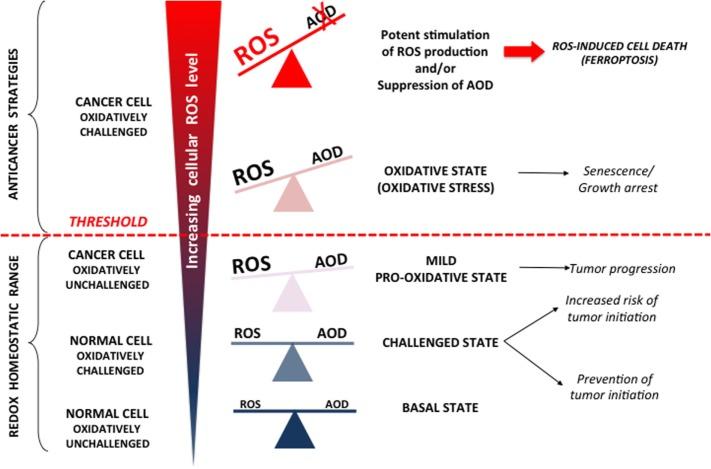
A fine balance in reactive oxygen species (ROS) production and removal is of utmost importance for homeostasis of all cells and especially in highly proliferating cells that encounter increased ROS production due to enhanced metabolism. Consequently, increased production of these highly reactive molecules requires coupling with increased antioxidant defense production within cells. This coupling is observed in cancer cells that allocate significant energy reserves to maintain their intracellular redox balance. Glutathione (GSH), as a first line of defense, represents the most important, non-enzymatic antioxidant component together with the NADPH/NADP couple, which ensures the maintenance of the pool of reduced GSH. In this review, the central role of amino acids (AAs) in the maintenance of redox homeostasis in cancer, through GSH synthesis (cysteine, glutamate, and glycine), and nicotinamide adenine dinucleotide (phosphate) production (serine, and glutamine/glutamate) are illustrated. Special emphasis is placed on the importance of AA transporters known to be upregulated in cancers (such as system x-light chain and alanine-serine-cysteine transporter 2) in the maintenance of AA homeostasis, and thus indirectly, the redox homeostasis of cancer cells. The role of the ROS varies (often described as a "two-edged sword") during the processes of carcinogenesis, metastasis, and cancer treatment. Therefore, the context-dependent role of specific AAs in the initiation, progression, and dissemination of cancer, as well as in the redox-dependent sensitivity/resistance of the neoplastic cells to chemotherapy are highlighted.
活性氧(ROS)生成与清除之间的精细平衡对于所有细胞的稳态至关重要,尤其对于因代谢增强而ROS生成增加的高增殖细胞而言。因此,这些高反应性分子生成的增加需要与细胞内抗氧化防御能力的增强相匹配。这种匹配在癌细胞中可见,癌细胞会分配大量能量储备来维持其细胞内的氧化还原平衡。谷胱甘肽(GSH)作为第一道防线,是最重要的非酶抗氧化成分,与NADPH/NADP偶联物共同作用,确保还原型GSH库的维持。在本综述中,阐述了氨基酸(AAs)在癌症氧化还原稳态维持中的核心作用,其通过GSH合成(半胱氨酸、谷氨酸和甘氨酸)以及烟酰胺腺嘌呤二核苷酸(磷酸)生成(丝氨酸和谷氨酰胺/谷氨酸)来实现。特别强调了已知在癌症中上调的AA转运体(如x-轻链系统和丙氨酸-丝氨酸-半胱氨酸转运体2)在维持AA稳态从而间接维持癌细胞氧化还原稳态中的重要性。在致癌、转移和癌症治疗过程中,ROS的作用各不相同(常被描述为“双刃剑”)。因此,本文突出了特定AAs在癌症起始、进展和扩散过程中的背景依赖性作用,以及在肿瘤细胞对化疗的氧化还原依赖性敏感性/抗性中的作用。



 Zotero 插件