
水相和气相臭氧对不同表面污染的奶牛粪便的微生物杀灭能力。
The microbial killing capacity of aqueous and gaseous ozone on different surfaces contaminated with dairy cattle manure.
机构信息
Department of Veterinary Clinical Medicine, College of Veterinary Medicine, University of Illinois at Urbana-Champaign, Urbana, Illinois, United States of America.
Department of Animal Medicine, Internal Medicine, Faculty of Veterinary Medicine, Benha University, Moshtohor-Toukh, Kalyobiya, Egypt.
出版信息
PLoS One. 2018 May 14;13(5):e0196555. doi: 10.1371/journal.pone.0196555. eCollection 2018.
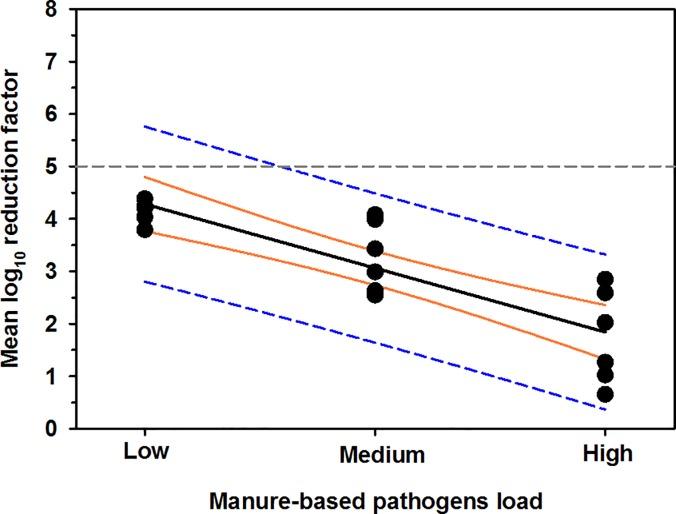
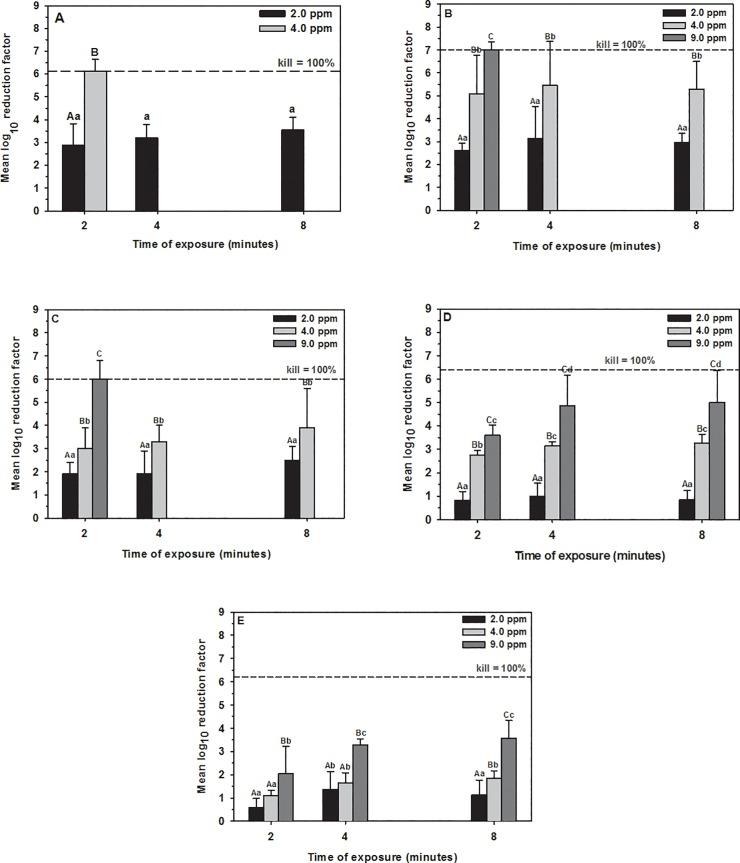
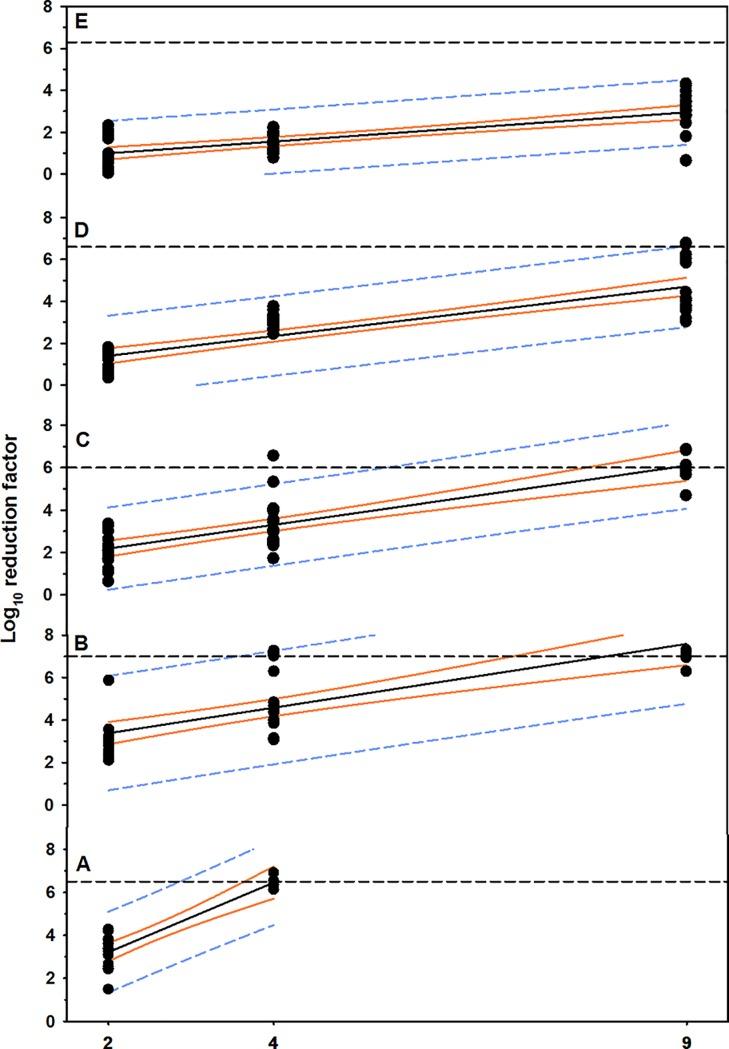
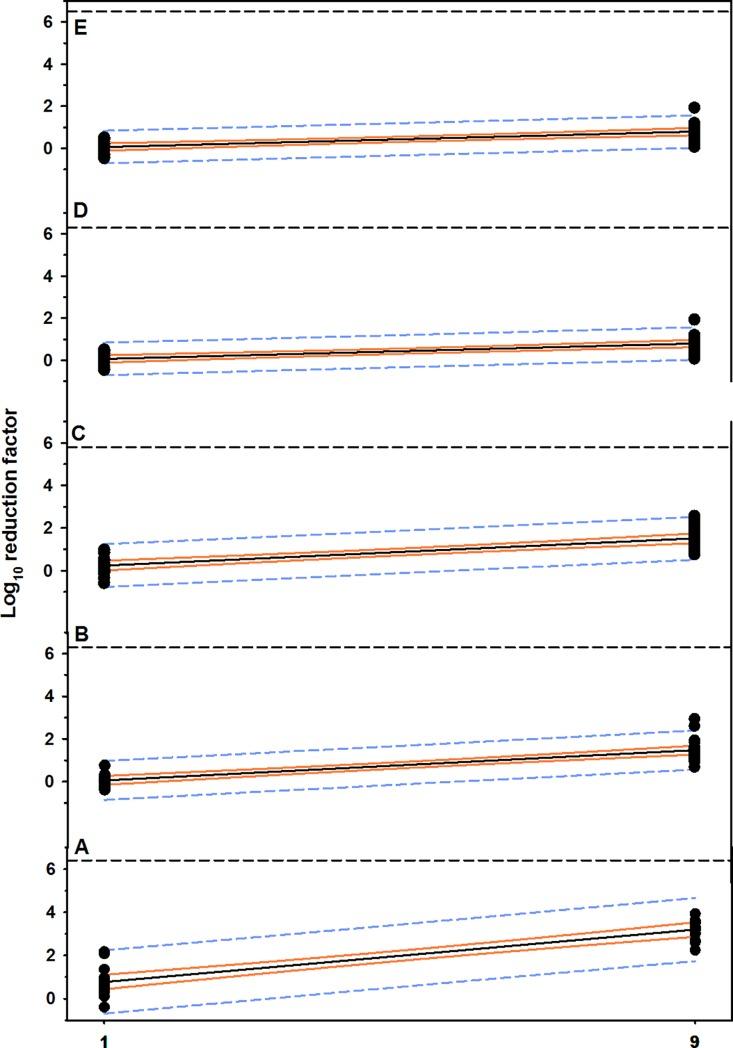
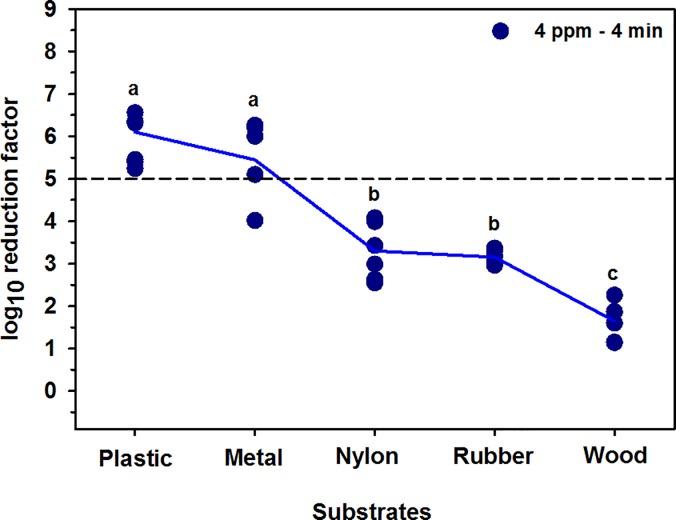
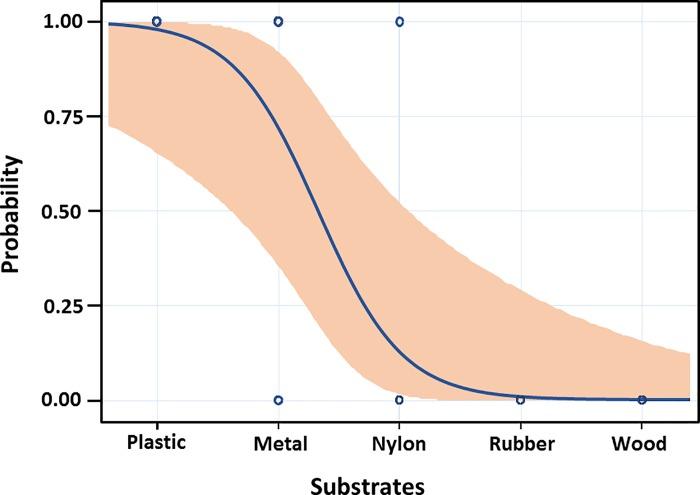
A high reactivity and leaving no harmful residues make ozone an effective disinfectant for farm hygiene and biosecurity. Our objectives were therefore to (1) characterize the killing capacity of aqueous and gaseous ozone at different operational conditions on dairy cattle manure-based pathogens (MBP) contaminated different surfaces (plastic, metal, nylon, rubber, and wood); (2) determine the effect of microbial load on the killing capacity of aqueous ozone. In a crossover design, 14 strips of each material were randomly assigned into 3 groups, treatment (n = 6), positive-control (n = 6), and negative-control (n = 2). The strips were soaked in dairy cattle manure with an inoculum level of 107-108 for 60 minutes. The treatment strips were exposed to aqueous ozone of 2, 4, and 9 ppm and gaseous ozone of 1and 9 ppm for 2, 4, and 8 minutes exposure. 3M™ Petrifilm™ rapid aerobic count plate and plate reader were used for bacterial culture. On smooth surfaces, plastic and metal, aqueous ozone at 4 ppm reduced MBP to a safe level (≥5-log10) within 2 minutes (6.1 and 5.1-log10, respectively). However, gaseous ozone at 9 ppm for 4 minutes inactivated 3.3-log10 of MBP. Aqueous ozone of 9 ppm is sufficient to reduce MBP to a safe level, 6.0 and 5.4- log10, on nylon and rubber surfaces within 2 and 8 minutes, respectively. On complex surfaces, wood, both aqueous and gaseous ozone at up to 9 ppm were unable to reduce MBP to a safe level (3.6 and 0.8-log10, respectively). The bacterial load was a strong predictor for reduction in MBP (P<0.0001, R2 = 0.72). We conclude that aqueous ozone of 4 and 9 ppm for 2 minutes may provide an efficient method to reduce MBP to a safe level on smooth and moderately rough surfaces, respectively. However, ozone alone may not an adequate means of controlling MBP on complex surfaces.
高反应性和无有害残留物使臭氧成为农场卫生和生物安全的有效消毒剂。我们的目标是:(1)在不同操作条件下,研究水臭氧和气体臭氧对基于奶牛粪便的病原体(MBP)污染不同表面(塑料、金属、尼龙、橡胶和木材)的杀灭能力;(2)确定微生物负荷对水臭氧杀灭能力的影响。在交叉设计中,将每种材料的 14 个条随机分为 3 组,处理组(n=6)、阳性对照组(n=6)和阴性对照组(n=2)。条带浸泡在奶牛粪便中,接种水平为 107-108。处理条带暴露于 2、4 和 9 ppm 的水臭氧和 1 和 9 ppm 的气体臭氧中 2、4 和 8 分钟。使用 3M™ Petrifilm™快速需氧计数板和板读数器进行细菌培养。在光滑表面(塑料和金属)上,4 ppm 的水臭氧在 2 分钟内将 MBP 减少到安全水平(≥5-log10)(分别为 6.1 和 5.1-log10)。然而,9 ppm 的气体臭氧在 4 分钟内使 3.3-log10 的 MBP 失活。9 ppm 的水臭氧足以在 2 和 8 分钟内将 MBP 减少到安全水平,分别为 6.0 和 5.4-log10,在尼龙和橡胶表面上。在复杂表面(木材)上,高达 9 ppm 的水臭氧和气体臭氧均无法将 MBP 减少到安全水平(分别为 3.6 和 0.8-log10)。细菌负荷是减少 MBP 的有力预测因素(P<0.0001,R2 = 0.72)。我们得出结论,4 和 9 ppm 的水臭氧在 2 分钟内分别可能为减少光滑和中等粗糙表面上的 MBP 提供有效方法。然而,臭氧本身可能不是控制复杂表面上 MBP 的合适方法。

 Zotero 插件