
利用体内重编程技术揭示癌症、衰老和 rejuvenation 中的表观遗传调控。
Unveiling epigenetic regulation in cancer, aging, and rejuvenation with in vivo reprogramming technology.
机构信息
Department of Life Science Frontiers, Center for iPS Cell Research and Application (CiRA), Kyoto University, Kyoto, Japan.
Department of Gastroenterology and Hepatology, Kyoto University Graduate School of Medicine, Kyoto, Japan.
出版信息
Cancer Sci. 2018 Sep;109(9):2641-2650. doi: 10.1111/cas.13731. Epub 2018 Aug 15.
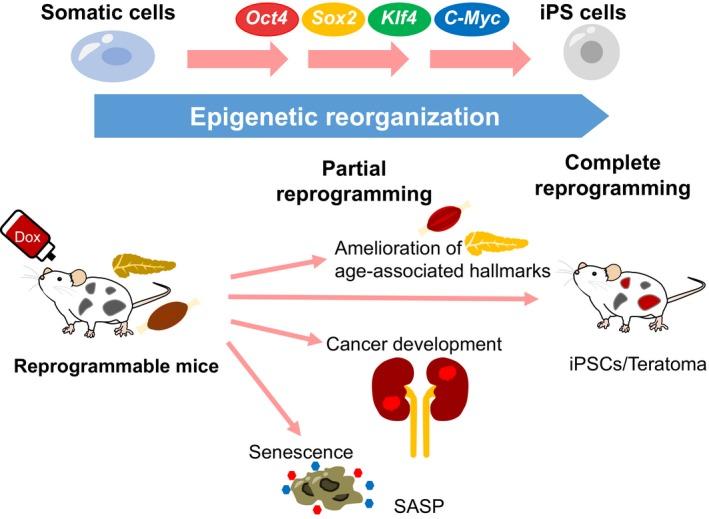
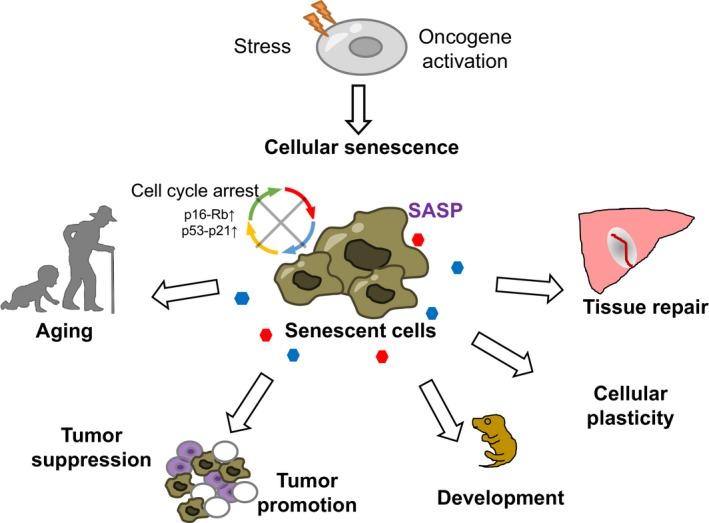
Reprogramming technology has enabled the fate conversion of terminally differentiated somatic cells into pluripotent stem cells or into another differentiated state. A dynamic reorganization of epigenetic regulation takes place during cellular reprogramming. Given that reprogramming does not require changes in the underlying genome, the technology can be used to actively modify epigenetic regulation. Although reprogramming has been investigated mostly at the cellular level in vitro, studies have reported that somatic cells are reprogrammable in multicellular organisms in vivo. In vivo reprogramming provides a potential strategy for regenerative medicine. Notably, recent studies using in vivo reprogramming technology to alter epigenetic regulation at organismal levels have revealed unappreciated epigenetic mechanisms in various biological phenomena, including cancer development, tissue regeneration, aging, and rejuvenation in mammals. Moreover, in vivo reprogramming technology can be applied to abrogate epigenetic aberrations associated with aging and cancer, which raises the possibility that the technology could provide a potential strategy to control the fate of detrimental cells such as senescent cells and cancer cells in vivo. Here, we review recent progress and future perspectives of in vivo reprogramming.
重编程技术使终末分化的体细胞命运转换为多能干细胞或另一种分化状态成为可能。在细胞重编程过程中,表观遗传调控发生动态重组。鉴于重编程不需要改变潜在的基因组,该技术可用于主动修饰表观遗传调控。尽管重编程主要在体外的细胞水平上进行了研究,但已有研究报道体细胞在体内的多细胞生物中是可重编程的。体内重编程为再生医学提供了一种潜在的策略。值得注意的是,最近使用体内重编程技术改变机体水平的表观遗传调控的研究揭示了各种生物学现象(包括癌症发展、组织再生、衰老和哺乳动物的 rejuvenation)中未被重视的表观遗传机制。此外,体内重编程技术可用于消除与衰老和癌症相关的表观遗传异常,这增加了该技术可以提供一种潜在策略来控制体内有害细胞(如衰老细胞和癌细胞)命运的可能性。在这里,我们综述了体内重编程的最新进展和未来展望。


 Zotero 插件