
缺氧促进人恶性间皮瘤获得侵袭表型。
Hypoxia promotes acquisition of aggressive phenotypes in human malignant mesothelioma.
机构信息
Laboratory of Clinical Pathology, College of Veterinary Medicine, Seoul National University, 1 Gwanak-ro, Gwanak-gu, Seoul, 08826, South Korea.
BK21 PLUS Program for Creative Veterinary Science Research, College of Veterinary Medicine, Seoul National University, 1 Gwanak-ro, Gwanak-gu, Seoul, 08826, South Korea.
出版信息
BMC Cancer. 2018 Aug 15;18(1):819. doi: 10.1186/s12885-018-4720-z.
BACKGROUND
Hypoxia is a hallmark of the solid tumor microenvironment and is associated with poor outcomes in cancer patients. The present study was performed to investigate mechanisms underlying the hypoxia-induced phenotypic changes using human malignant mesothelioma (HMM) cells.
METHODS
Hypoxic conditions were achieved by incubating HMM cells in the air chamber. The effect of hypoxia on phenotype changes in HMM cells was investigated by performing in vitro clonogenicity, drug resistance, migration, and invasion assays. Signaling pathways and molecules involved in the more aggressive behaviors of HMM cells under hypoxia were investigated. A two-tailed unpaired Student's t-test or one-way ANOVA with Bonferroni post-test correction was used in this study.
RESULTS
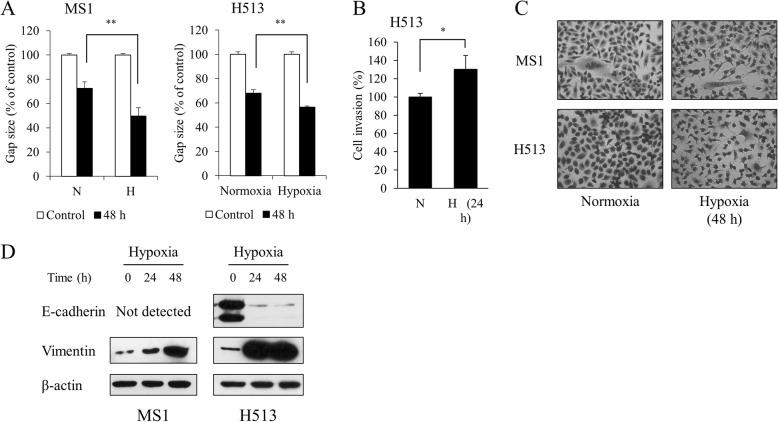
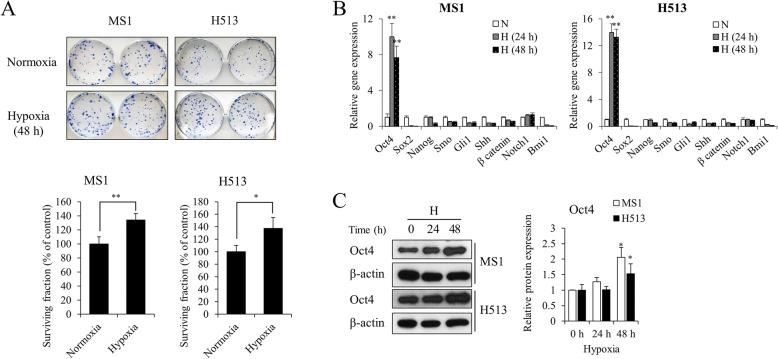
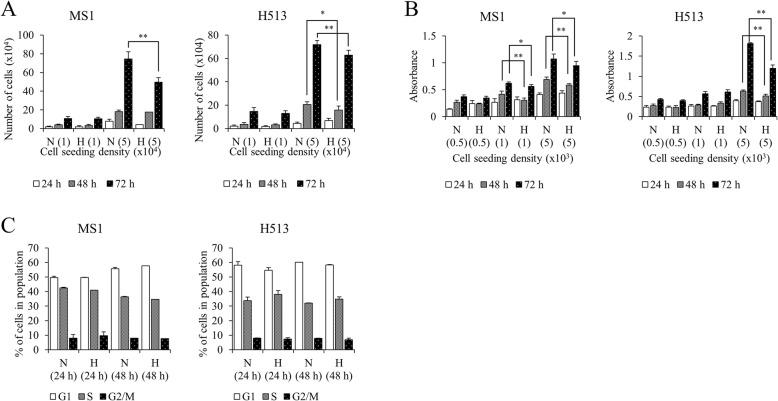
Hypoxic conditions upregulated hypoxia-inducible factor 1 alpha (HIF-1α) and HIF-2α in parallel with the upregulation of its target, Glut-1, in HMM cells. In vitro clonogenicity of HMM cells was significantly increased in hypoxic conditions, but the proliferation of cells at a high density in hypoxia was lower than that in normoxic conditions. The expression levels of HIF-2α and Oct4 were increased in hypoxic HMM cells. The percentage of cells with high CD44 expression was significantly higher in HMM cells cultured in hypoxia than those cultured in normoxia. Hypoxia significantly enhanced the resistance of HMM cells to cisplatin, which occurred through cytoprotection against cisplatin-induced apoptosis. While cisplatin treatment decreased the ratio of Bcl-2 to Bax in normoxic condition, hypoxia conversely increased the ratio in HMM cells treated with cisplatin. Hypoxia increased the mobility and invasiveness of HMM cells. Epithelial to mesenchymal transition was promoted, which was indicated by the repression of E-cadherin and the concomitant increase of vimentin in HMM cells.
CONCLUSIONS
The data illustrated that hypoxic conditions augmented the aggressive phenotypes of HMM cells at the biological and molecular levels. The present study provides valuable background information beginning to understand aggressiveness of HMM in tumor microenvironments, suggesting that a control measure for tumor hypoxia may be an effective therapeutic strategy to reduce the aggressiveness of cancer cells in HMM patients.
背景
缺氧是实体瘤微环境的一个标志,与癌症患者的不良预后相关。本研究旨在通过人恶性间皮瘤(HMM)细胞来研究缺氧诱导的表型变化的机制。
方法
通过在气室中孵育 HMM 细胞来实现缺氧条件。通过进行体外集落形成、耐药性、迁移和侵袭测定来研究缺氧对 HMM 细胞表型变化的影响。研究了缺氧条件下 HMM 细胞更具侵袭性行为所涉及的信号通路和分子。本研究中使用了双侧非配对学生 t 检验或带有 Bonferroni 后检验校正的单向方差分析。
结果
缺氧条件下,HMM 细胞中平行上调了缺氧诱导因子 1α(HIF-1α)和 HIF-2α,及其靶基因 Glut-1。在缺氧条件下,HMM 细胞的体外集落形成能力显著增加,但在缺氧条件下高细胞密度的增殖低于常氧条件。缺氧 HMM 细胞中 HIF-2α 和 Oct4 的表达水平增加。在缺氧培养的 HMM 细胞中,高表达 CD44 的细胞比例明显高于常氧培养的细胞。缺氧显著增强了 HMM 细胞对顺铂的耐药性,这是通过对顺铂诱导的细胞凋亡的细胞保护作用来实现的。虽然顺铂处理降低了常氧条件下 Bcl-2 与 Bax 的比值,但缺氧条件下相反地增加了 HMM 细胞中顺铂处理后的比值。缺氧增加了 HMM 细胞的迁移和侵袭能力。上皮间质转化得到促进,这表现为 E-钙粘蛋白的抑制和 HMM 细胞中波形蛋白的同时增加。
结论
数据表明,缺氧条件在生物学和分子水平上增强了 HMM 细胞的侵袭表型。本研究提供了有价值的背景信息,开始了解肿瘤微环境中 HMM 的侵袭性,表明控制肿瘤缺氧可能是减少 HMM 患者癌症细胞侵袭性的有效治疗策略。



 Zotero 插件