
2 型糖尿病肾病模型小鼠肾小球内皮细胞中早期增强的亮氨酸丰富型 2 糖蛋白-1 表达。
Early Enhanced Leucine-Rich -2-Glycoprotein-1 Expression in Glomerular Endothelial Cells of Type 2 Diabetic Nephropathy Model Mice.
机构信息
Department of Medical Science and Cardiorenal Medicine, Yokohama City University Graduate School of Medicine, Yokohama, Japan.
Cardiovascular and Metabolic Disorders Program, Duke-NUS Medical School, Singapore.
出版信息
Biomed Res Int. 2018 Nov 1;2018:2817045. doi: 10.1155/2018/2817045. eCollection 2018.
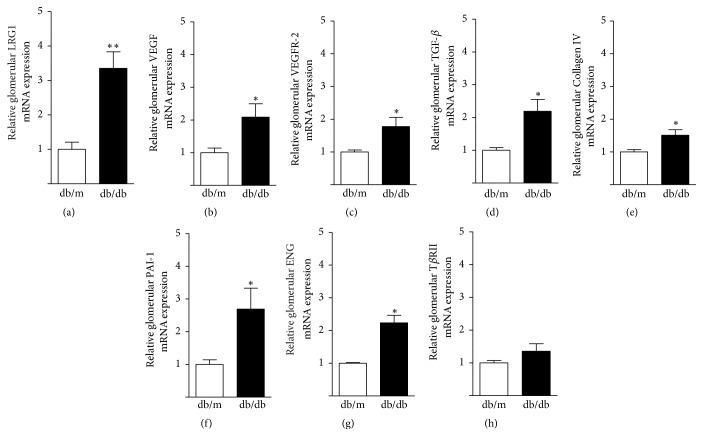
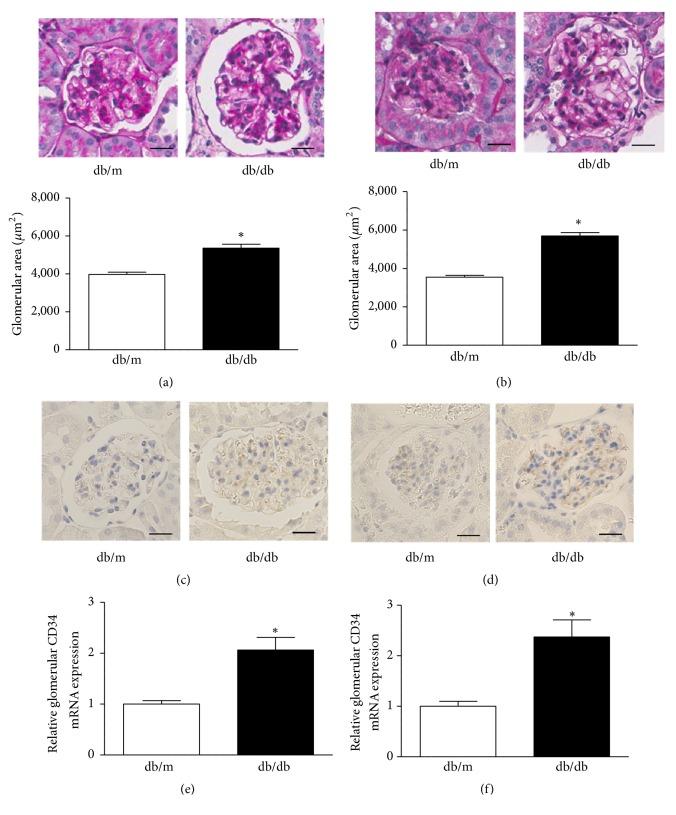
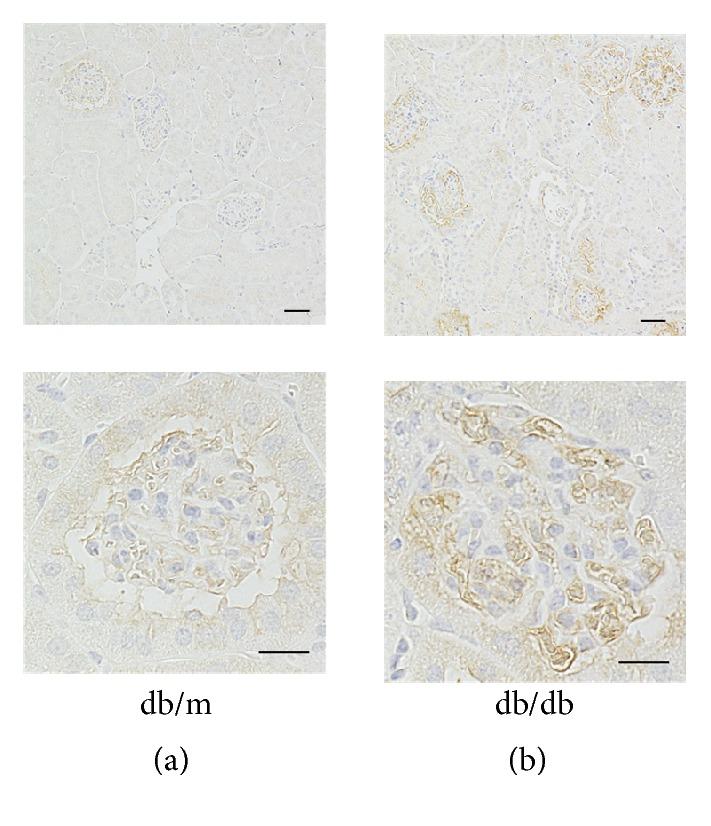
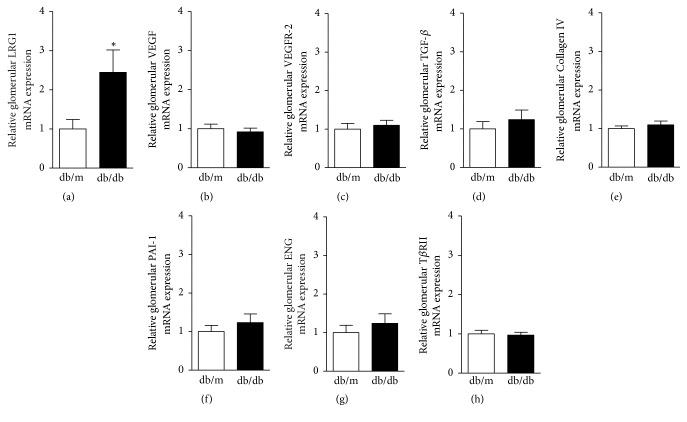
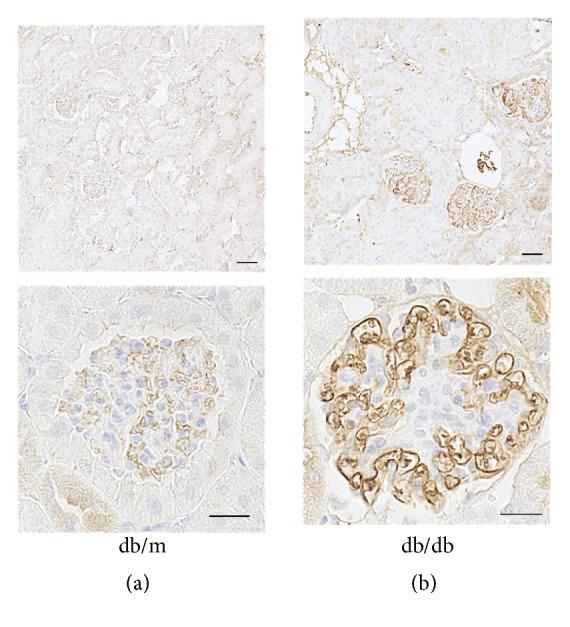
Abnormal angiogenesis plays a major role in the development of early stage diabetic nephropathy. Vascular endothelial growth factor (VEGF) is a classical proangiogenic factor that regulates abnormal glomerular angiogenesis linked to glomerular hypertrophy in the early stage of diabetic nephropathy. Leucine-rich -2-glycoprotein-1 (LRG1) was recently reported as a novel proangiogenic factor that is expressed in endothelial cells and promotes angiogenesis by modulating the transforming growth factor- signaling pathway. However, the pathophysiology of LRG1 in diabetic nephropathy remains largely unknown. In the present study, we investigated intrarenal expression of the novel proangiogenic factor LRG1 in diabetic mice by immunohistochemistry and a laser capture microdissection method during the development of diabetic nephropathy. We hypothesized that glomerular LRG1 expression is increased earlier than VEGF expression under conditions of pathological angiogenesis in the early stage of diabetic nephropathy. Thus, we compared glomerular expression of VEGF and LRG1 in diabetic mice at 16 and 24 weeks of age. At 16 weeks, diabetic mice exhibited glomerular hypertrophy with abnormal angiogenesis characterized by endothelial cell proliferation, which was concomitant with an increase in LRG1 expression of glomerular endothelial cells. However, glomerular VEGF expression was not increased at this early stage. At 24 weeks, the features of early diabetic nephropathy in mice had developed further, along with further enhanced glomerular LRG1 expression. At this late stage, glomerular VEGF and fibrosis-related-gene expression was also significantly increased compared with nondiabetic mice. These results suggest that LRG1 plays a pivotal role in the initial development of diabetic nephropathy by promoting abnormal angiogenesis, thereby suggesting that LRG1 is a potential preemptive therapeutic target of diabetic nephropathy.
异常的血管生成在早期糖尿病肾病的发展中起着主要作用。血管内皮生长因子(VEGF)是一种经典的促血管生成因子,可调节与糖尿病肾病早期肾小球肥大相关的异常肾小球血管生成。富含亮氨酸的 2-糖蛋白-1(LRG1)最近被报道为一种新的促血管生成因子,它在内皮细胞中表达,并通过调节转化生长因子-β信号通路促进血管生成。然而,LRG1 在糖尿病肾病中的病理生理学仍知之甚少。在本研究中,我们通过免疫组织化学和激光捕获显微切割方法研究了糖尿病肾病发展过程中新型促血管生成因子 LRG1 在糖尿病小鼠肾脏内的表达。我们假设在糖尿病肾病早期病理血管生成的情况下,肾小球 LRG1 的表达比 VEGF 的表达更早增加。因此,我们比较了 16 周和 24 周龄糖尿病 小鼠的肾小球 VEGF 和 LRG1 的表达。在 16 周时,糖尿病 小鼠表现出肾小球肥大和异常血管生成,其特征为内皮细胞增殖,同时伴有肾小球内皮细胞 LRG1 表达增加。然而,在这个早期阶段,肾小球 VEGF 的表达没有增加。在 24 周时,糖尿病 小鼠的早期糖尿病肾病特征进一步发展,同时肾小球 LRG1 表达进一步增强。在这个晚期阶段,与非糖尿病 小鼠相比,肾小球 VEGF 和纤维化相关基因的表达也显著增加。这些结果表明,LRG1 通过促进异常血管生成在糖尿病肾病的早期发展中起着关键作用,提示 LRG1 是糖尿病肾病的潜在预防性治疗靶点。
 Zotero 插件