
内质网应激:银纳米颗粒抑制多药耐药乳腺癌细胞 P-糖蛋白大小依赖的主要参与者。
Endoplasmic reticulum stress: major player in size-dependent inhibition of P-glycoprotein by silver nanoparticles in multidrug-resistant breast cancer cells.
机构信息
Department of Biochemistry and Molecular Biology, Faculty of Science and Informatics, University of Szeged, Közép fasor 52, Szeged, 6726, Hungary.
Department of Applied and Environmental Chemistry, University of Szeged, Rerrich B. tér 1, Szeged, 6720, Hungary.
出版信息
J Nanobiotechnology. 2019 Jan 22;17(1):9. doi: 10.1186/s12951-019-0448-4.
BACKGROUND
Development of multidrug resistance (MDR) is a major burden of successful chemotherapy, therefore, novel approaches to defeat MDR are imperative. Although the remarkable anti-cancer propensity of silver nanoparticles (AgNP) has been demonstrated and their potential application in MDR cancer has been proposed, the nanoparticle size-dependent cellular events directing P-glycoprotein (Pgp) expression and activity in MDR cancer have never been addressed. Hence, in the present study we examined AgNP size-dependent cellular features in multidrug resistant breast cancer cells.
RESULTS
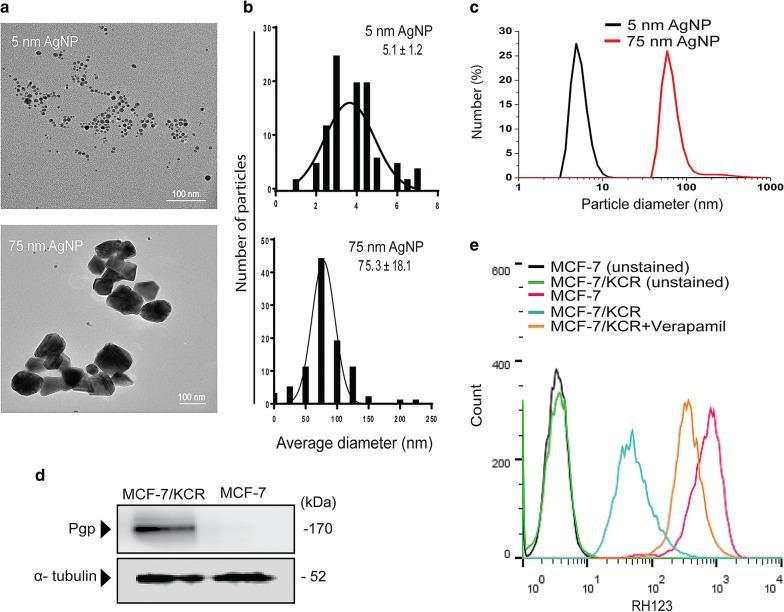
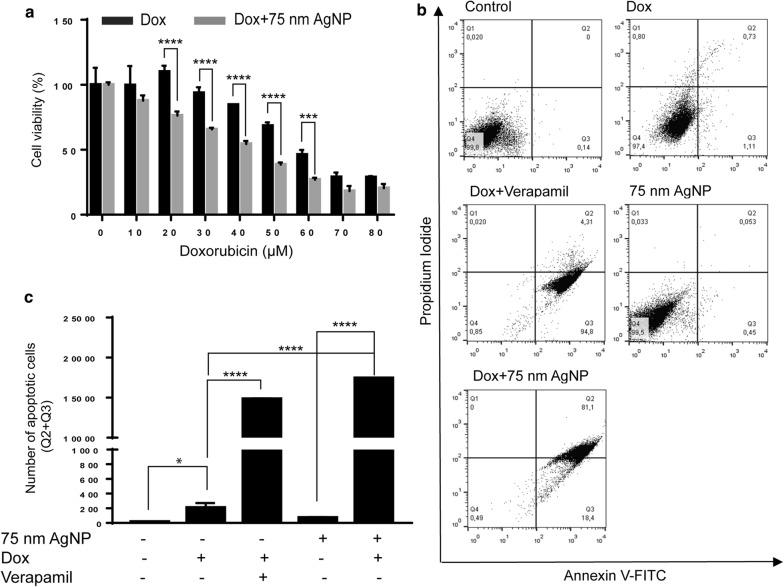
In this study we report that 75 nm AgNPs inhibited significantly Pgp efflux activity in drug-resistant breast cancer cells and potentiated the apoptotic effect of doxorubicin, which features were not observed upon 5 nm AgNP treatment. Although both sized AgNPs induced significant ROS production and mitochondrial damage, 5 nm AgNPs were more potent than 75 nm AgNPs in this respect, therefore, these effects can not to be accounted for the reduced transport activity of ATP-driven pumps observed after 75 nm AgNP treatments. Instead we found that 75 nm AgNPs depleted endoplasmic reticulum (ER) calcium stores, caused notable ER stress and decreased plasma membrane positioning of Pgp.
CONCLUSION
Our study suggests that AgNPs are potent inhibitors of Pgp function and are promising agents for sensitizing multidrug resistant breast cancers to anticancer drugs. This potency is determined by their size, since 75 nm AgNPs are more efficient than smaller counterparts. This is a highly relevant finding as it renders AgNPs attractive candidates in rational design of therapeutically useful agents for tumor targeting. In the present study we provide evidence that exploitation of ER stress can be a propitious target in defeating multidrug resistance in cancers.
背景
多药耐药(MDR)的发展是化疗成功的主要负担,因此,有必要开发新的方法来克服 MDR。尽管已经证明了银纳米粒子(AgNP)具有显著的抗癌倾向,并且已经提出了它们在 MDR 癌症中的潜在应用,但从未研究过纳米颗粒尺寸依赖性细胞事件如何指导 MDR 癌症中的 P 糖蛋白(Pgp)表达和活性。因此,在本研究中,我们研究了 AgNP 尺寸依赖性细胞特征在多药耐药乳腺癌细胞中的作用。
结果
在这项研究中,我们报告 75nm AgNP 显著抑制了耐药乳腺癌细胞中的 Pgp 外排活性,并增强了阿霉素的凋亡作用,而用 5nm AgNP 处理则未观察到这些特征。尽管两种尺寸的 AgNP 都能诱导显著的 ROS 产生和线粒体损伤,但在这方面,5nm AgNP 比 75nm AgNP 更有效,因此,这些作用不能用 75nm AgNP 处理后观察到的 ATP 驱动泵的转运活性降低来解释。相反,我们发现 75nm AgNP 耗尽内质网(ER)钙库,引起明显的 ER 应激并降低 Pgp 的质膜定位。
结论
我们的研究表明,AgNP 是 Pgp 功能的有效抑制剂,并且是增敏多药耐药乳腺癌对抗癌药物的有前途的药物。这种效力取决于其尺寸,因为 75nm AgNP 比较小的 AgNP 更有效。这是一个非常相关的发现,因为它使 AgNP 成为用于肿瘤靶向的治疗上有用的药物的合理设计的有吸引力的候选物。在本研究中,我们提供的证据表明,利用 ER 应激可以成为克服癌症多药耐药的有利靶标。




 Zotero 插件