
在气液界面生成的类器官可生成具有功能输出的多种神经束。
Cerebral organoids at the air-liquid interface generate diverse nerve tracts with functional output.
机构信息
MRC Laboratory of Molecular Biology, Cambridge Biomedical Campus, Cambridge, UK.
Department of Physiology, Development and Neuroscience, University of Cambridge, Cambridge, UK.
出版信息
Nat Neurosci. 2019 Apr;22(4):669-679. doi: 10.1038/s41593-019-0350-2. Epub 2019 Mar 18.
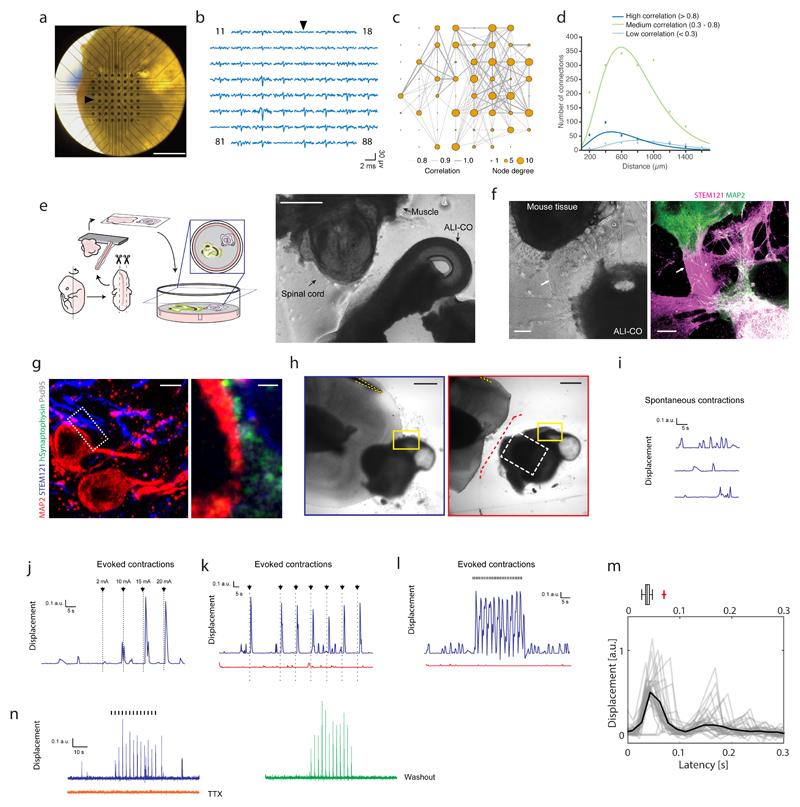
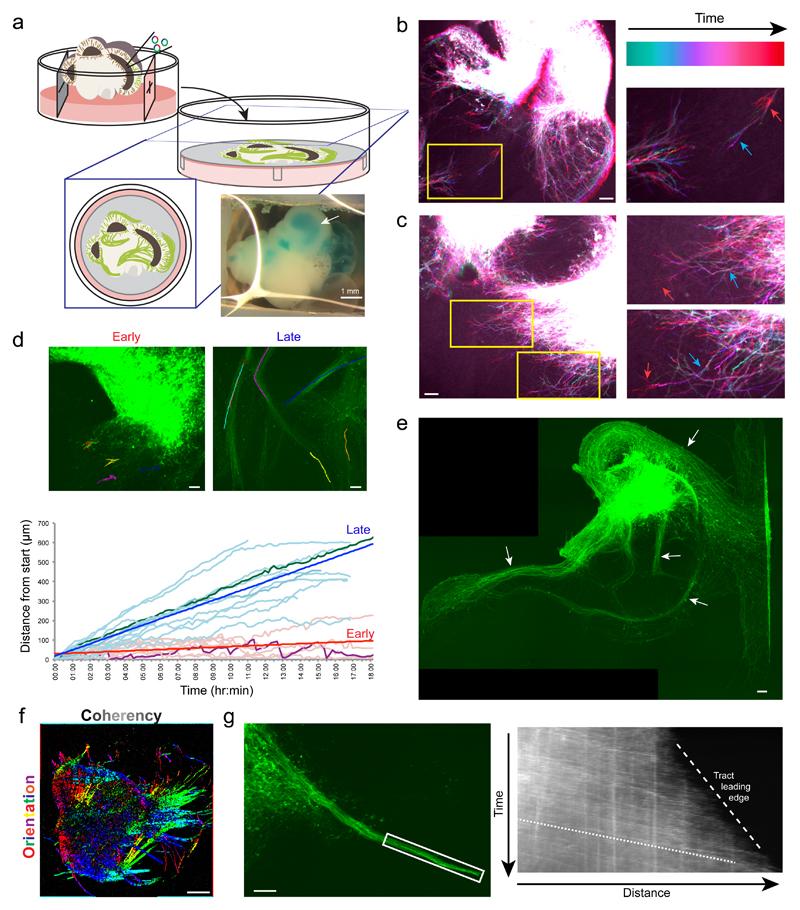
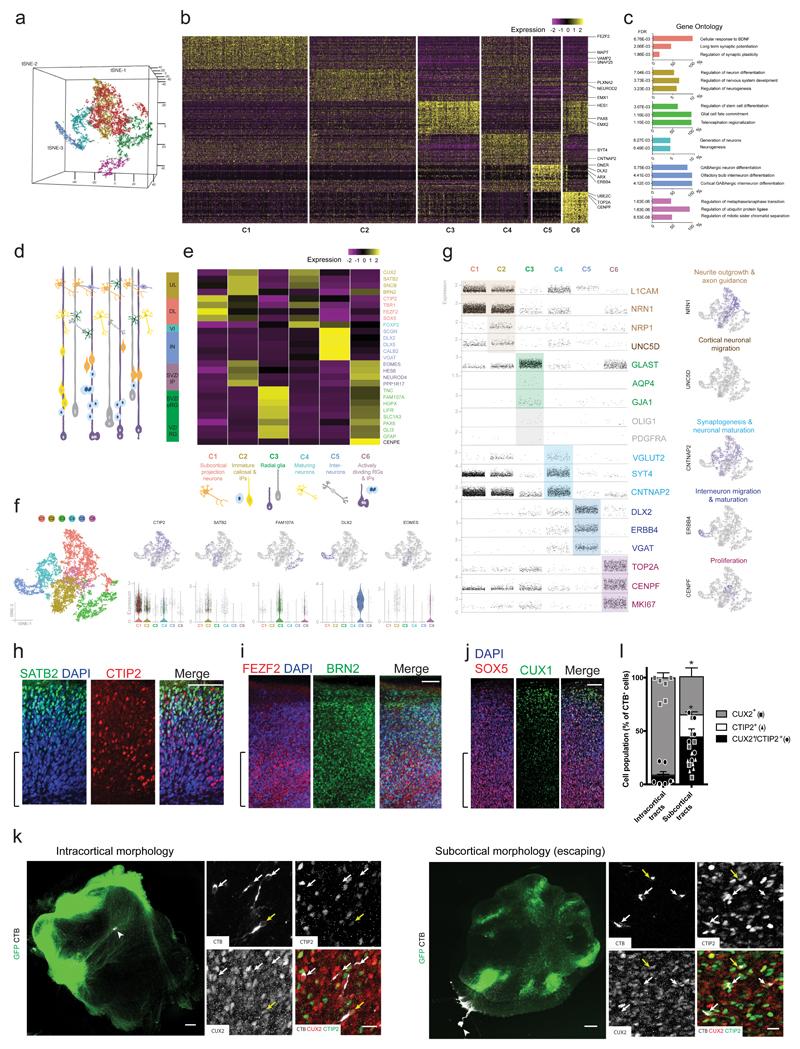
Neural organoids have the potential to improve our understanding of human brain development and neurological disorders. However, it remains to be seen whether these tissues can model circuit formation with functional neuronal output. Here we have adapted air-liquid interface culture to cerebral organoids, leading to improved neuronal survival and axon outgrowth. The resulting thick axon tracts display various morphologies, including long-range projection within and away from the organoid, growth-cone turning, and decussation. Single-cell RNA sequencing reveals various cortical neuronal identities, and retrograde tracing demonstrates tract morphologies that match proper molecular identities. These cultures exhibit active neuronal networks, and subcortical projecting tracts can innervate mouse spinal cord explants and evoke contractions of adjacent muscle in a manner dependent on intact organoid-derived innervating tracts. Overall, these results reveal a remarkable self-organization of corticofugal and callosal tracts with a functional output, providing new opportunities to examine relevant aspects of human CNS development and disease.
神经类器官有潜力增进我们对人类大脑发育和神经紊乱的理解。然而,这些组织是否能模拟具有功能性神经元输出的回路形成,还有待观察。在这里,我们对大脑类器官进行了气液界面培养的改良,从而提高了神经元的存活率和轴突的生长。由此产生的厚轴突束显示出各种形态,包括在类器官内和远离类器官的长程投射、生长锥转向和交叉。单细胞 RNA 测序揭示了各种皮质神经元的特征,逆行示踪显示出与正确分子特征相匹配的束形态。这些培养物表现出活跃的神经元网络,并且皮质下投射束可以支配小鼠脊髓外植体,并以依赖于完整的类器官衍生支配束的方式引起相邻肌肉的收缩。总的来说,这些结果揭示了皮质传出和连合束的显著自组织,具有功能性输出,为研究人类中枢神经系统发育和疾病的相关方面提供了新的机会。



 Zotero 插件