
来自角膜缘的透明质酸是角膜淋巴管生成的关键调节因子。
Hyaluronan Derived From the Limbus is a Key Regulator of Corneal Lymphangiogenesis.
机构信息
College of Optometry, University of Houston, Houston, Texas, United States.
Universidade Federal de São Paulo, São Paulo, Brazil.
出版信息
Invest Ophthalmol Vis Sci. 2019 Mar 1;60(4):1050-1062. doi: 10.1167/iovs.18-25920.
PURPOSE
We recently reported that the glycosaminoglycan hyaluronan (HA), which promotes inflammatory angiogenesis in other vascular beds, is an abundant component of the limbal extracellular matrix. Consequently, we have explored the possibility that HA contributes to lymphangiogenesis in the inflamed cornea.
METHODS
To study the role of HA on lymphangiogenesis, we used mice lacking the hyaluronan synthases and injury models that induce lymphangiogenesis.
RESULTS
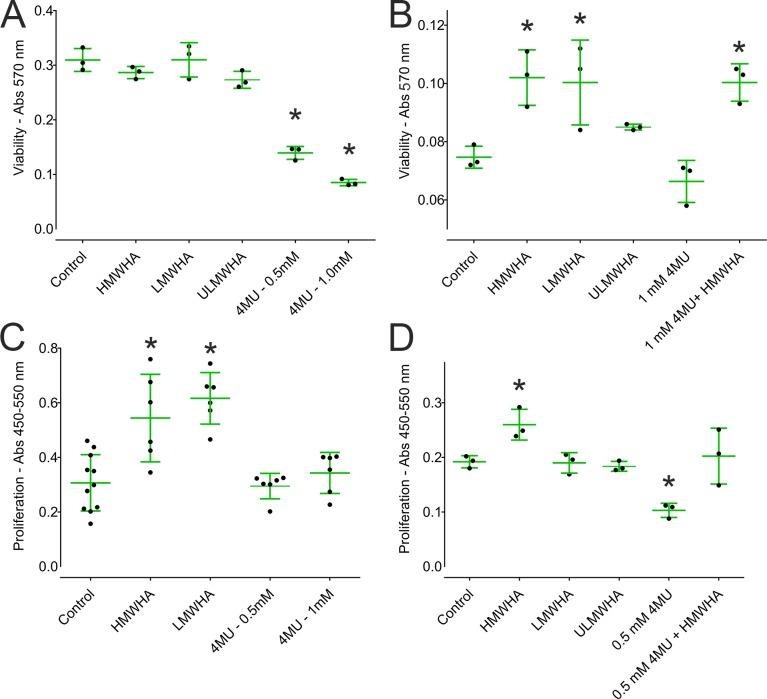
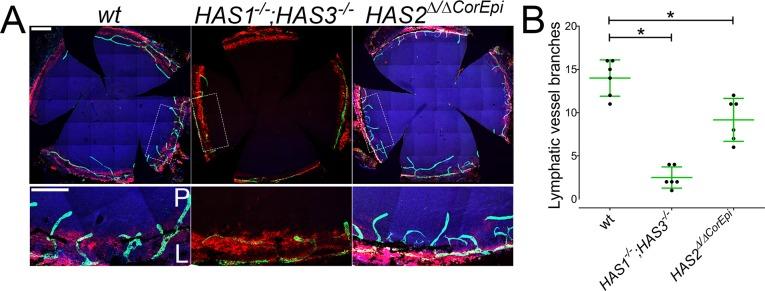
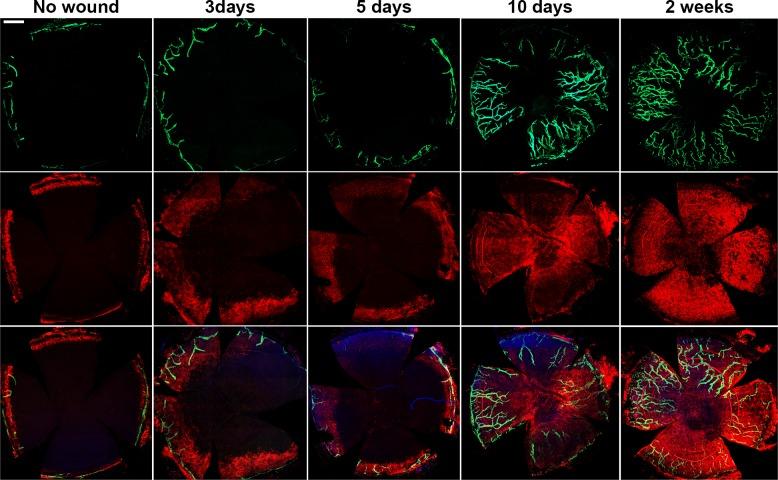
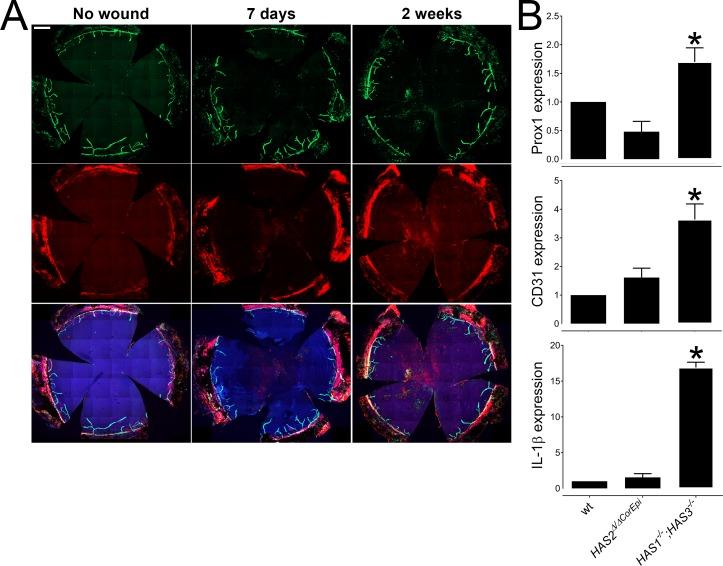
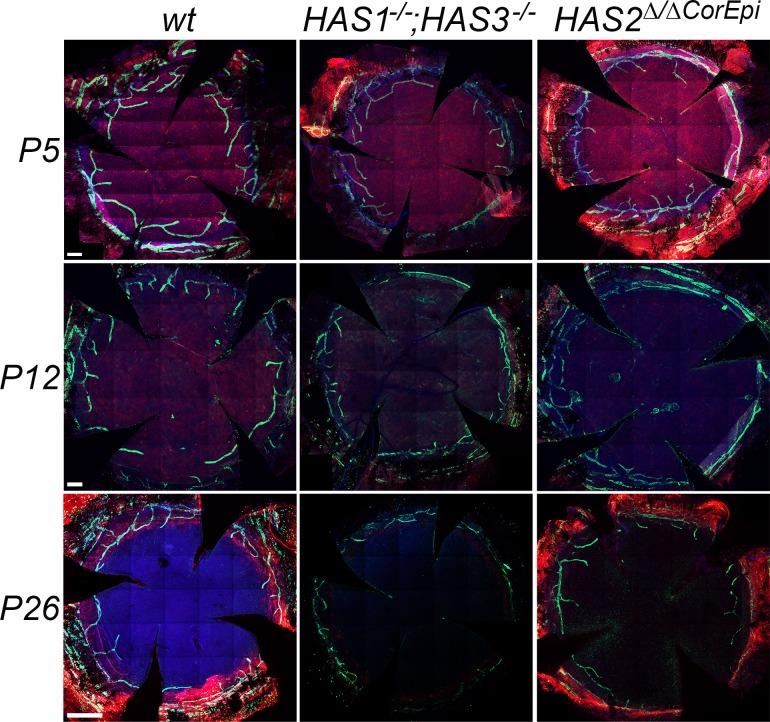
Here we report that HA regulates corneal lymphangiogenesis, both during post-natal development and in response to adult corneal injury. Furthermore, we show that injury to the cornea by alkali burn upregulates both HA production and lymphangiogenesis and that these processes are ablated in HA synthase 2 deficient mice.
CONCLUSION
These findings raise the possibility that therapeutic blockade of HA-mediated lymphangiogenesis might prevent the corneal scarring and rejection that frequently results from corneal transplantation.
目的
我们最近报道称,糖胺聚糖透明质酸(HA)在其他血管床中促进炎症性血管生成,是角膜缘细胞外基质的丰富成分。因此,我们探讨了 HA 是否有助于炎症角膜中的淋巴管生成。
方法
为了研究 HA 对淋巴管生成的作用,我们使用缺乏透明质酸合成酶的小鼠和诱导淋巴管生成的损伤模型。
结果
在这里,我们报告说,HA 调节角膜淋巴管生成,无论是在出生后发育期间还是对成年角膜损伤的反应中。此外,我们表明,通过碱烧伤对角膜的损伤上调了 HA 的产生和淋巴管生成,并且这些过程在 HA 合成酶 2 缺陷小鼠中被消除。
结论
这些发现提出了一种可能性,即治疗性阻断 HA 介导的淋巴管生成可能防止经常由角膜移植引起的角膜瘢痕和排斥反应。




 Zotero 插件