
葫芦素 B 通过调节自噬和氧化应激发挥其在酵母中的抗衰老作用。
Cucurbitacin B Exerts Antiaging Effects in Yeast by Regulating Autophagy and Oxidative Stress.
机构信息
College of Pharmaceutical Sciences, Zhejiang University, 866 Yu Hang Tang Road, Hangzhou, China.
Departments of Integrated Biosciences, Graduate School of Frontier Sciences, University of Tokyo, 5-1-5 Kashiwanoha, Kashiwa, Chiba 277-8562, Japan.
出版信息
Oxid Med Cell Longev. 2019 Jun 2;2019:4517091. doi: 10.1155/2019/4517091. eCollection 2019.
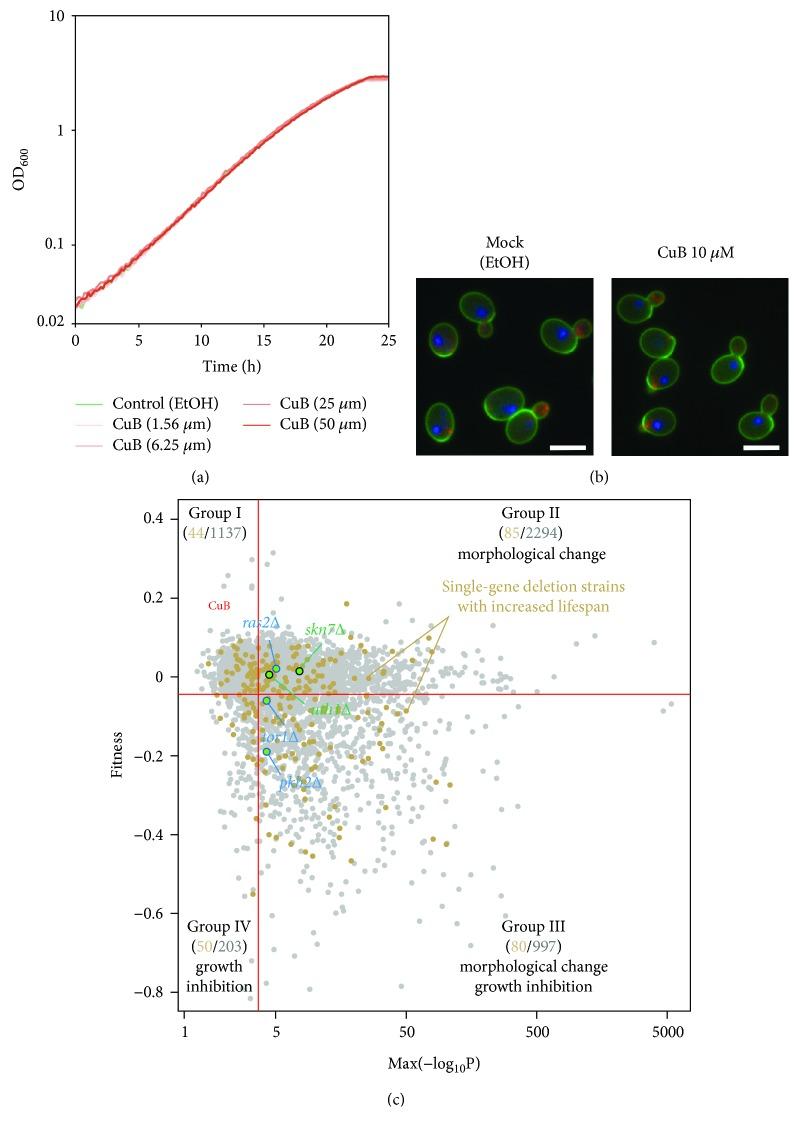
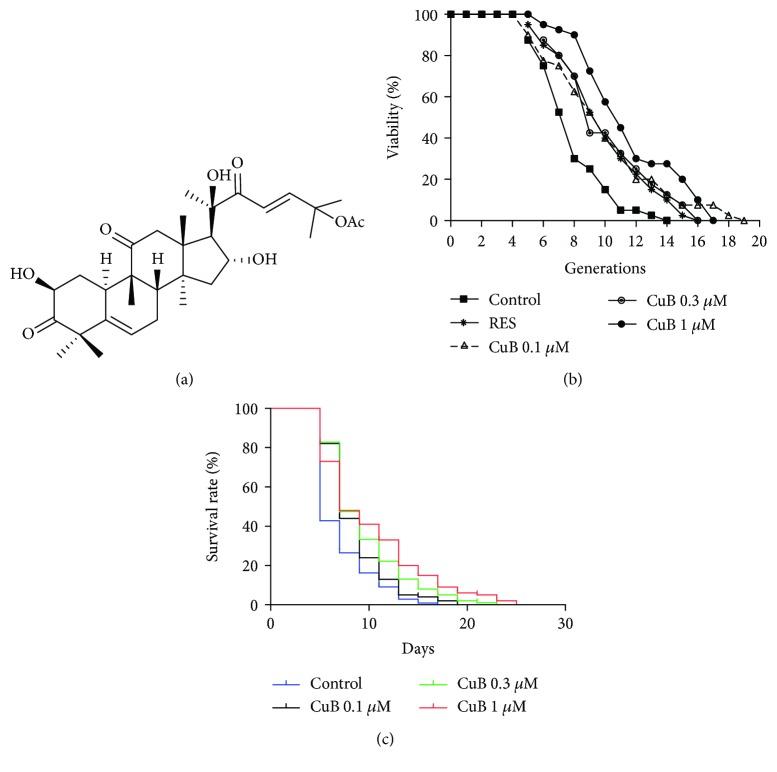
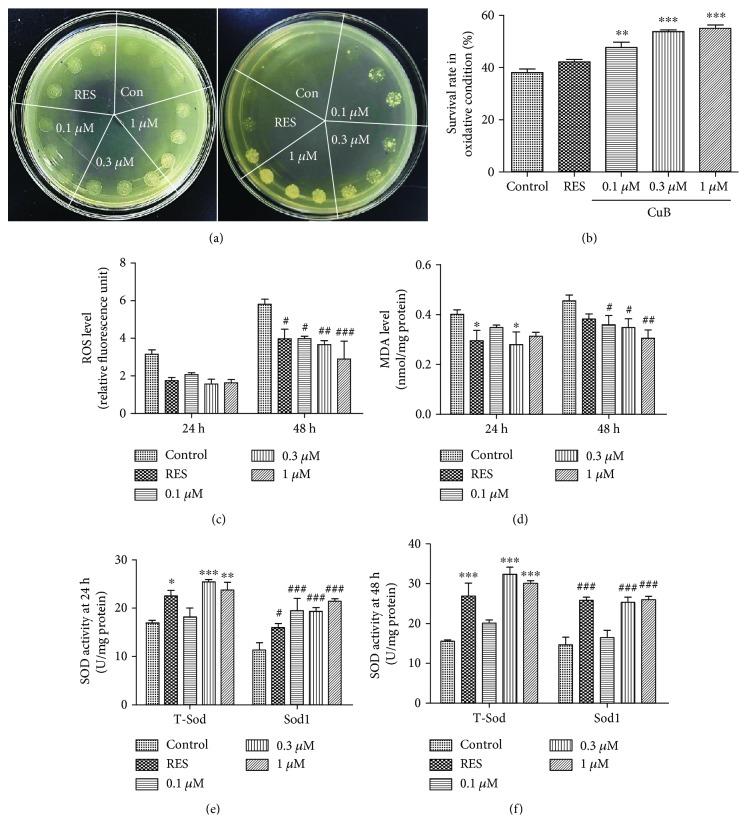
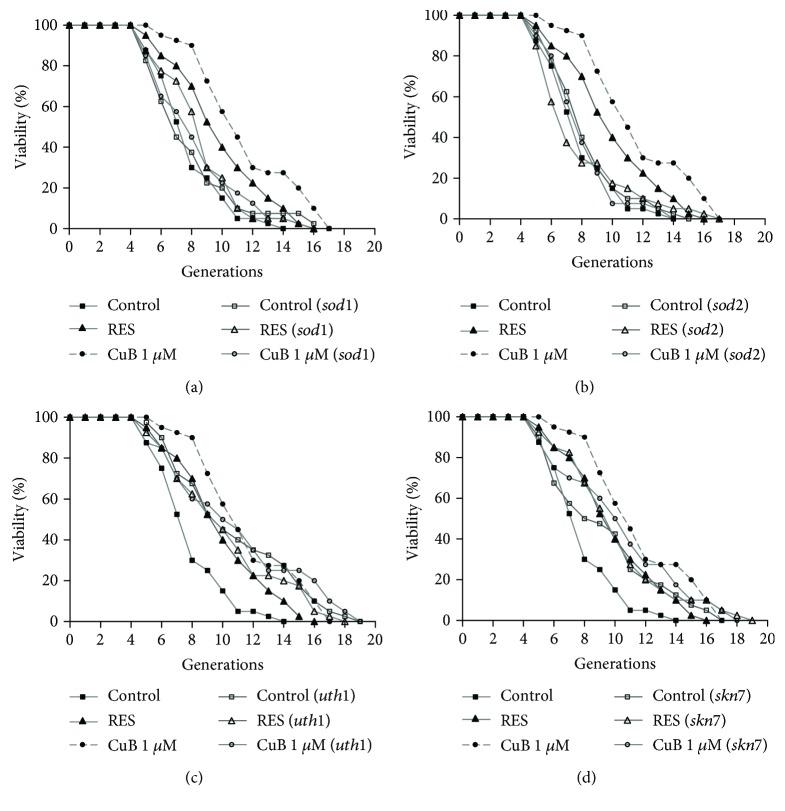
The budding yeast has been used as a model organism for the basic mechanism of aging, which provides useful assay systems for measuring both replicative and chronological lifespans. In the course of our screening program for substances that extend replicative lifespan, cucurbitacin B (CuB) was found as a hit compound from a compound library, which contains cerebrosides, phenols, sesquiterpenoid, triterpenoids, and sterols isolated from natural products by our research group. Importantly, it prolonged not only the replicative lifespan but also the chronological lifespan in yeast. CuB increased gene expression, suggesting that CuB induces autophagy. Indeed, the GFP signal generated from the cleavage of GFP-Atg8, which is a signature of autophagy, was increased upon CuB treatment. On the other hand, CuB failed to increase the chronological lifespans when either or , essential autophagy genes, was deleted, indicating that the lifespan extension by CuB depends on autophagy induction. Furthermore, CuB significantly increased superoxide dismutase (Sod) activity and the survival rate of yeast under oxidative stress, while it decreased the amount of reactive oxygen species (ROS) and malondialdehyde (MDA) production, indicating that CuB has activity to antagonize oxidative stress. Additionally, CuB did not affect replicative lifespans of , , , and mutants with the K6001 background, indicating that aging-related genes including , , , and participate in the antiaging effect of CuB. These results suggest that CuB exerts antiaging activity by regulating autophagy, ROS, antioxidative ability, and aging-related genes. Finally, we discuss the possible intracellular targets of CuB based on the phenotypic comparison between the CuB and global gene deletion databases.
芽殖酵母已被用作衰老基本机制的模式生物,为测量复制寿命和时序寿命提供了有用的测定系统。在我们筛选延长复制寿命的物质的过程中,发现葫芦素 B (CuB) 是从我们研究小组从天然产物中分离出的神经酰胺、酚类、倍半萜、三萜和甾醇的化合物库中筛选出来的有效化合物。重要的是,它不仅延长了酵母的复制寿命,还延长了时序寿命。CuB 增加了基因表达,表明 CuB 诱导自噬。事实上,CuB 处理后,来自 GFP-Atg8 切割的 GFP 信号增加,这是自噬的特征。另一方面,当 或 ,即必需的自噬基因被删除时,CuB 未能增加时序寿命,表明 CuB 延长寿命依赖于自噬诱导。此外,CuB 可显著提高超氧化物歧化酶 (Sod) 活性和酵母在氧化应激下的存活率,同时降低活性氧 (ROS) 和丙二醛 (MDA) 的产生量,表明 CuB 具有拮抗氧化应激的活性。此外,CuB 不影响 K6001 背景下的 、 、 、和 突变体的复制寿命,表明包括 、 、 、和 在内的与衰老相关的基因参与了 CuB 的抗衰老作用。这些结果表明,CuB 通过调节自噬、ROS、抗氧化能力和与衰老相关的基因来发挥抗衰老活性。最后,我们根据 CuB 与全局基因缺失数据库之间的表型比较,讨论了 CuB 可能的细胞内靶标。

 Zotero 插件