
POT1 和损伤反应功能障碍导致心脏血管肉瘤中 VEGFA 通路获得体激活突变。
POT1 and Damage Response Malfunction Trigger Acquisition of Somatic Activating Mutations in the VEGF Pathway in Cardiac Angiosarcomas.
机构信息
Human Genetics Group Spanish National Cancer Research Center (CNIO) Madrid Spain.
Center for Biomedical Network Research on Rare Diseases (CIBERER) Madrid Spain.
出版信息
J Am Heart Assoc. 2019 Sep 17;8(18):e012875. doi: 10.1161/JAHA.119.012875. Epub 2019 Sep 12.
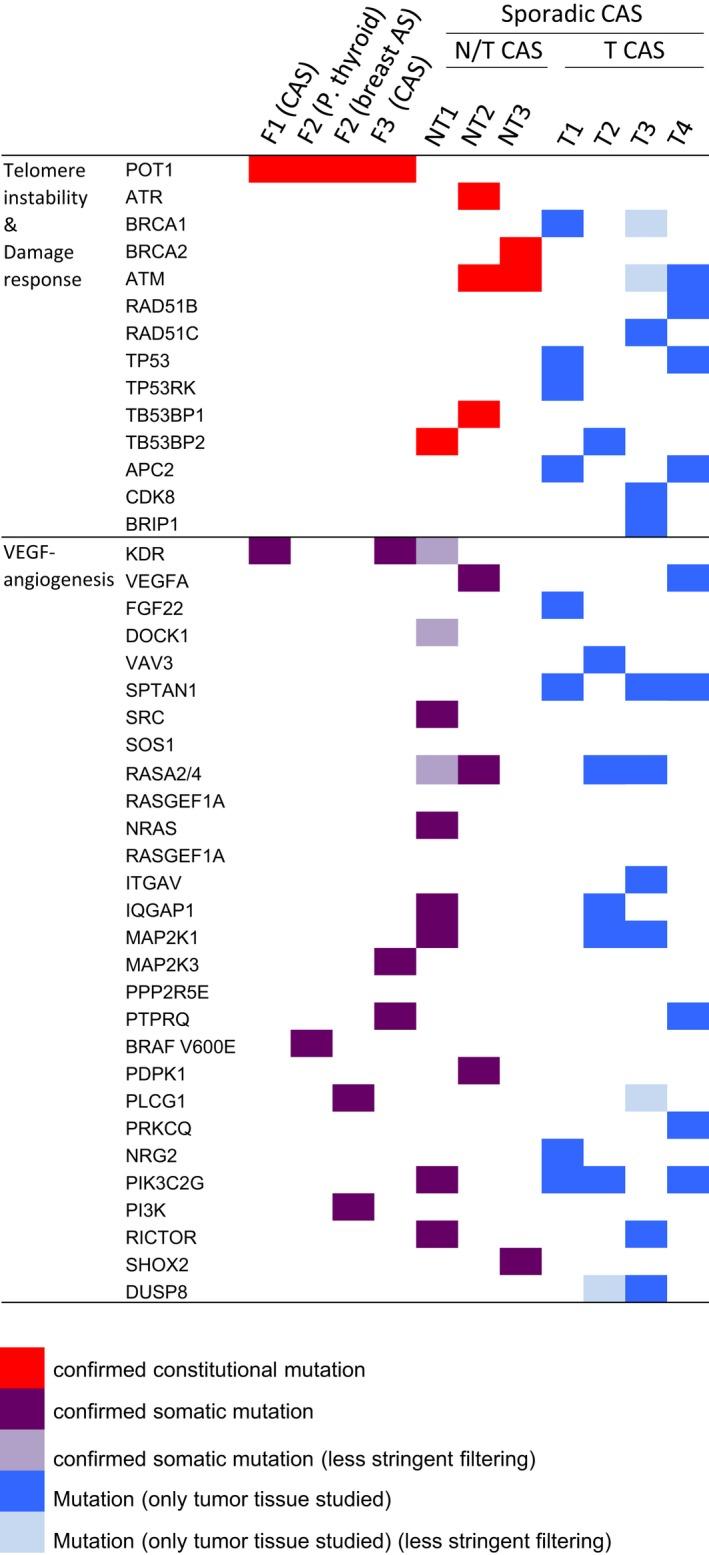
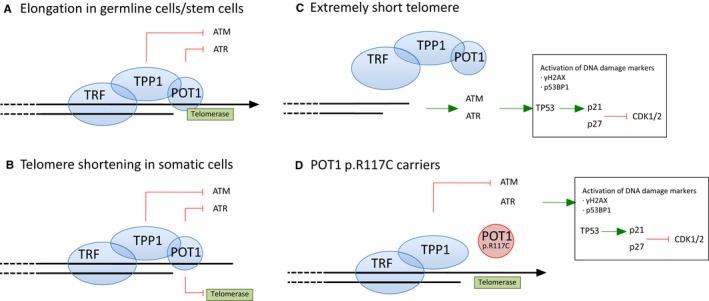
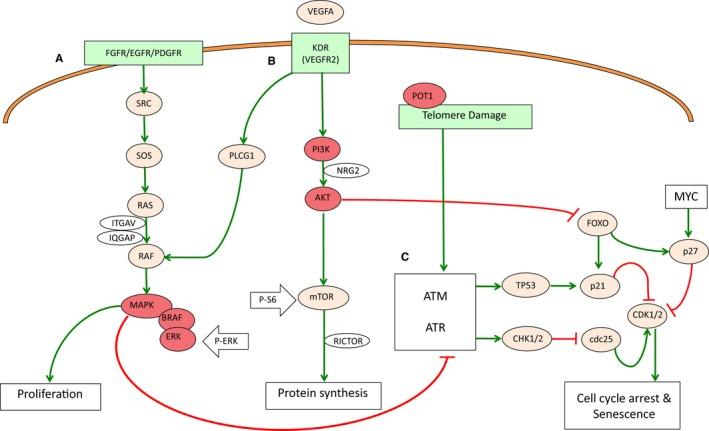
Background Mutations in the gene explain abnormally long telomeres and multiple tumors including cardiac angiosarcomas (CAS). However, the link between long telomeres and tumorigenesis is poorly understood. Methods and Results Here, we have studied the somatic landscape of 3 different angiosarcoma patients with mutations in the gene to further investigate this tumorigenesis process. In addition, the genetic landscape of 7 CAS patients without mutations in the gene has been studied. Patients with CAS and nonfunctional did not repress ATR (ataxia telangiectasia RAD3-related)-dependent DNA damage signaling and showed a constitutive increase of cell cycle arrest and somatic activating mutations in the VEGF (vascular endothelial growth factor)/angiogenesis pathway ( gene). The same observation was made in mutation carriers with tumors different from CAS and also in CAS patients without mutations in the gene but with mutations in other genes involved in DNA damage signaling. Conclusions Inhibition of POT1 function and damage-response malfunction activated DNA damage signaling and increased cell cycle arrest as well as interfered with apoptosis, which would permit acquisition of somatic mutations in the VEGF/angiogenesis pathway that drives tumor formation. Therapies based on the inhibition of damage signaling in asymptomatic carriers may diminish defects on cell cycle arrest and thus prevent the apoptosis deregulation that leads to the acquisition of driver mutations.
背景
基因中的突变解释了异常长的端粒和多种肿瘤,包括心脏血管肉瘤(CAS)。然而,长端粒与肿瘤发生之间的联系还知之甚少。
方法和结果
在这里,我们研究了 3 名患有基因突变的不同血管肉瘤患者的体细胞图谱,以进一步研究这种肿瘤发生过程。此外,还研究了 7 名没有基因突变的 CAS 患者的遗传景观。没有功能的 CAS 患者和基因患者不会抑制 ATR(共济失调毛细血管扩张症 RAD3 相关)依赖性 DNA 损伤信号,并表现出细胞周期停滞和血管内皮生长因子(VEGF)/血管生成途径中的体细胞激活突变的组成性增加(基因)。在具有与 CAS 不同的肿瘤的基因突变携带者中以及在没有基因但具有涉及 DNA 损伤信号的其他基因突变的 CAS 患者中也观察到了相同的观察结果。
结论
POT1 功能抑制和损伤反应功能障碍激活了 DNA 损伤信号,增加了细胞周期停滞,并干扰了细胞凋亡,从而允许获得驱动肿瘤形成的 VEGF/血管生成途径中的体细胞突变。基于抑制无症状携带者的损伤信号的治疗方法可能会减少细胞周期停滞缺陷,从而防止导致获得驱动突变的细胞凋亡失调。

 Zotero 插件