
POT1在人类癌症中的作用。
Role of POT1 in Human Cancer.
作者信息
Wu Yangxiu, Poulos Rebecca C, Reddel Roger R
机构信息
Cancer Research Unit, Children's Medical Research Institute, Faculty of Medicine and Health, The University of Sydney, Westmead NSW 2145, Australia.
ProCan® Cancer Data Science Group, Children's Medical Research Institute, Faculty of Medicine and Health, The University of Sydney, Westmead NSW 2145, Australia.
出版信息
Cancers (Basel). 2020 Sep 24;12(10):2739. doi: 10.3390/cancers12102739.
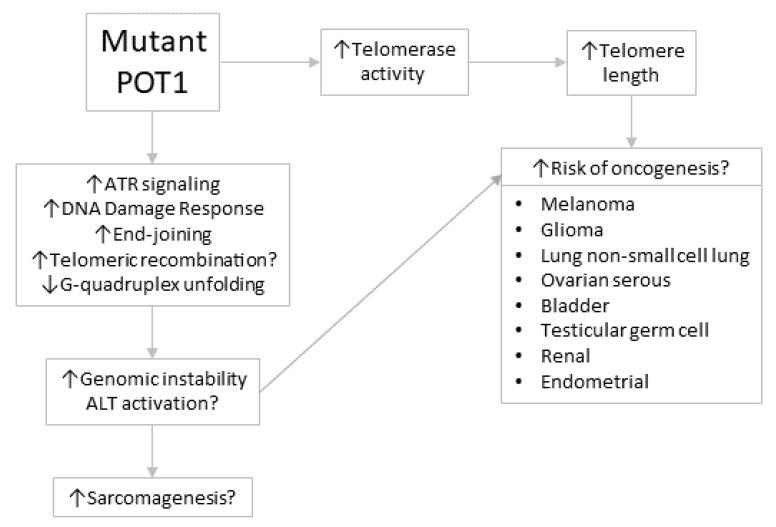
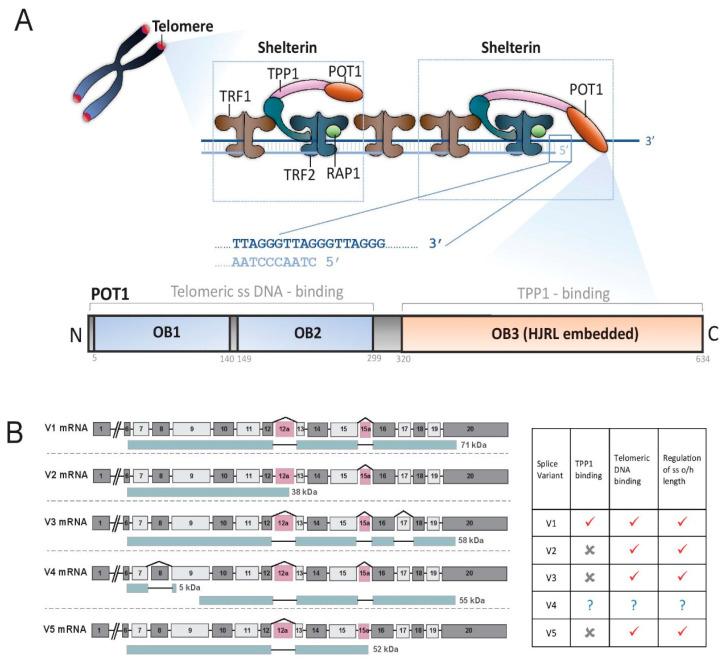
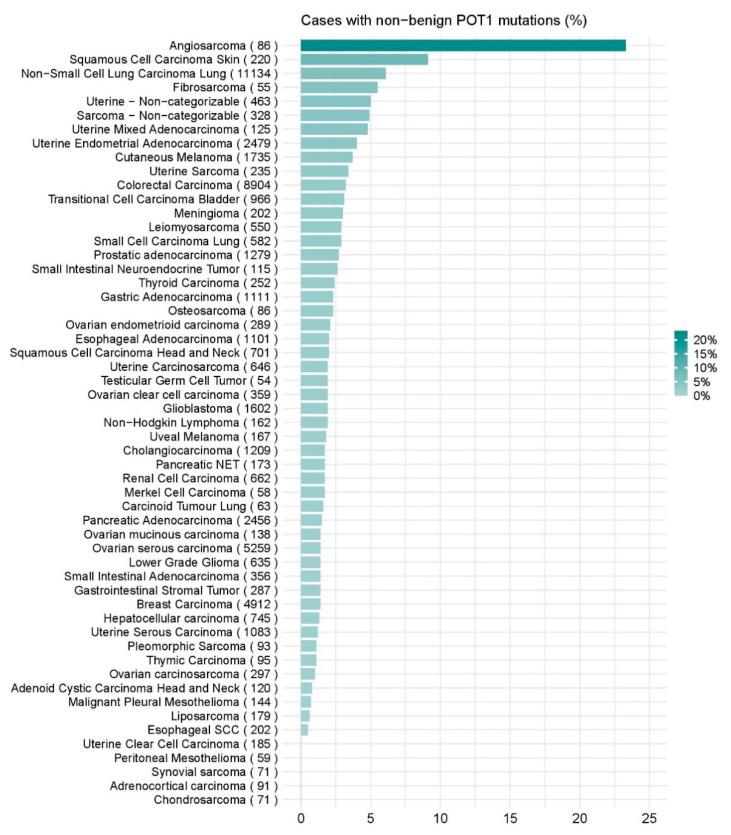
Telomere abnormalities facilitate cancer development by contributing to genomic instability and cellular immortalization. The Protection of Telomeres 1 (POT1) protein is an essential subunit of the shelterin telomere binding complex. It directly binds to single-stranded telomeric DNA, protecting chromosomal ends from an inappropriate DNA damage response, and plays a role in telomere length regulation. Alterations of have been detected in a range of cancers. Here, we review the biological functions of POT1, the prevalence of germline and somatic mutations across cancer predisposition syndromes and tumor types, and the dysregulation of POT1 expression in cancers. We propose a framework for understanding how POT1 abnormalities may contribute to oncogenesis in different cell types. Finally, we summarize the clinical implications of POT1 alterations in the germline and in cancer, and possible approaches for the development of targeted cancer therapies.
端粒异常通过导致基因组不稳定和细胞永生化促进癌症发展。端粒保护蛋白1(POT1)是端粒结合复合体shelterin的一个重要亚基。它直接结合单链端粒DNA,保护染色体末端免受不适当的DNA损伤反应,并在端粒长度调节中发挥作用。在一系列癌症中已检测到POT1的改变。在这里,我们综述了POT1的生物学功能、跨癌症易感综合征和肿瘤类型的种系和体细胞突变的发生率,以及癌症中POT1表达的失调。我们提出了一个框架,以理解POT1异常如何可能在不同细胞类型中促进肿瘤发生。最后,我们总结了种系和癌症中POT1改变的临床意义,以及开发靶向癌症治疗的可能方法。
 Zotero 插件