
化疗引起的卵巢损伤及目前的防护措施。
Ovarian damage from chemotherapy and current approaches to its protection.
机构信息
Biomedical Sciences, University of Edinburgh, Edinburgh UK.
Department of Biomedicine and Prevention, University of Rome Tor Vergata, Rome, Italy.
出版信息
Hum Reprod Update. 2019 Nov 5;25(6):673-693. doi: 10.1093/humupd/dmz027.
BACKGROUND
Anti-cancer therapy is often a cause of premature ovarian insufficiency and infertility since the ovarian follicle reserve is extremely sensitive to the effects of chemotherapy and radiotherapy. While oocyte, embryo and ovarian cortex cryopreservation can help some women with cancer-induced infertility achieve pregnancy, the development of effective methods to protect ovarian function during chemotherapy would be a significant advantage.
OBJECTIVE AND RATIONALE
This paper critically discusses the different damaging effects of the most common chemotherapeutic compounds on the ovary, in particular, the ovarian follicles and the molecular pathways that lead to that damage. The mechanisms through which fertility-protective agents might prevent chemotherapy drug-induced follicle loss are then reviewed.
SEARCH METHODS
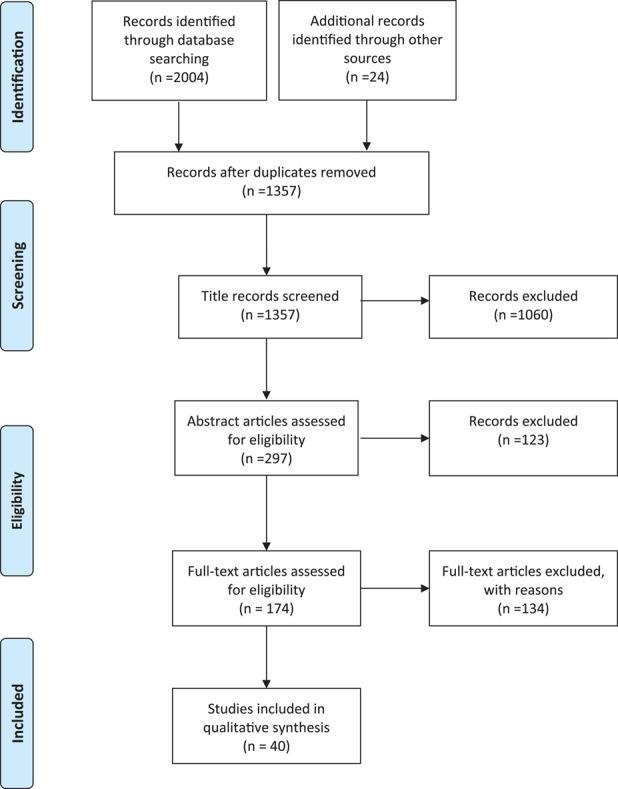
Articles published in English were searched on PubMed up to March 2019 using the following terms: ovary, fertility preservation, chemotherapy, follicle death, adjuvant therapy, cyclophosphamide, cisplatin, doxorubicin. Inclusion and exclusion criteria were applied to the analysis of the protective agents.
OUTCOMES
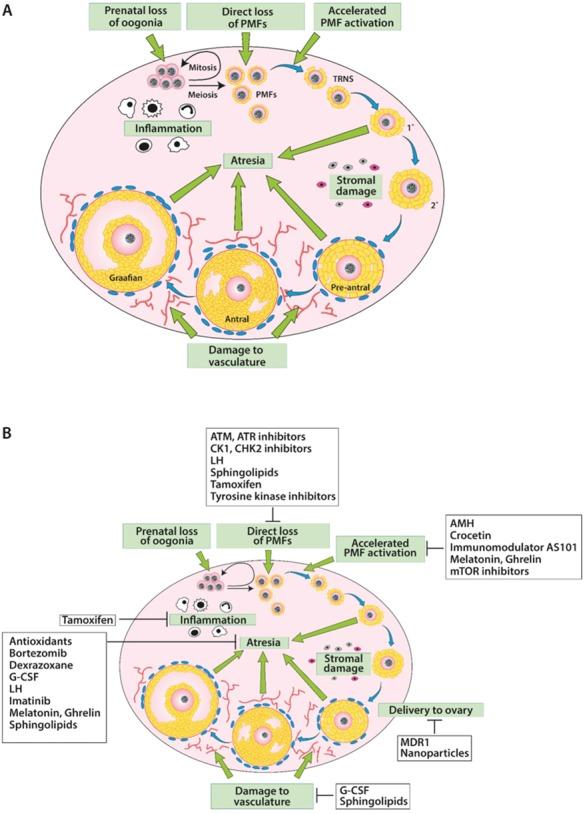
Recent studies reveal how chemotherapeutic drugs can affect the different cellular components of the ovary, causing rapid depletion of the ovarian follicular reserve. The three most commonly used drugs, cyclophosphamide, cisplatin and doxorubicin, cause premature ovarian insufficiency by inducing death and/or accelerated activation of primordial follicles and increased atresia of growing follicles. They also cause an increase in damage to blood vessels and the stromal compartment and increment inflammation. In the past 20 years, many compounds have been investigated as potential protective agents to counteract these adverse effects. The interactions of recently described fertility-protective agents with these damage pathways are discussed.
WIDER IMPLICATIONS
Understanding the mechanisms underlying the action of chemotherapy compounds on the various components of the ovary is essential for the development of efficient and targeted pharmacological therapies that could protect and prolong female fertility. While there are increasing preclinical investigations of potential fertility preserving adjuvants, there remains a lack of approaches that are being developed and tested clinically.
背景
抗癌治疗常常导致卵巢早衰和不孕,因为卵巢卵泡储备对化疗和放疗的影响极其敏感。虽然卵母细胞、胚胎和卵巢皮质冷冻保存可以帮助一些癌症引起不孕的女性实现妊娠,但开发保护化疗期间卵巢功能的有效方法将是一个重大优势。
目的和理由
本文批判性地讨论了最常见的化疗化合物对卵巢的不同破坏作用,特别是对卵巢卵泡和导致这种破坏的分子途径。然后回顾了生育保护剂防止化疗药物诱导卵泡丢失的可能机制。
搜索方法
在 PubMed 上搜索截至 2019 年 3 月以英文发表的文章,使用以下术语:卵巢、生育保护、化疗、卵泡死亡、辅助治疗、环磷酰胺、顺铂、多柔比星。对保护剂的分析应用了纳入和排除标准。
结果
最近的研究揭示了化疗药物如何影响卵巢的不同细胞成分,导致卵巢卵泡储备迅速耗尽。三种最常用的药物,环磷酰胺、顺铂和多柔比星,通过诱导原始卵泡的死亡和/或加速激活以及生长卵泡的闭锁增加,导致卵巢早衰。它们还导致血管和基质隔室的损伤增加和炎症增加。在过去的 20 年里,已经研究了许多化合物作为潜在的保护剂来对抗这些不利影响。讨论了最近描述的生育保护剂与这些损伤途径的相互作用。
更广泛的影响
了解化疗化合物对卵巢各组成部分作用的机制对于开发有效的靶向药理疗法至关重要,这些疗法可以保护和延长女性的生育能力。虽然对潜在的生育保护辅助剂的临床前研究越来越多,但仍缺乏正在开发和测试的方法。
 Zotero 插件