
低温诱导O157:H7形成活的非可培养状态的转录组学分析
Transcriptomic Analysis of Viable but Non-Culturable O157:H7 Formation Induced by Low Temperature.
作者信息
Zhong Junliang, Zhao Xihong
机构信息
Guangdong Province Key Laboratory for Green Processing of Natural Products and Product Safety, School of Food Science and Engineering, South China University of Technology, Guangzhou 510640, China.
Research Center for Environmental Ecology and Engineering, Key Laboratory for Green Chemical Process of Ministry of Education, Key Laboratory for Hubei Novel Reactor & Green Chemical Technology, School of Environmental Ecology and Biological Engineering, Wuhan Institute of Technology, Wuhan 430205, China.
出版信息
Microorganisms. 2019 Nov 30;7(12):634. doi: 10.3390/microorganisms7120634.
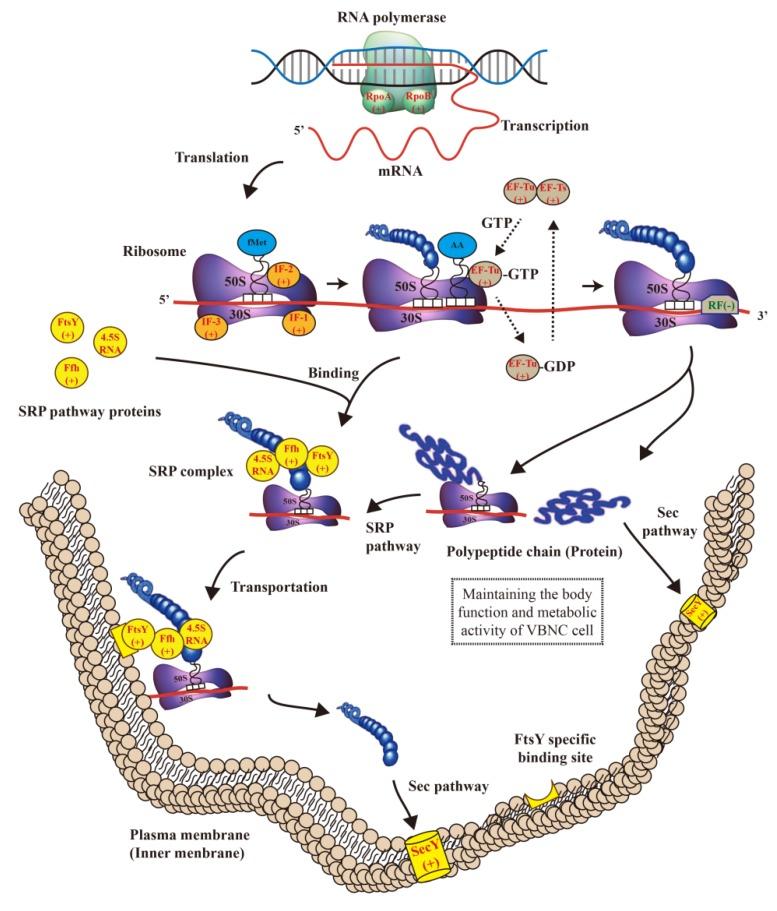
O157:H7 is one of the most common pathogenic bacteria that pose a threat to food safety. The aim of this study was to investigate the mechanisms of the formation of viable but non-culturable (VBNC) O157:H7 induced by low temperature (-20 °C) using RNA sequencing (RNA-Seq) transcriptomics analysis. The results of the present investigation revealed the presence of 2298 differentially expressed genes in VBNC cells, accounting for 46.03% of the total number of genes. Additionally, GO function and KEGG pathway enrichment analysis were performed to investigate the functional and related metabolic pathways of the differentially expressed genes. We found that the ion transport, protein synthesis, and protein transmembrane transport activities were significantly improved in the VBNC cells, indicating that O157:H7 cells synthesized a considerable amount of protein to maintain the levels of their functional metabolic processes and life activities in the VBNC state. In conclusion, we suggest that the increased synthesis of proteins such as SecY, FtsY, and Ffh might indicate that they are the key proteins involved in the improvement of the transmembrane transport activities in VBNC O157:H7 cells, maintaining their functional metabolism in the VBNC state and enhancing their survival ability under low temperatures.
O157:H7是对食品安全构成威胁的最常见病原菌之一。本研究旨在利用RNA测序(RNA-Seq)转录组学分析,探究低温(-20℃)诱导O157:H7形成活的非可培养(VBNC)状态的机制。本研究结果显示,VBNC细胞中存在2298个差异表达基因,占基因总数的46.03%。此外,进行了基因本体(GO)功能和京都基因与基因组百科全书(KEGG)通路富集分析,以研究差异表达基因的功能及相关代谢途径。我们发现,VBNC细胞中的离子转运、蛋白质合成和蛋白质跨膜转运活性显著提高,这表明O157:H7细胞合成了大量蛋白质,以维持其在VBNC状态下的功能代谢过程和生命活动水平。总之,我们认为SecY、FtsY和Ffh等蛋白质合成增加可能表明它们是参与提高VBNC状态的O157:H7细胞跨膜转运活性、维持其在VBNC状态下的功能代谢以及增强其在低温下生存能力的关键蛋白质。


 Zotero 插件