
DNA 甲基化年龄计算器显示与 1 型糖尿病的糖尿病神经病变有关。
DNA methylation age calculators reveal association with diabetic neuropathy in type 1 diabetes.
机构信息
Genetics and Genome Biology Program, The Hospital for Sick Children, Toronto, ON, Canada.
Department of Diabetes Complications and Metabolism, Beckman Research Institute of City of Hope, Duarte, CA, USA.
出版信息
Clin Epigenetics. 2020 Apr 5;12(1):52. doi: 10.1186/s13148-020-00840-6.
BACKGROUND
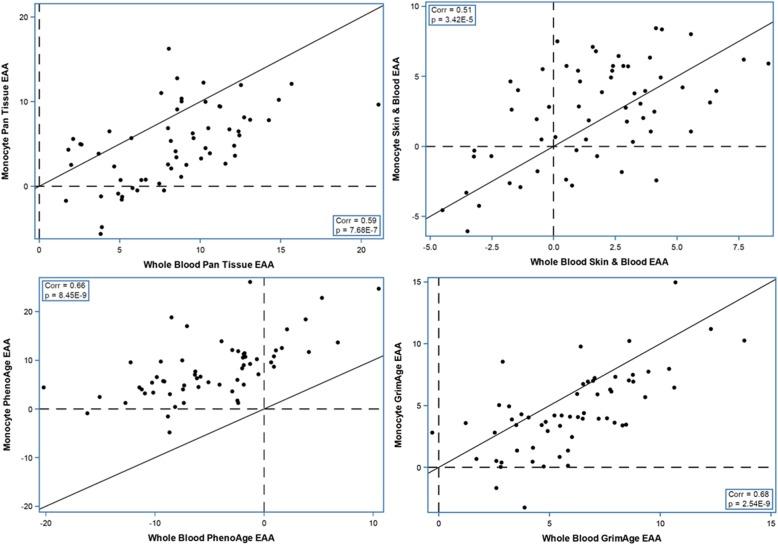
Many CpGs become hyper or hypo-methylated with age. Multiple methods have been developed by Horvath et al. to estimate DNA methylation (DNAm) age including Pan-tissue, Skin & Blood, PhenoAge, and GrimAge. Pan-tissue and Skin & Blood try to estimate chronological age in the normal population whereas PhenoAge and GrimAge use surrogate markers associated with mortality to estimate biological age and its departure from chronological age. Here, we applied Horvath's four methods to calculate and compare DNAm age in 499 subjects with type 1 diabetes (T1D) from the Diabetes Control and Complications Trial/Epidemiology of Diabetes Interventions and Complications (DCCT/EDIC) study using DNAm data measured by Illumina EPIC array in the whole blood. Association of the four DNAm ages with development of diabetic complications including cardiovascular diseases (CVD), nephropathy, retinopathy, and neuropathy, and their risk factors were investigated.
RESULTS
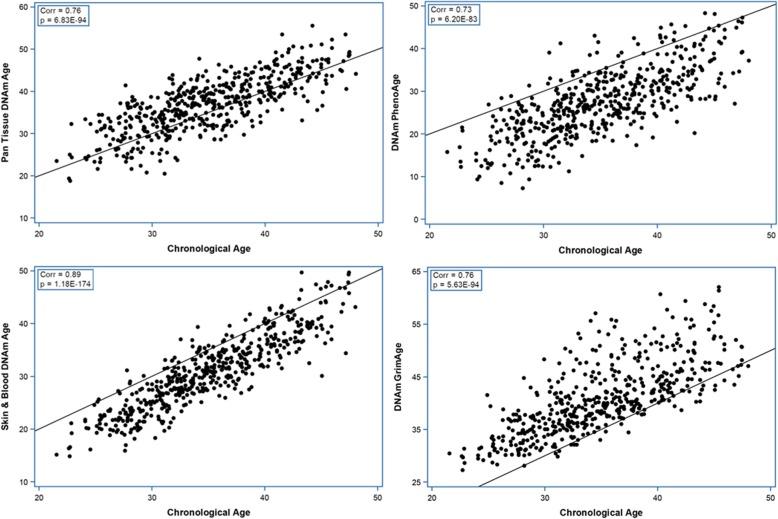
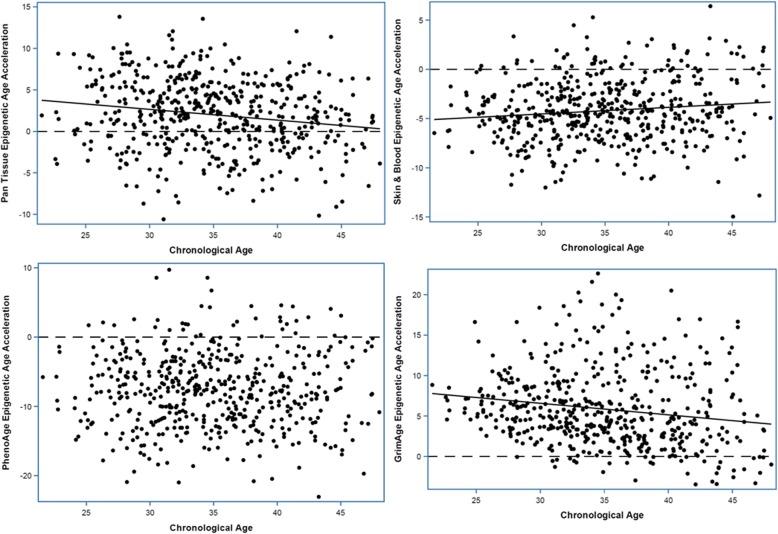
Pan-tissue and GrimAge were higher whereas Skin & Blood and PhenoAge were lower than chronological age (p < 0.0001). DNAm age was not associated with the risk of CVD or retinopathy over 18-20 years after DNAm measurement. However, higher PhenoAge (β = 0.023, p = 0.007) and GrimAge (β = 0.029, p = 0.002) were associated with higher albumin excretion rate (AER), an indicator of diabetic renal disease, measured over time. GrimAge was also associated with development of both diabetic peripheral neuropathy (OR = 1.07, p = 9.24E-3) and cardiovascular autonomic neuropathy (OR = 1.06, p = 0.011). Both HbA1c (β = 0.38, p = 0.026) and T1D duration (β = 0.01, p = 0.043) were associated with higher PhenoAge. Employment (β = - 1.99, p = 0.045) and leisure time (β = - 0.81, p = 0.022) physical activity were associated with lower Pan-tissue and Skin & Blood, respectively. BMI (β = 0.09, p = 0.048) and current smoking (β = 7.13, p = 9.03E-50) were positively associated with Skin & Blood and GrimAge, respectively. Blood pressure, lipid levels, pulse rate, and alcohol consumption were not associated with DNAm age regardless of the method used.
CONCLUSIONS
Various methods of measuring DNAm age are sub-optimal in detecting people at higher risk of developing diabetic complications although some work better than the others.
背景
随着年龄的增长,许多 CpG 会发生超甲基化或低甲基化。Horvath 等人开发了多种方法来估计 DNA 甲基化(DNAm)年龄,包括 Pan-tissue、Skin & Blood、PhenoAge 和 GrimAge。Pan-tissue 和 Skin & Blood 试图在正常人群中估计实际年龄,而 PhenoAge 和 GrimAge 使用与死亡率相关的替代标志物来估计生物年龄及其与实际年龄的差异。在这里,我们应用 Horvath 的四种方法来计算和比较 499 例 1 型糖尿病(T1D)患者的 DNAm 年龄,这些患者来自糖尿病控制和并发症试验/糖尿病干预和并发症的流行病学(DCCT/EDIC)研究,使用 Illumina EPIC 阵列在全血中测量的 DNAm 数据。研究了四种 DNAm 年龄与心血管疾病(CVD)、肾病、视网膜病变和神经病变等糖尿病并发症的发展及其危险因素的关系。
结果
Pan-tissue 和 GrimAge 较高,而 Skin & Blood 和 PhenoAge 较低(p < 0.0001)。DNAm 年龄与 DNAm 测量后 18-20 年内 CVD 或视网膜病变的风险无关。然而,较高的 PhenoAge(β=0.023,p=0.007)和 GrimAge(β=0.029,p=0.002)与随时间测量的糖尿病肾病指标白蛋白排泄率(AER)升高有关。GrimAge 也与糖尿病周围神经病变(OR=1.07,p=9.24E-3)和心血管自主神经病变(OR=1.06,p=0.011)的发展有关。HbA1c(β=0.38,p=0.026)和 T1D 持续时间(β=0.01,p=0.043)与较高的 PhenoAge 有关。就业(β=-1.99,p=0.045)和休闲时间(β=-0.81,p=0.022)体育活动与 Pan-tissue 和 Skin & Blood 呈负相关。BMI(β=0.09,p=0.048)和当前吸烟(β=7.13,p=9.03E-50)与 Skin & Blood 和 GrimAge 呈正相关。血压、血脂水平、脉搏率和饮酒量与使用的方法无关,与 DNAm 年龄无关。
结论
尽管有些方法比其他方法更好,但测量 DNAm 年龄的各种方法在检测发生糖尿病并发症风险较高的人群方面并不理想。
 Zotero 插件