
自闭症患者之间的信息传递非常有效。
Autistic peer-to-peer information transfer is highly effective.
作者信息
Crompton Catherine J, Ropar Danielle, Evans-Williams Claire Vm, Flynn Emma G, Fletcher-Watson Sue
机构信息
The University of Edinburgh, UK.
The University of Nottingham, UK.
出版信息
Autism. 2020 Oct;24(7):1704-1712. doi: 10.1177/1362361320919286. Epub 2020 May 20.
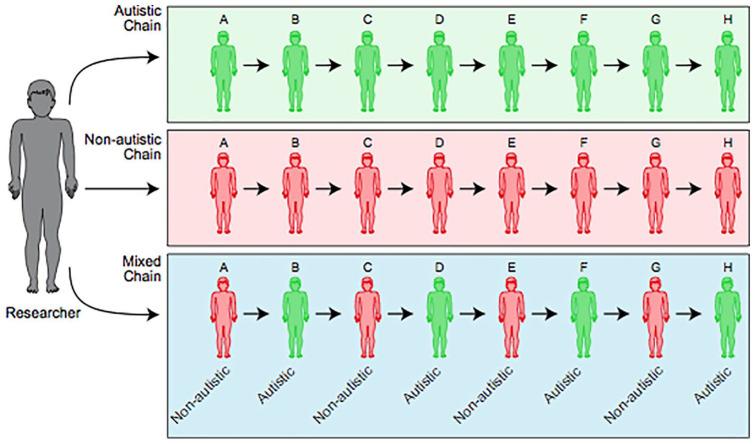
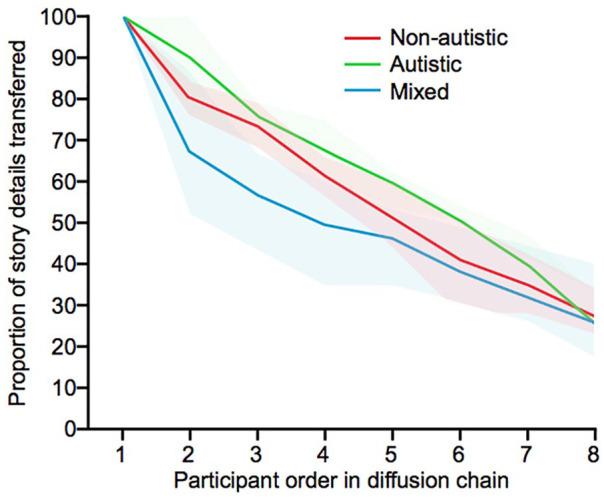
Sharing information with other people relies on the ability to communicate well. Autism is defined clinically by deficits in social communication. It may therefore be expected that autistic people find it difficult to share information with other people. We wanted to find out whether this was the case, and whether it was different when autistic people were sharing information with other autistic people or with non-autistic people. We recruited nine groups, each with eight people. In three of the groups, everyone was autistic; in three of the groups, everyone was non-autistic; and three of the groups were mixed groups where half the group was autistic and half the group was non-autistic. We told one person in each group a story and asked them to share it with another person, and for that person to share it again and so on, until everyone in the group had heard the story. We then looked at how many details of the story had been shared at each stage. We found that autistic people share information with other autistic people as well as non-autistic people do with other non-autistic people. However, when there are mixed groups of autistic and non-autistic people, much less information is shared. Participants were also asked how they felt they had got on with the other person in the interaction. The people in the mixed groups also experienced lower rapport with the person they were sharing the story with. This finding is important as it shows that autistic people have the skills to share information well with one another and experience good rapport, and that there are selective problems when autistic and non-autistic people are interacting.
与他人分享信息依赖于良好的沟通能力。自闭症在临床上被定义为社交沟通存在缺陷。因此,可以预期自闭症患者会发现与他人分享信息很困难。我们想弄清楚情况是否如此,以及自闭症患者与其他自闭症患者或非自闭症患者分享信息时是否存在差异。我们招募了九个小组,每个小组有八个人。其中三个小组的成员都是自闭症患者;三个小组的成员都是非自闭症患者;还有三个小组是混合组,其中一半是自闭症患者,一半是非自闭症患者。我们给每个小组中的一个人讲一个故事,然后让他们与另一个人分享,再让那个人继续分享给下一个人,以此类推,直到小组中的每个人都听过这个故事。然后我们观察在每个阶段故事的多少细节被分享了。我们发现自闭症患者与其他自闭症患者分享信息的情况和非自闭症患者与其他非自闭症患者分享信息的情况一样好。然而,当存在自闭症患者和非自闭症患者的混合组时,分享的信息要少得多。参与者还被问及他们在互动中感觉与对方相处得如何。混合组中的人在与分享故事的人相处时也感觉融洽程度较低。这一发现很重要,因为它表明自闭症患者有能力彼此很好地分享信息并体验良好的融洽关系,而且自闭症患者和非自闭症患者互动时存在选择性问题。


 Zotero 插件