
多胺对猪繁殖与呼吸综合征病毒感染的调控依赖于精脒-精胺乙酰转移酶 1。
Polyamine regulation of porcine reproductive and respiratory syndrome virus infection depends on spermidine-spermine acetyltransferase 1.
机构信息
State Key Laboratory of Agricultural Microbiology, College of Veterinary Medicine, Huazhong Agricultural University, Wuhan 430070, China; Key Laboratory of Preventive Veterinary Medicine in Hubei Province, the Cooperative Innovation Center for Sustainable Pig Production, Wuhan 430070, China.
State Key Laboratory of Agricultural Microbiology, College of Veterinary Medicine, Huazhong Agricultural University, Wuhan 430070, China; Key Laboratory of Preventive Veterinary Medicine in Hubei Province, the Cooperative Innovation Center for Sustainable Pig Production, Wuhan 430070, China.
出版信息
Vet Microbiol. 2020 Nov;250:108839. doi: 10.1016/j.vetmic.2020.108839. Epub 2020 Sep 19.
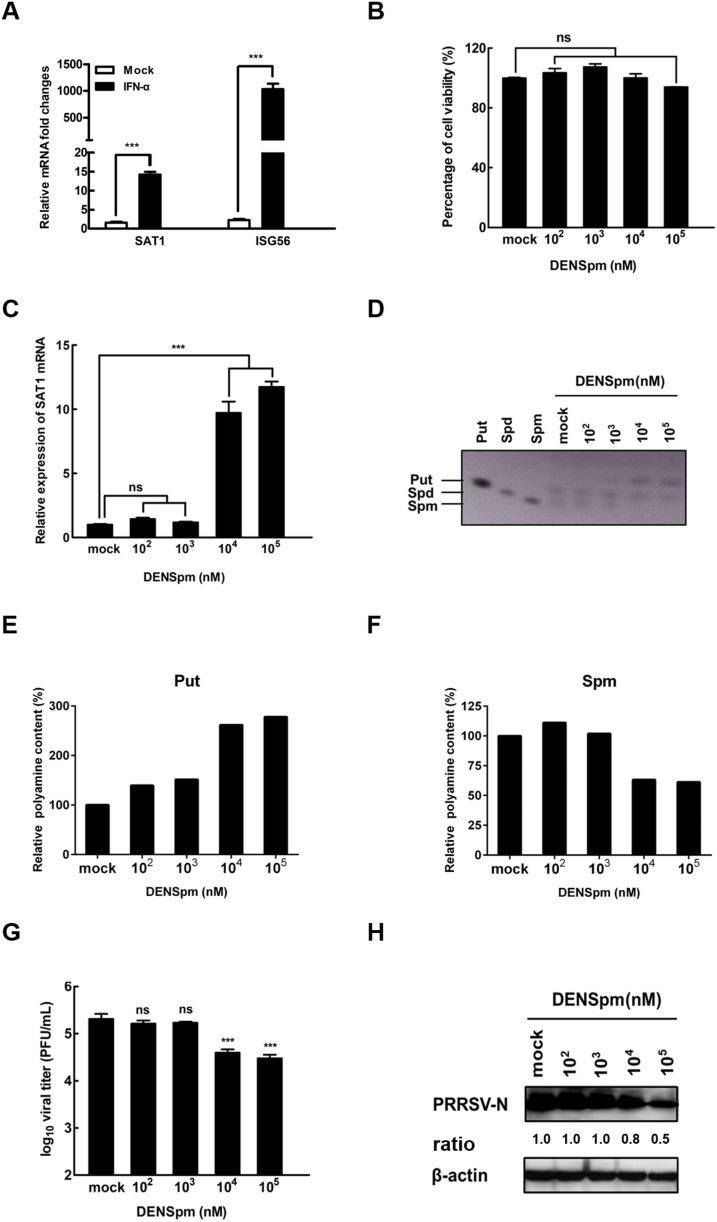
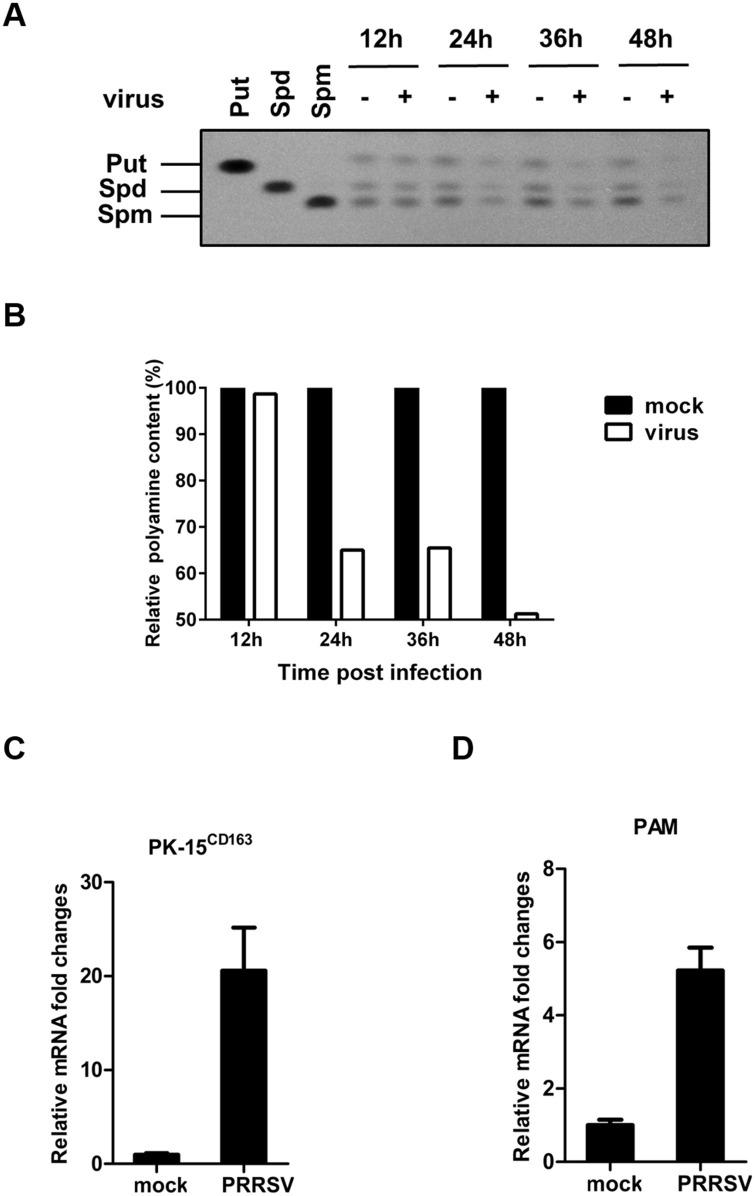
Like obligate intracellular parasites, viruses co-opt host cell resources to establish productive infections. Polyamines are key aliphatic molecules that perform important roles in cellular growth and proliferation. They are also needed for the successful multiplication of various viruses. Little is known about the effects of polyamines on Arteriviridae infections. Here, porcine reproductive and respiratory syndrome virus (PRRSV), an economically prominent porcine virus, was used to investigate virus-polyamine interactions. We found that PRRSV infection significantly downregulated the levels of cellular polyamines. Using an inhibitor or specific short interfering RNAs (siRNAs) of ornithine decarboxylase 1, a key anabolic enzyme involved in the classical de novo biosynthesis of polyamines, we found that polyamine depletion abrogated PRRSV proliferation, and this effect was recoverable by adding exogenous spermidine and spermine, but not putrescine to the cells, suggesting that the host inhibits polyamine biosynthesis to restrict PRRSV proliferation. Further analysis revealed that the expression level of spermidine-spermine acetyltransferase 1 (SAT1), a catabolic enzyme that reduces spermidine and spermine levels, was upregulated during PRRSV infection, but conversely, SAT1 had an inhibitory effect on PRRSV reproduction. Our data show that polyamines are important molecules during PRRSV-host interactions, and polyamines and their biosynthetic pathways are potential therapeutic targets against PRRSV infection.
像专性细胞内寄生虫一样,病毒会篡夺宿主细胞的资源以建立有效的感染。多胺是关键的脂族分子,在细胞生长和增殖中发挥重要作用。它们也是各种病毒成功繁殖所必需的。关于多胺对动脉炎病毒科感染的影响知之甚少。在这里,猪繁殖与呼吸综合征病毒(PRRSV)是一种经济上重要的猪病毒,用于研究病毒-多胺相互作用。我们发现 PRRSV 感染显著下调了细胞多胺的水平。使用鸟氨酸脱羧酶 1 的抑制剂或特定的短发夹 RNA(siRNA),鸟氨酸脱羧酶 1 是参与多胺经典从头生物合成的关键合成酶,我们发现多胺耗竭会破坏 PRRSV 的增殖,而通过向细胞添加外源性精脒和精胺,而不是腐胺,可以恢复这种效应,这表明宿主抑制多胺生物合成以限制 PRRSV 的增殖。进一步的分析表明,在 PRRSV 感染期间,分解酶 spermidine-spermine 乙酰转移酶 1(SAT1)的表达水平上调,SAT1 降低了精脒和精胺的水平,但反过来,SAT1 对 PRRSV 的繁殖有抑制作用。我们的数据表明,多胺是 PRRSV-宿主相互作用中的重要分子,多胺及其生物合成途径是针对 PRRSV 感染的潜在治疗靶点。


 Zotero 插件