
多胺在病毒感染中的多种功能。
Diverse Functions of Polyamines in Virus Infection.
机构信息
Department of Microbiology and Immunology, Stritch School of Medicine, Loyola University Chicago, Maywood, IL 60153, USA.
出版信息
Biomolecules. 2020 Apr 18;10(4):628. doi: 10.3390/biom10040628.
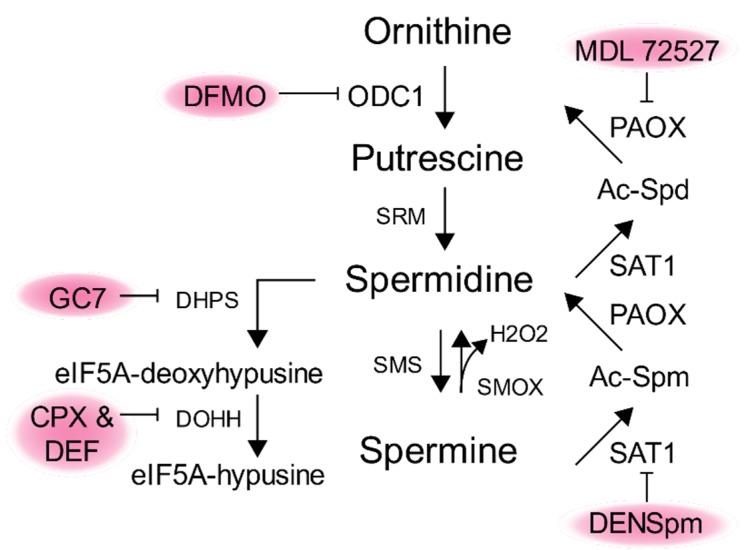
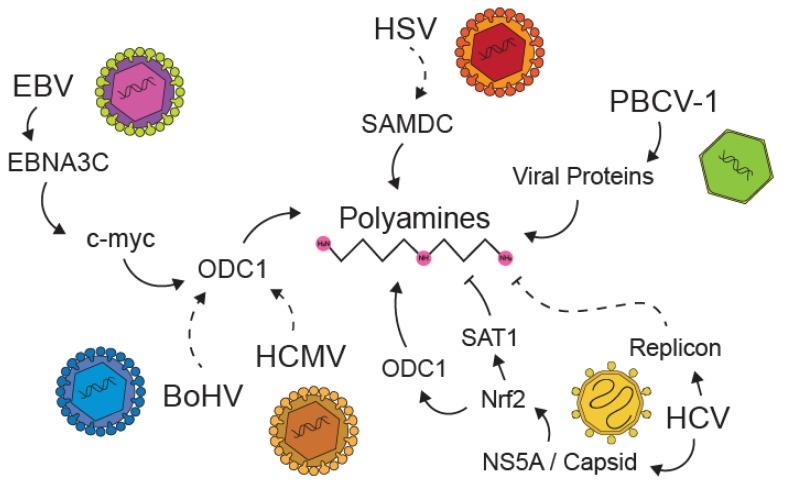
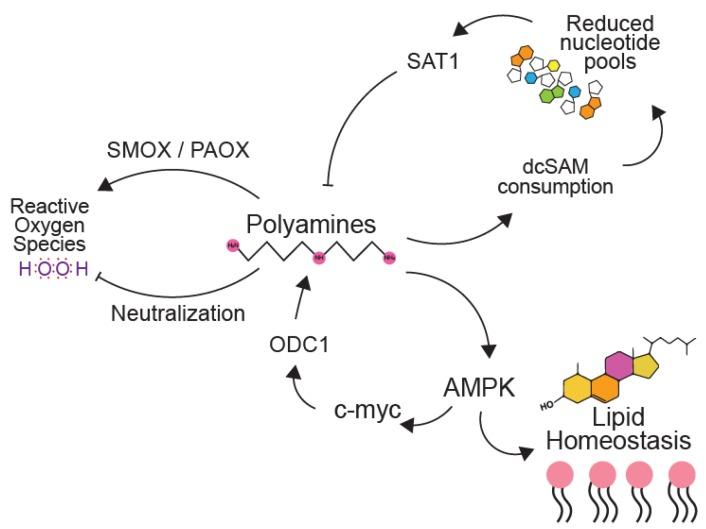
As obligate intracellular parasites, viruses rely on host cells for the building blocks of progeny viruses. Metabolites such as amino acids, nucleotides, and lipids are central to viral proteins, genomes, and envelopes, and the availability of these molecules can restrict or promote infection. Polyamines, comprised of putrescine, spermidine, and spermine in mammalian cells, are also critical for virus infection. Polyamines are small, positively charged molecules that function in transcription, translation, and cell cycling. Initial work on the function of polyamines in bacteriophage infection illuminated these molecules as critical to virus infection. In the decades since early virus-polyamine descriptions, work on diverse viruses continues to highlight a role for polyamines in viral processes, including genome packaging and viral enzymatic activity. On the host side, polyamines function in the response to virus infection. Thus, viruses and hosts compete for polyamines, which are a critical resource for both. Pharmacologically targeting polyamines, tipping the balance to favor the host and restrict virus replication, holds significant promise as a broad-spectrum antiviral strategy.
作为专性细胞内寄生虫,病毒依赖宿主细胞来构建子代病毒。代谢物如氨基酸、核苷酸和脂质是病毒蛋白、基因组和包膜的核心,这些分子的可用性可以限制或促进感染。多胺由哺乳动物细胞中的腐胺、亚精胺和精胺组成,对病毒感染也至关重要。多胺是带正电荷的小分子,在转录、翻译和细胞周期中发挥作用。最初对多胺在噬菌体感染中的功能的研究表明,这些分子对病毒感染至关重要。自早期病毒-多胺描述以来的几十年里,对多种病毒的研究继续强调多胺在病毒过程中的作用,包括基因组包装和病毒酶活性。在宿主方面,多胺在病毒感染的反应中发挥作用。因此,病毒和宿主争夺多胺,这对两者都是至关重要的资源。通过药理学靶向多胺,有利于宿主并限制病毒复制,为广谱抗病毒策略提供了巨大的前景。


 Zotero 插件