
定义影响抗微生物肽针对有荚膜的活性的原则。
Defining principles that influence antimicrobial peptide activity against capsulated .
机构信息
Department of Molecular Biosciences, The University of Texas at Austin, Austin, TX 78712.
Department of Chemistry, The University of Texas at Austin, Austin, TX 78712.
出版信息
Proc Natl Acad Sci U S A. 2020 Nov 3;117(44):27620-27626. doi: 10.1073/pnas.2007036117. Epub 2020 Oct 21.
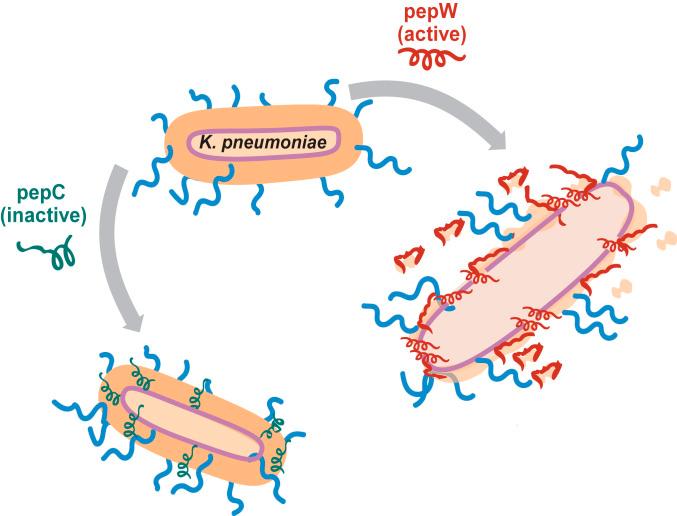
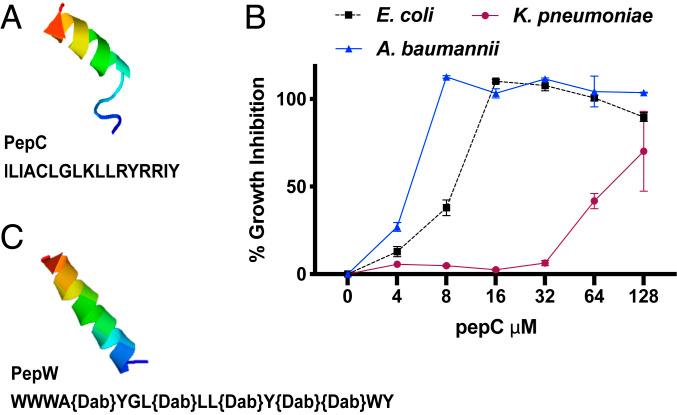
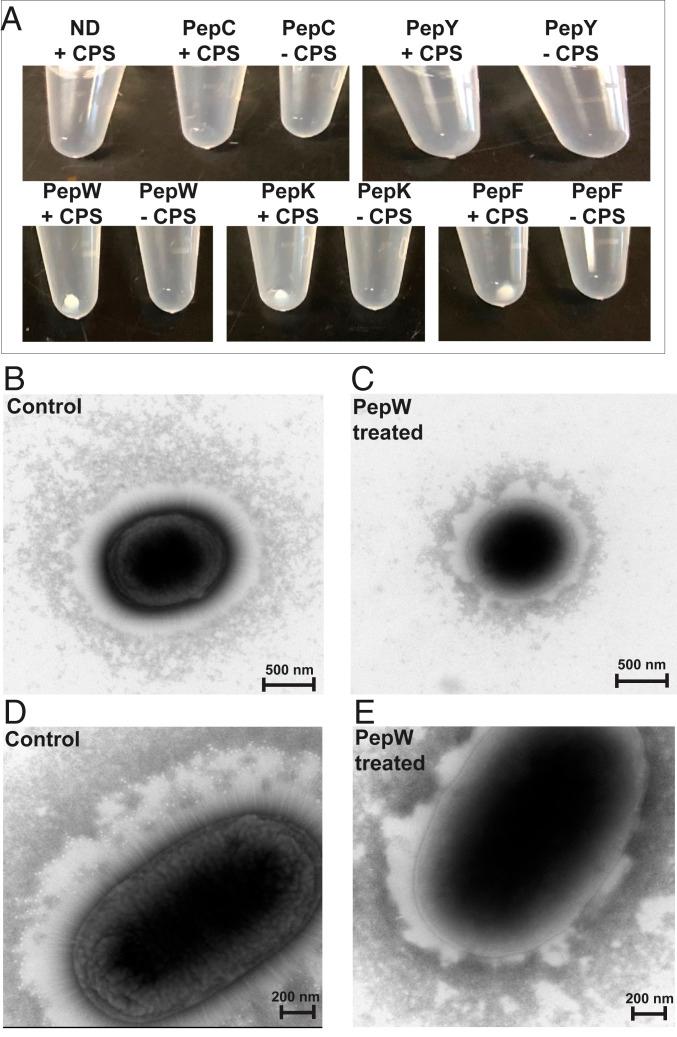
The extracellular polysaccharide capsule of resists penetration by antimicrobials and protects the bacteria from the innate immune system. Host antimicrobial peptides are inactivated by the capsule as it impedes their penetration to the bacterial membrane. While the capsule sequesters most peptides, a few antimicrobial peptides have been identified that retain activity against encapsulated suggesting that this bacterial defense can be overcome. However, it is unclear what factors allow peptides to avoid capsule inhibition. To address this, we created a peptide analog with strong antimicrobial activity toward several strains from a previously inactive peptide. We characterized the effects of these two peptides on , along with their physical interactions with capsule. Both peptides disrupted bacterial cell membranes, but only the active peptide displayed this activity against capsulated Unexpectedly, the active peptide showed no decrease in capsule binding, but did lose secondary structure in a capsule-dependent fashion compared with the inactive parent peptide. We found that these characteristics are associated with capsule-peptide aggregation, leading to disruption of the capsule. Our findings reveal a potential mechanism for disrupting the protective barrier that uses to avoid the immune system and last-resort antibiotics.
荚膜的胞外多糖胶囊可以抵抗抗生素的渗透,保护细菌免受先天免疫系统的影响。胶囊阻碍抗菌肽渗透到细菌膜,从而使宿主抗菌肽失活。虽然胶囊可以隔离大多数肽,但已经发现了一些抗菌肽仍然对包裹的细菌具有活性,这表明这种细菌防御可以被克服。然而,目前尚不清楚是什么因素允许肽类避免胶囊抑制。为了解决这个问题,我们从以前没有活性的肽中创建了一种具有针对几种细菌活性的肽类似物。我们研究了这两种肽对的影响,以及它们与荚膜的物理相互作用。这两种肽都破坏了细菌的细胞膜,但只有活性肽对包裹的细菌表现出这种活性。出乎意料的是,活性肽与未包裹的细菌结合没有减少,但与无活性的亲本肽相比,它的二级结构以依赖于胶囊的方式丧失。我们发现这些特性与胶囊-肽聚集有关,导致荚膜破裂。我们的研究结果揭示了一种破坏细菌用来逃避免疫系统和最后手段抗生素的保护屏障的潜在机制。


 Zotero 插件