
线粒体翻译抑制触发 ATF4 激活,导致综合应激反应,但不导致线粒体未折叠蛋白反应。
Mitochondrial translation inhibition triggers ATF4 activation, leading to integrated stress response but not to mitochondrial unfolded protein response.
机构信息
Department of Clinical Chemistry and Laboratory Medicine, Graduate School of Medical Sciences, Kyushu University, 3-1-1, Maidashi, Higashi-ku, Fukuoka 812-8582, Japan.
Clinical Laboratory Department, Kyushu Pro-Search Limited Liability Partnership 4-1, Kyudaishimmachi, Nishi-ku, Fukuoka 819-0388, Japan.
出版信息
Biosci Rep. 2020 Nov 27;40(11). doi: 10.1042/BSR20201289.
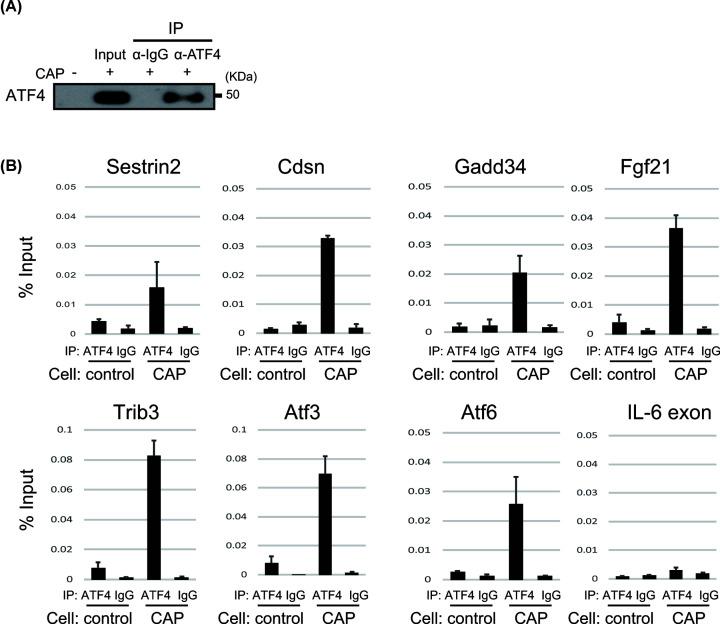
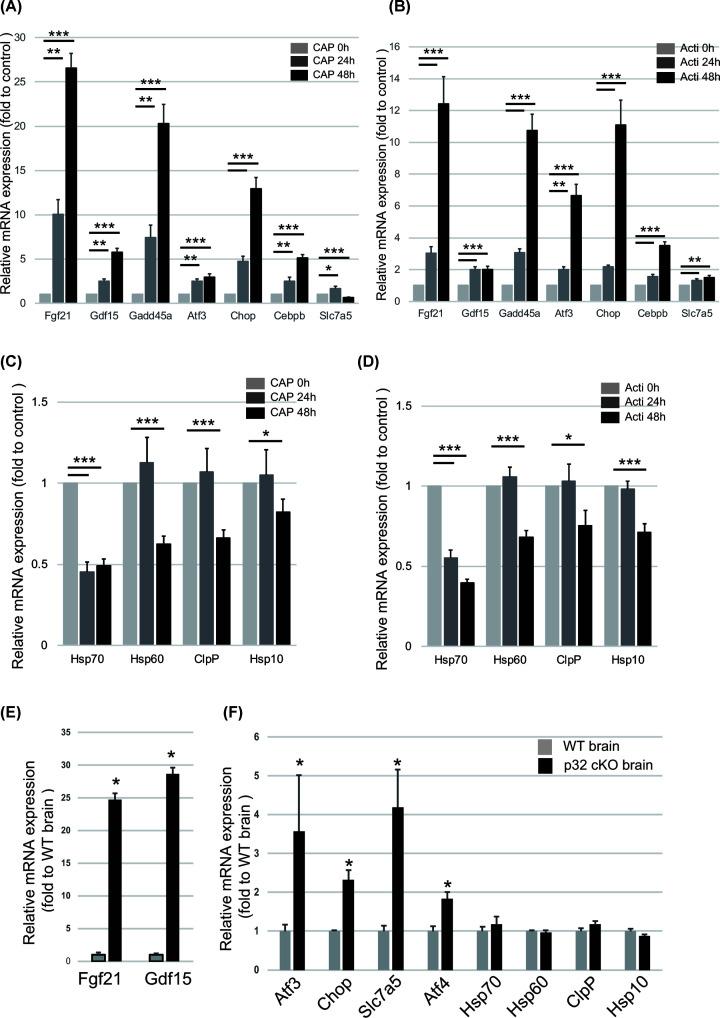
Mitochondrial-nuclear communication, known as retrograde signaling, is important for regulating nuclear gene expression in response to mitochondrial dysfunction. Previously, we have found that p32/C1qbp-deficient mice, which have a mitochondrial translation defect, show endoplasmic reticulum (ER) stress response and integrated stress response (ISR) gene expression in the heart and brain. However, the mechanism by which mitochondrial translation inhibition elicits these responses is not clear. Among the transcription factors that respond to mitochondrial stress, activating transcription factor 4 (ATF4) is a key transcription factor in the ISR. Herein, chloramphenicol (CAP), which inhibits mitochondrial DNA (mtDNA)-encoded protein expression, induced eukaryotic initiation factor 2 α subunit (eIF2α) phosphorylation and ATF4 induction, leading to ISR gene expression. However, the expression of the mitochondrial unfolded protein response (mtUPR) genes, which has been shown in Caenorhabditis elegans, was not induced. Short hairpin RNA-based knockdown of ATF4 markedly inhibited the CAP-induced ISR gene expression. We also observed by ChIP analysis that induced ATF4 bound to the promoter region of several ISR genes, suggesting that mitochondrial translation inhibition induces ISR gene expression through ATF4 activation. In the present study, we showed that mitochondrial translation inhibition induced the ISR through ATF4 activation rather than the mtUPR.
线粒体-核通讯,又称逆行信号转导,对于调节核基因表达以响应线粒体功能障碍非常重要。先前,我们发现线粒体翻译缺陷的 p32/C1qbp 缺陷小鼠在心脏和大脑中表现出内质网(ER)应激反应和整合应激反应(ISR)基因表达。然而,线粒体翻译抑制引发这些反应的机制尚不清楚。在响应线粒体应激的转录因子中,激活转录因子 4(ATF4)是 ISR 中的关键转录因子。在此,抑制线粒体 DNA(mtDNA)编码蛋白表达的氯霉素(CAP)诱导真核起始因子 2α亚基(eIF2α)磷酸化和 ATF4 诱导,导致 ISR 基因表达。然而,已在秀丽隐杆线虫中显示的线粒体未折叠蛋白反应(mtUPR)基因的表达并未被诱导。基于短发夹 RNA 的 ATF4 敲低显着抑制了 CAP 诱导的 ISR 基因表达。我们还通过 ChIP 分析观察到,诱导的 ATF4 结合到几个 ISR 基因的启动子区域,表明线粒体翻译抑制通过 ATF4 激活诱导 ISR 基因表达。在本研究中,我们表明,线粒体翻译抑制通过 ATF4 激活而非 mtUPR 诱导 ISR。



 Zotero 插件