
模拟澳大利亚 COVID-19 大流行的传播和控制。
Modelling transmission and control of the COVID-19 pandemic in Australia.
机构信息
Centre for Complex Systems, Faculty of Engineering, University of Sydney, Sydney, NSW, 2006, Australia.
Marie Bashir Institute for Infectious Diseases and Biosecurity, University of Sydney, Westmead, NSW, 2145, Australia.
出版信息
Nat Commun. 2020 Nov 11;11(1):5710. doi: 10.1038/s41467-020-19393-6.
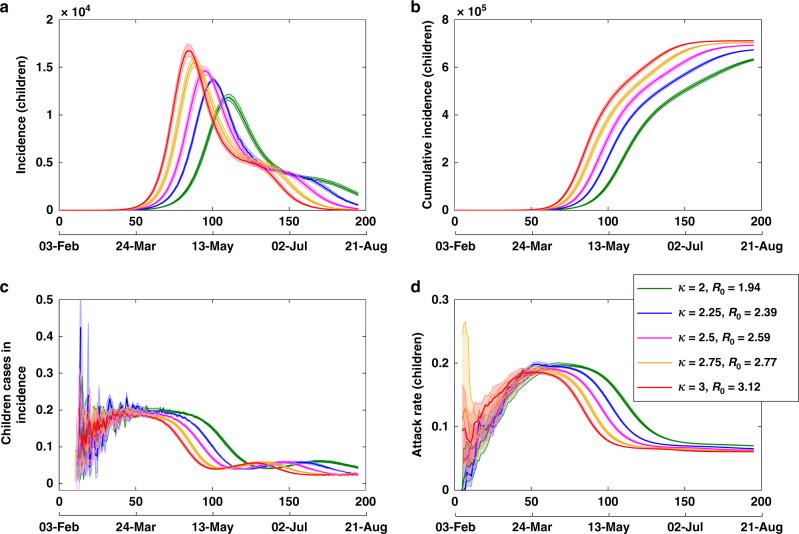
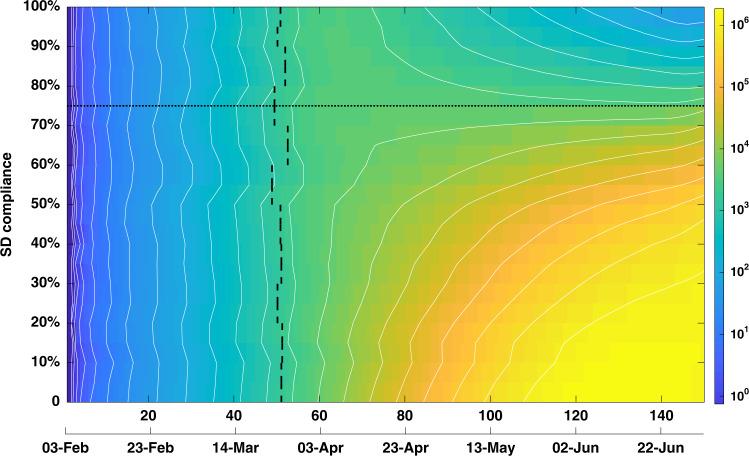
There is a continuing debate on relative benefits of various mitigation and suppression strategies aimed to control the spread of COVID-19. Here we report the results of agent-based modelling using a fine-grained computational simulation of the ongoing COVID-19 pandemic in Australia. This model is calibrated to match key characteristics of COVID-19 transmission. An important calibration outcome is the age-dependent fraction of symptomatic cases, with this fraction for children found to be one-fifth of such fraction for adults. We apply the model to compare several intervention strategies, including restrictions on international air travel, case isolation, home quarantine, social distancing with varying levels of compliance, and school closures. School closures are not found to bring decisive benefits unless coupled with high level of social distancing compliance. We report several trade-offs, and an important transition across the levels of social distancing compliance, in the range between 70% and 80% levels, with compliance at the 90% level found to control the disease within 13-14 weeks, when coupled with effective case isolation and international travel restrictions.
关于旨在控制 COVID-19 传播的各种缓解和抑制策略的相对益处,一直存在争议。在这里,我们报告了基于代理的建模的结果,该模型使用澳大利亚正在进行的 COVID-19 大流行的细粒度计算模拟。该模型经过校准,以匹配 COVID-19 传播的关键特征。一个重要的校准结果是症状病例的年龄依赖性分数,发现儿童的这一分数是成年人的五分之一。我们应用该模型来比较几种干预策略,包括限制国际航空旅行、病例隔离、家庭检疫、不同程度的社交距离以及学校关闭。除非与高水平的社会距离合规性相结合,否则学校关闭不会带来决定性的好处。我们报告了几个权衡方案,以及在社交距离合规性水平在 70%至 80%之间的重要过渡,当与有效的病例隔离和国际旅行限制相结合时,发现遵守 90%的水平可以在 13-14 周内控制疾病。



 Zotero 插件