
N95 口罩与医用外科口罩预防 SARS-CoV2 大流行时期空气传播感染的效果比较:一项随机试验的荟萃分析。
Comparative effectiveness of N95 respirators and surgical/face masks in preventing airborne infections in the era of SARS-CoV2 pandemic: A meta-analysis of randomized trials.
机构信息
Polish Society of Disaster Medicine, Warsaw, Poland.
Maria Sklodowska-Curie Medical Academy in Warsaw, Warsaw, Poland.
出版信息
PLoS One. 2020 Dec 15;15(12):e0242901. doi: 10.1371/journal.pone.0242901. eCollection 2020.
BACKGROUND
Recently, several randomized controlled trials (RCTs) have evaluated the effect of N95 respirators compared with medical masks to protect against acute respiratory infections. However, these studies are limited by modest sample sizes and inconclusive results. Therefore, the goal of the present study was to review the relevant and available published RCTs with the aid of the increased power of meta-analytic methods in order to assess the effectiveness of medical masks and N95 respirators in reducing the risk of respiratory infections.
METHODS
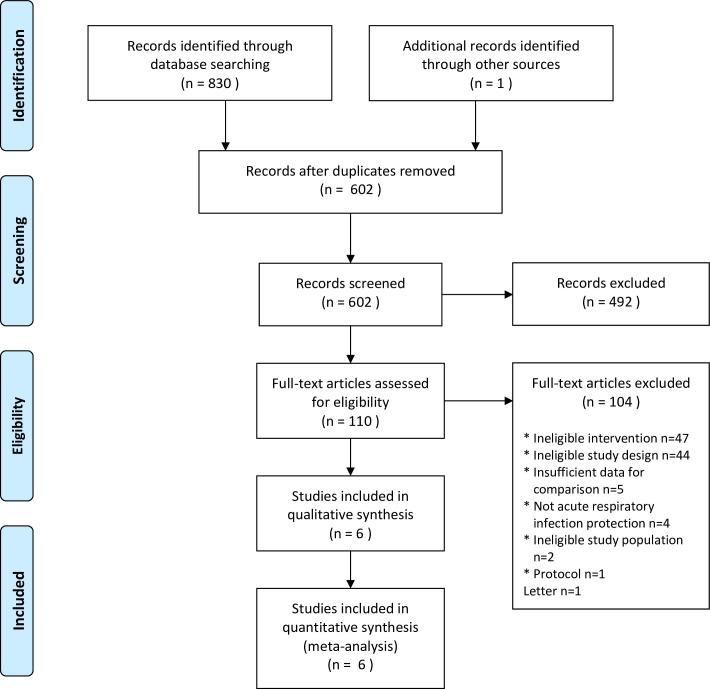
This meta-analysis follows the recommendations of the Preferred Reporting Items for Systematic Reviews and Meta-Analyses (PRISMA) statement for conducting and reporting results. We searched PubMed, Web of Science, Embase, and Cochrane databases from inception through April 1, 2020 to identify potentially relevant studies. Two authors (LS and JS) independently searched the titles and abstracts of the potentially eligible articles. They independently retrieved required data from the eligible trials; the data were initially tabulated for statistical analysis. Two authors (JRL and LS) independently assessed the methodological quality of the included RCTs using the Cochrane Collaboration's tool for assessing risk of bias.
RESULTS
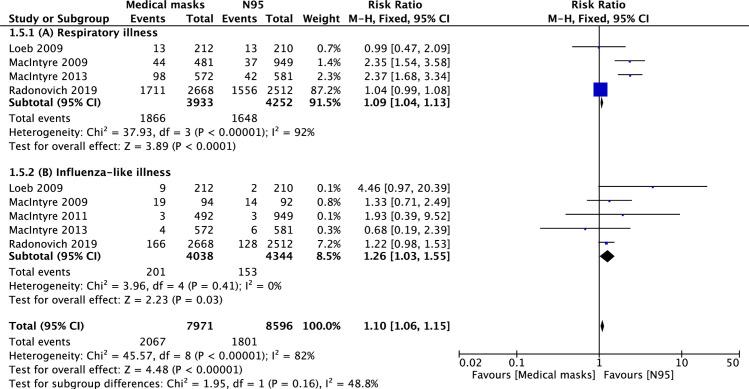
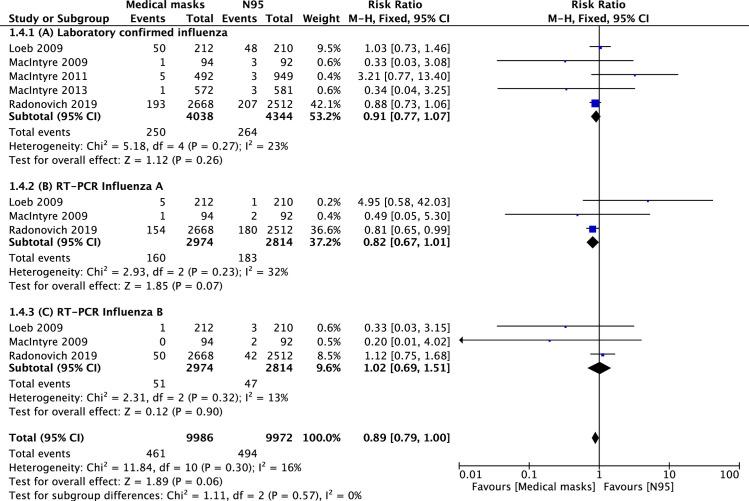
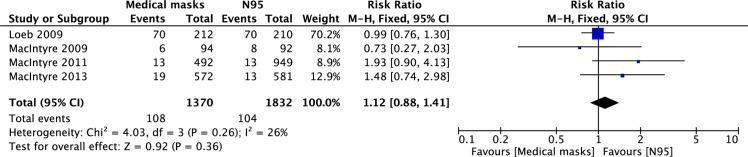
Six articles met the inclusion criteria. The pooled analysis showed that N95 respirators did not reduce the risk of infection with respiratory viruses compared with medical/surgical masks (5.7% vs. 7.9%; RR = 1.12; 95% CI: 0.88-1.41; p = 0.36); however, there was no statistically significant difference in laboratory-confirmed influenza between N95 and medical masks (RR = 0.91; 95% CI: 0.77-1.07; p = 0.26). Medical masks provided similar protection against other viruses, including coronavirus (RR = 0.74; 95% CI: 0.32-1.73; p = 0.49). Respiratory illness, as well as influenza-like illness were less frequently observed with N95 respirators.
CONCLUSIONS
Our meta-analysis suggests that there are insufficient data to definitively determine whether N95 respirators are superior to medical masks in protection against transmissible acute respiratory infections. Further randomized trials are necessary to compare the above methods of respiratory protection in the context of COVID-19 incidence.
背景
最近,几项随机对照试验(RCT)评估了 N95 口罩与医用口罩在预防急性呼吸道感染方面的效果。然而,这些研究受到样本量小且结果不确定的限制。因此,本研究的目的是借助荟萃分析方法的更大效能,对相关且已发表的 RCT 进行综述,以评估医用口罩和 N95 口罩在降低呼吸道感染风险方面的效果。
方法
本荟萃分析遵循系统评价和荟萃分析报告的首选报告项目(PRISMA)声明的建议,以进行和报告结果。我们检索了 PubMed、Web of Science、Embase 和 Cochrane 数据库,检索时间从建库开始至 2020 年 4 月 1 日,以确定潜在相关的研究。两位作者(LS 和 JS)独立搜索了潜在合格文章的标题和摘要。他们独立地从合格试验中检索所需的数据;最初对数据进行制表以进行统计分析。两位作者(JRL 和 LS)独立使用 Cochrane 协作组评估偏倚风险的工具评估纳入 RCT 的方法学质量。
结果
有 6 篇文章符合纳入标准。汇总分析表明,与医用/外科口罩相比,N95 口罩并不能降低呼吸道病毒感染的风险(5.7%比 7.9%;RR=1.12;95%CI:0.88-1.41;p=0.36);然而,N95 口罩和医用口罩之间在实验室确诊的流感方面无统计学显著差异(RR=0.91;95%CI:0.77-1.07;p=0.26)。医用口罩对其他病毒(包括冠状病毒)提供了类似的保护作用(RR=0.74;95%CI:0.32-1.73;p=0.49)。使用 N95 口罩时,呼吸道疾病和流感样疾病的发生率较低。
结论
我们的荟萃分析表明,目前尚无足够的数据明确确定 N95 口罩在预防传染性急性呼吸道感染方面是否优于医用口罩。需要进一步的随机试验来比较 COVID-19 发病情况下上述呼吸道保护方法。
 Zotero 插件