
组蛋白去乙酰化酶抑制剂 Tubastatin A 和 SAHA 影响寄生虫细胞分裂,是潜在的抗弓形虫化学治疗药物。
HDAC inhibitors Tubastatin A and SAHA affect parasite cell division and are potential anti-Toxoplasma gondii chemotherapeutics.
机构信息
Laboratório de Ultraestrutura Celular Hertha Meyer - Universidade Federal do Rio de Janeiro - Instituto de Biofísica Carlos Chagas Filho, Av. Carlos Chagas Filho, 373 -Cidade Universitária, Rio de Janeiro - RJ, 21941-170, Brazil; Instituto Nacional de Ciência e Tecnologia em Biologia Estrutural e Bioimagens, Universidade Federal do Rio de Janeiro, Brazil.
Laboratório de Quimioterapia de Protozoários Egler Chiari, Departamento de Parasitologia - ICB - Universidade Federal de Minas Gerais - Avenida Presidente Antônio Carlos, 6.627 -Pampulha - Belo Horizonte, MG, 31270-901, Brazil.
出版信息
Int J Parasitol Drugs Drug Resist. 2021 Apr;15:25-35. doi: 10.1016/j.ijpddr.2020.12.003. Epub 2020 Dec 17.
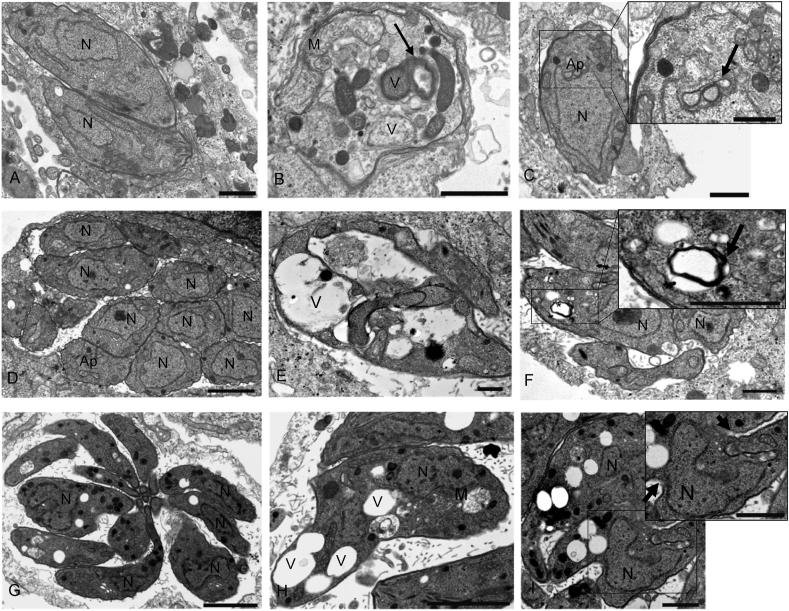
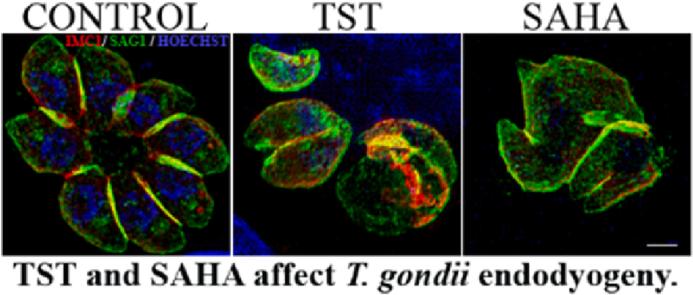
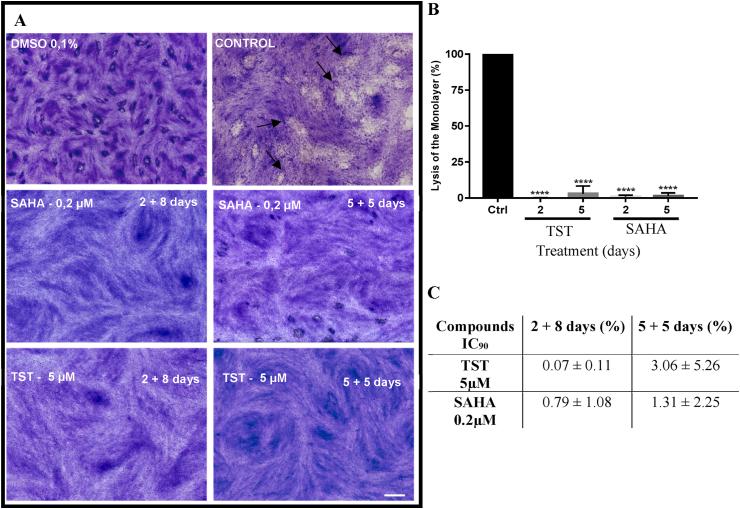
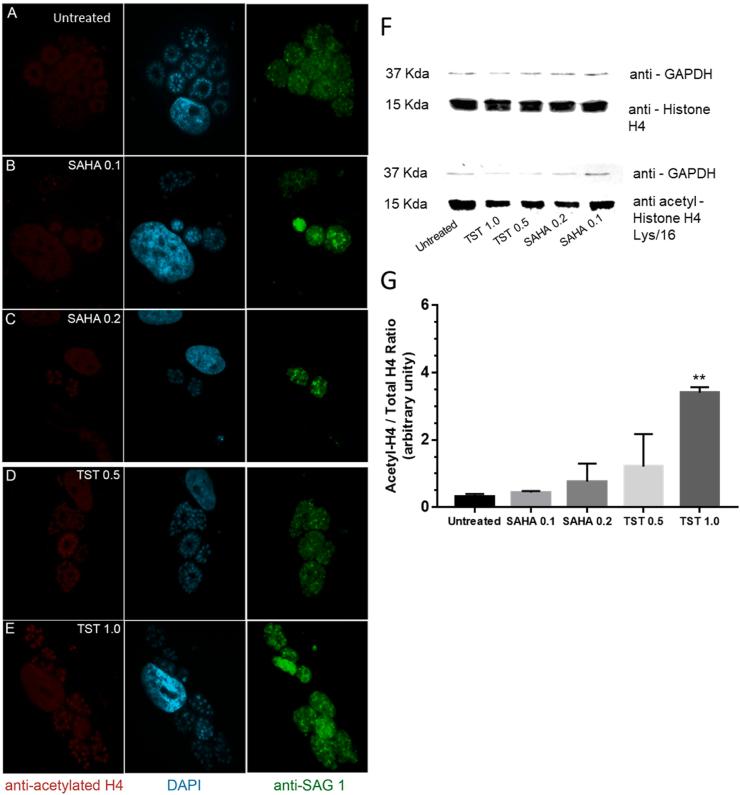
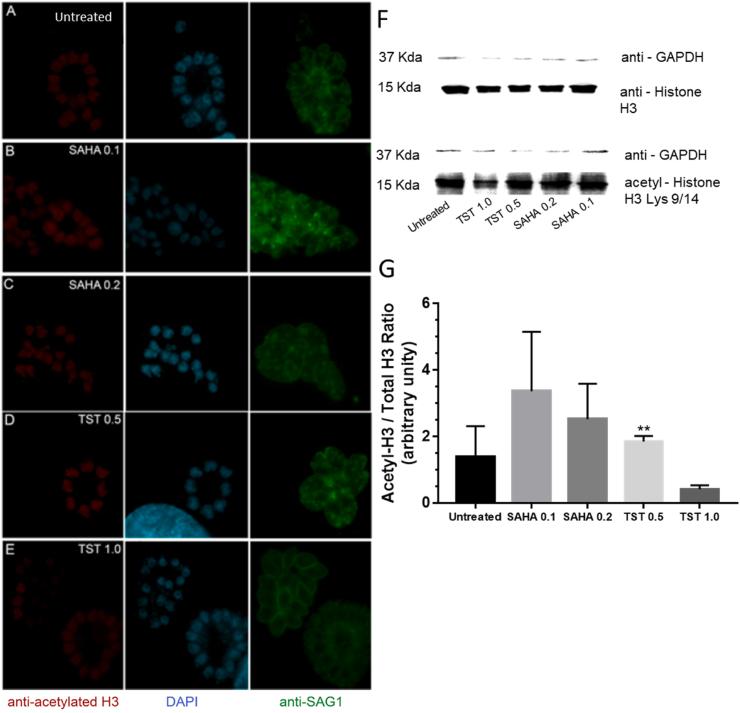
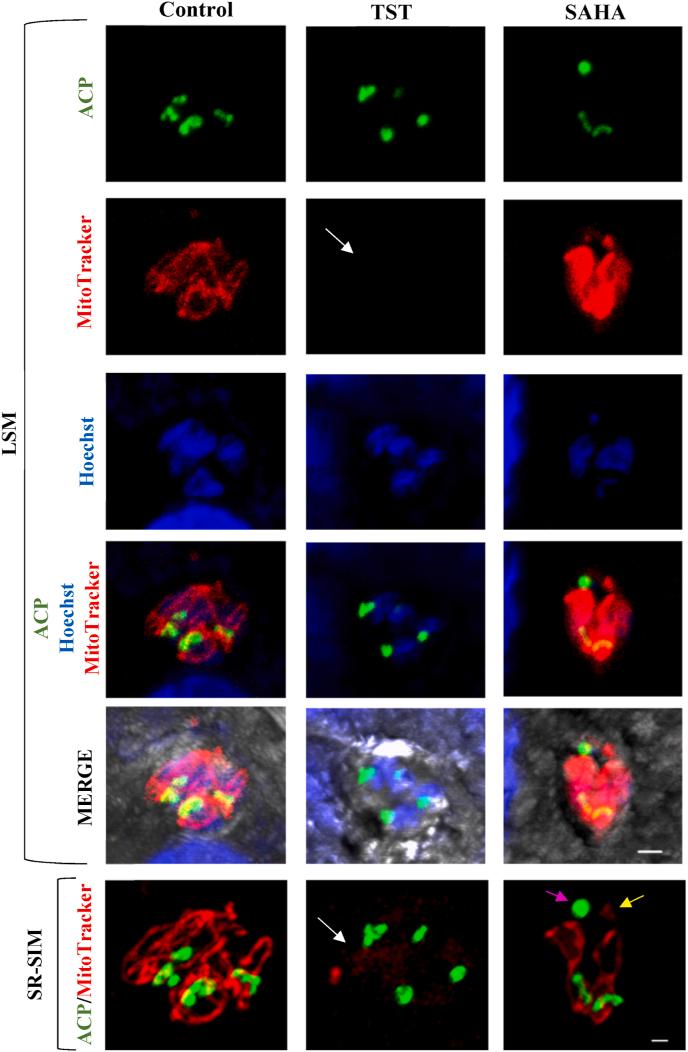
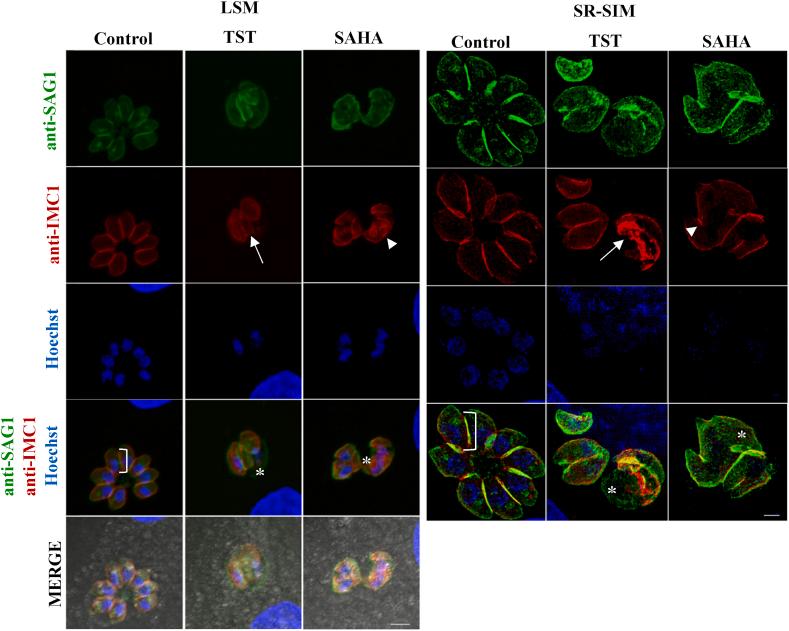
The redirectioning of drugs in the pharmaceutical market is a well-known practice to identify new therapies for parasitic diseases. The histone deacetylase inhibitors Tubastatin A (TST) and Suberoylanilide Hydroxamic Acid (SAHA), firstly developed for cancer treatment, are effective against protozoa parasites. In this work, we aimed to demonstrate the activity of these drugs as potential agents against Toxoplasma gondii, the causative agent of toxoplasmosis. TST and SAHA were active against different genotypes of Toxoplasma gondii, such as, RH (type I), EGS (I/III) and ME49 (type II) strains. The IC₅₀ values for the RH strain were 19 ± 1 nM and 520 ± 386 nM for TST and 41 ± 3 nM and 67 ± 36 nM for SAHA, for 24 and 48 h, respectively. Both compounds were highly selective for T. gondii and their anti-proliferative effect was irreversible for 8 days. The calculated selectivity indexes (39 for TST and 30 for SAHA) make them lead compounds for the future development of anti-Toxoplasma molecules. Western blotting showed TST led to a significant increase of the nuclear histone H4 and a decrease of H3 acetylation levels. Treatment with 1 μM TST and 0.1 μM SAHA for 48 h decreased the amount of global α-tubulin. Fluorescence and electron microscopy showed that both drugs affected the endodyogeny process impairing the budding of daughter cells. The drugs led to the formation of large, rounded masses of damaged parasites with several centrosomes randomly dispersed and incorrect apicoplast division and positioning. TST-treated parasites showed a rupture of the mitochondrial membrane potential and led to a failure of the IMC assembling of new daughter cells. SAHA and TST possibly inhibit HDAC3 and other cytoplasmic or organelle targeted HDACs involved in the modification of proteins other than histones.
药物在医药市场中的重定向是一种众所周知的方法,用于鉴定寄生虫疾病的新疗法。组蛋白去乙酰化酶抑制剂 Tubastatin A(TST)和 Suberoylanilide Hydroxamic Acid(SAHA)最初是为癌症治疗开发的,对原生动物寄生虫有效。在这项工作中,我们旨在证明这些药物作为潜在的抗弓形虫药物的活性,弓形虫是弓形体病的病原体。TST 和 SAHA 对不同基因型的弓形虫(如 RH(I 型)、EGS(I/III)和 ME49(II 型)株)均具有活性。RH 株的 IC₅₀值分别为 19±1 nM 和 520±386 nM,对于 TST 和 41±3 nM 和 67±36 nM,对于 24 和 48 h。两种化合物对 T. gondii 具有高度选择性,其抗增殖作用在 8 天内是不可逆的。计算出的选择性指数(TST 为 39,SAHA 为 30)使它们成为未来抗弓形虫分子开发的先导化合物。Western blot 显示 TST 导致核组蛋白 H4 显著增加,H3 乙酰化水平降低。用 1μM TST 和 0.1μM SAHA 处理 48 h 可减少总α-微管蛋白的量。荧光和电子显微镜显示,两种药物均影响内体发生过程,损害子细胞的出芽。这些药物导致受损寄生虫形成大而圆形的团块,其中几个中心体随机分散,质体分裂和定位不正确。TST 处理的寄生虫的线粒体膜电位破裂,并导致新子细胞的 IMC 组装失败。TST 和 SAHA 可能抑制 HDAC3 和其他细胞质或细胞器靶向的 HDAC,参与除组蛋白以外的蛋白质修饰。


 Zotero 插件