
中国食管癌疾病负担的变化趋势:1990 年至 2017 年及未来 25 年的预测水平。
Changing trends in the disease burden of esophageal cancer in China from 1990 to 2017 and its predicted level in 25 years.
机构信息
Clinical Epidemiology Unit, Qilu Hospital of Shandong University, Jinan, China.
Department of Gastroenterology, Qilu Hospital, Cheeloo College of Medicine, Shandong University, Jinan, China.
出版信息
Cancer Med. 2021 Mar;10(5):1889-1899. doi: 10.1002/cam4.3775. Epub 2021 Feb 14.
BACKGROUND
Nearly half of the cases of esophageal cancer in the world were in China, but the corresponding burden in China has not been estimated for the past decades or for the near future.
METHODS
Data on the incidence, mortality, and disability-adjusted life years (DALYs) rates owing to esophageal cancer in China from 1990 to 2017 were extracted from the Global Burden of Disease Study 2017. To reflect the trend in the disease burden, we calculated the estimated annual percentage change (EAPC) in the age-standardized rates of these three outcomes in China from 1990 to 2017.
RESULTS
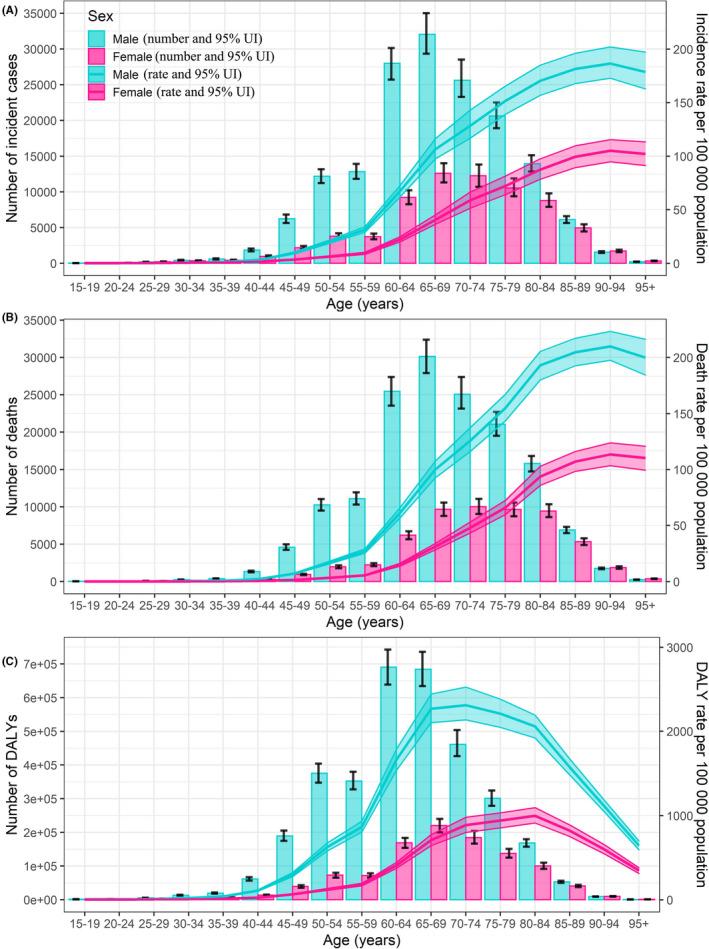
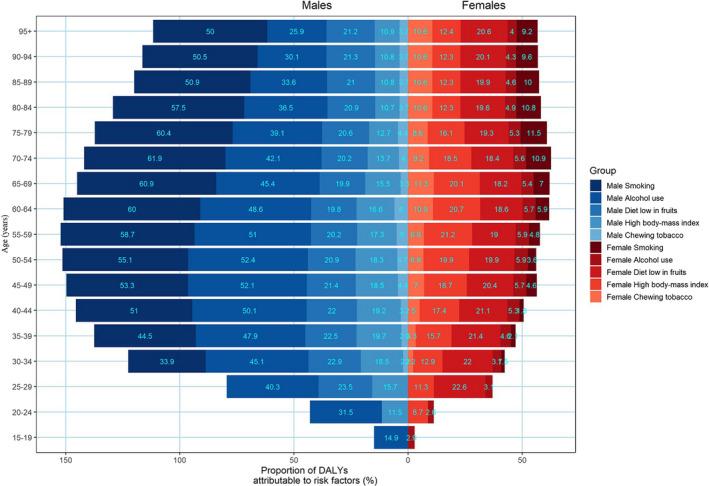
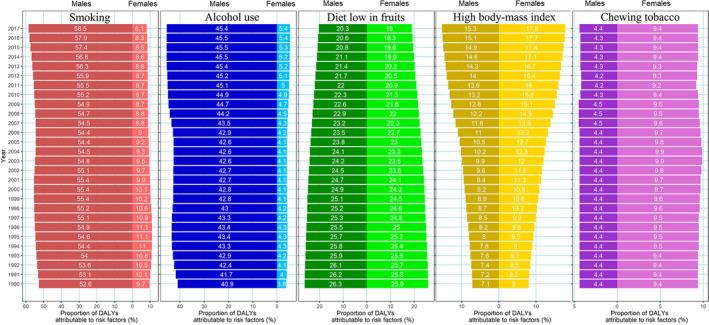
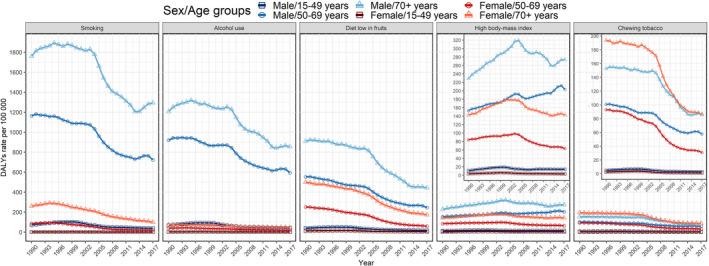
The age-standardized incidence rate (ASIR) for esophageal cancer decreased from 19.38/100,000 in 1990 to 12.23/100,000 in 2017, with an EAPC of -2.53 (95%CI: -2.90, -2.16), but the number of cases of esophageal cancer increased from 164,473 to 234,624. The age-standardized rates of esophageal cancer in females were always lower than they were in males during the study period, and there was a downward trend that was more pronounced among females than males. The most common risk factors for males were smoking and alcohol consumption, while the most common risk factors for females were a diet low in fruits and a high body mass index (BMI). New cases of, and deaths from esophageal cancer are predicted to increase by about 1.5 times in the coming 25 years.
CONCLUSION
Although the age-standardized burden of esophageal cancer has been declining, the number of new cases of, and deaths from esophageal cancer have increased in China over the past 30 years, and they will continue to increase in the near future. Hence, national policies should be adopted to promote the prevention and management of known risk factors for it, especially smoking and excessive caloric intake.
背景
全球近一半的食管癌病例在中国,但过去几十年或不久的将来,中国尚未对此相应负担进行评估。
方法
从 2017 年全球疾病负担研究中提取了 1990 年至 2017 年中国食管癌发病率、死亡率和伤残调整生命年(DALY)率的数据。为了反映疾病负担的趋势,我们计算了 1990 年至 2017 年中国这三种结局的年龄标准化率的估计年平均变化率(EAPC)。
结果
食管癌的年龄标准化发病率(ASIR)从 1990 年的 19.38/100000 下降到 2017 年的 12.23/100000,EAPC 为-2.53(95%CI:-2.90,-2.16),但食管癌病例数从 164473 例增加到 234624 例。在研究期间,女性的食管癌年龄标准化率始终低于男性,且女性的下降趋势比男性更为明显。男性最常见的危险因素是吸烟和饮酒,而女性最常见的危险因素是水果摄入不足和高身体质量指数(BMI)。预计未来 25 年内,中国新发病例和死亡人数将增加约 1.5 倍。
结论
尽管食管癌的年龄标准化负担一直在下降,但过去 30 年来中国新发病例和死亡人数有所增加,在不久的将来还会继续增加。因此,应采取国家政策来促进已知危险因素的预防和管理,特别是吸烟和过度热量摄入。


 Zotero 插件