
病毒感染与宿主代谢——我们能否控制相互作用?
Virus Infections and Host Metabolism-Can We Manage the Interactions?
机构信息
Department of Biomedical and Diagnostic Sciences, College of Veterinary Medicine, The University of Tennessee, Knoxville, TN, United States.
Department of Virology, Faculty of Veterinary Medicine, Erciyes University, Kayseri, Turkey.
出版信息
Front Immunol. 2021 Feb 3;11:594963. doi: 10.3389/fimmu.2020.594963. eCollection 2020.
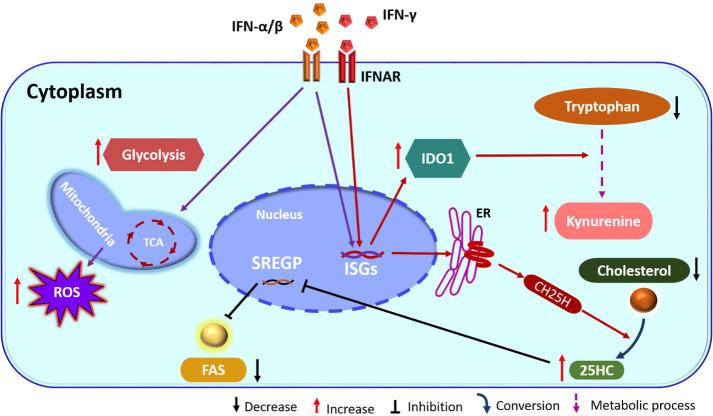
When viruses infect cells, they almost invariably cause metabolic changes in the infected cell as well as in several host cell types that react to the infection. Such metabolic changes provide potential targets for therapeutic approaches that could reduce the impact of infection. Several examples are discussed in this review, which include effects on energy metabolism, glutaminolysis and fatty acid metabolism. The response of the immune system also involves metabolic changes and manipulating these may change the outcome of infection. This could include changing the status of herpesviruses infections from productive to latency. The consequences of viral infections which include coronavirus disease 2019 (COVID-19), may also differ in patients with metabolic problems, such as diabetes mellitus (DM), obesity, and endocrine diseases. Nutrition status may also affect the pattern of events following viral infection and examples that impact on the pattern of human and experimental animal viral diseases and the mechanisms involved are discussed. Finally, we discuss the so far few published reports that have manipulated metabolic events to change the outcome of virus infection. The topic is expected to expand in relevance as an approach used alone or in combination with other therapies to shape the nature of virus induced diseases.
当病毒感染细胞时,它们几乎总是会导致感染细胞以及几种宿主细胞类型的代谢变化,这些变化会对感染产生反应。本综述讨论了几种这样的代谢变化,包括对能量代谢、谷氨酰胺分解和脂肪酸代谢的影响。免疫系统的反应也涉及代谢变化,操纵这些变化可能会改变感染的结果。这可能包括将疱疹病毒感染的状态从有活力转变为潜伏。代谢问题(如糖尿病、肥胖和内分泌疾病)也会影响包括 2019 冠状病毒病(COVID-19)在内的病毒感染的后果。营养状况也可能影响病毒感染后的事件模式,我们讨论了影响人类和实验动物病毒疾病模式的例子,以及涉及的机制。最后,我们讨论了迄今为止少数几篇关于操纵代谢事件以改变病毒感染结果的已发表报告。随着该主题作为一种单独或与其他疗法联合使用的方法来改变病毒引起的疾病的性质,预计其相关性将会扩大。

 Zotero 插件