
COVID-19大流行:当代及未来检测工具综述
COVID-19 Pandemic: Review of Contemporary and Forthcoming Detection Tools.
作者信息
Oishee Mumtarin Jannat, Ali Tamanna, Jahan Nowshin, Khandker Shahad Saif, Haq Md Ahsanul, Khondoker Mohib Ullah, Sil Bijon Kumar, Lugova Halyna, Krishnapillai Ambigga, Abubakar Abdullahi Rabiu, Kumar Santosh, Haque Mainul, Jamiruddin Mohd Raeed, Adnan Nihad
机构信息
Gonoshasthaya-RNA Molecular Diagnostic and Research Center, Dhaka, Bangladesh.
Gonoshasthaya Samaj Vittik Medical College, Dhaka, 1344, Bangladesh.
出版信息
Infect Drug Resist. 2021 Mar 17;14:1049-1082. doi: 10.2147/IDR.S289629. eCollection 2021.
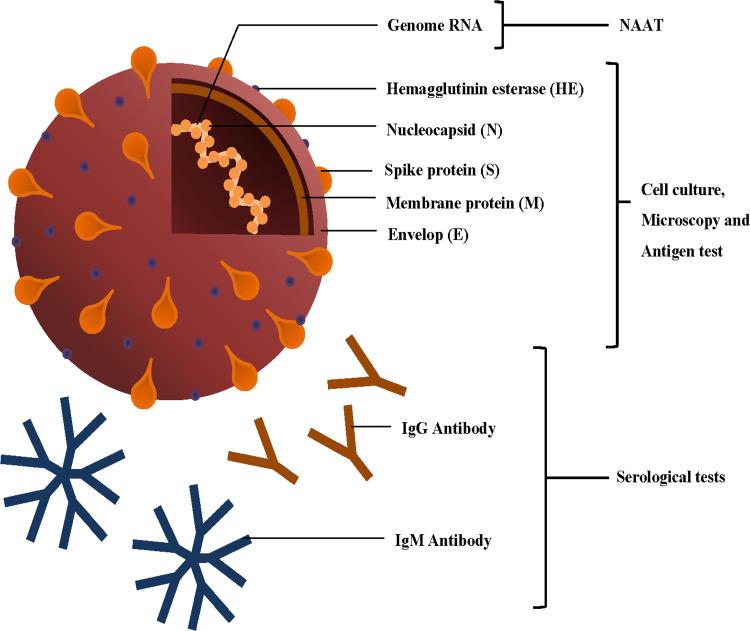
Recent severe acute respiratory syndrome 2 (SARS-CoV-2) known as COVID-19, presents a deadly challenge to the global healthcare system of developing and developed countries, exposing the limitations of health facilities preparedness for emerging infectious disease pandemic. Opportune detection, confinement, and early treatment of infected cases present the first step in combating COVID-19. In this review, we elaborate on various COVID-19 diagnostic tools that are available or under investigation. Consequently, cell culture, followed by an indirect fluorescent antibody, is one of the most accurate methods for detecting SARS-CoV-2 infection. However, restrictions imposed by the regulatory authorities prevented its general use and implementation. Diagnosis via radiologic imaging and reverse transcriptase PCR assay is frequently employed, considered as standard procedures, whereas isothermal amplification methods are currently on the verge of clinical introduction. Notably, techniques such as CRISPR-Cas and microfluidics have added new dimensions to the SARS-CoV-2 diagnosis. Furthermore, commonly used immunoassays such as enzyme-linked immunosorbent assay (ELISA), lateral flow immunoassay (LFIA), neutralization assay, and the chemiluminescent assay can also be used for early detection and surveillance of SARS-CoV-2 infection. Finally, advancement in the next generation sequencing (NGS) and metagenomic analysis are smoothing the viral detection further in this global challenge.
最近,被称为COVID-19的严重急性呼吸综合征2(SARS-CoV-2)给发展中国家和发达国家的全球医疗系统带来了致命挑战,暴露了卫生设施对新发传染病大流行准备工作的局限性。及时检测、隔离和早期治疗感染病例是抗击COVID-19的第一步。在本综述中,我们详细阐述了各种现有的或正在研究的COVID-19诊断工具。因此,细胞培养,随后进行间接荧光抗体检测,是检测SARS-CoV-2感染最准确的方法之一。然而,监管机构施加的限制阻碍了其广泛使用和实施。通过放射影像学和逆转录酶PCR检测进行诊断是常用的方法,被视为标准程序,而异等温扩增方法目前正处于临床应用的边缘。值得注意的是,CRISPR-Cas和微流控等技术为SARS-CoV-2诊断增添了新的维度。此外,常用的免疫测定方法,如酶联免疫吸附测定(ELISA)、侧向流动免疫测定(LFIA)、中和测定和化学发光测定,也可用于SARS-CoV-2感染的早期检测和监测。最后,下一代测序(NGS)和宏基因组分析的进展在这一全球挑战中进一步简化了病毒检测。


 Zotero 插件