
癌症相关成纤维细胞在癌症发生发展中的作用及其在靶向放射性核素成像与治疗中的作用
Cancer-Associated Fibroblasts as Players in Cancer Development and Progression and Their Role in Targeted Radionuclide Imaging and Therapy.
作者信息
Koustoulidou Sofia, Hoorens Mark W H, Dalm Simone U, Mahajan Shweta, Debets Reno, Seimbille Yann, de Jong Marion
机构信息
Department of Radiology and Nuclear Medicine, Erasmus University Medical Center, Dr. Molewaterplein 40, 3015 GD Rotterdam, The Netherlands.
Department of Medical Oncology, Erasmus University Medical Center, Dr. Molewaterplein 40, 3015 GD Rotterdam, The Netherlands.
出版信息
Cancers (Basel). 2021 Mar 4;13(5):1100. doi: 10.3390/cancers13051100.
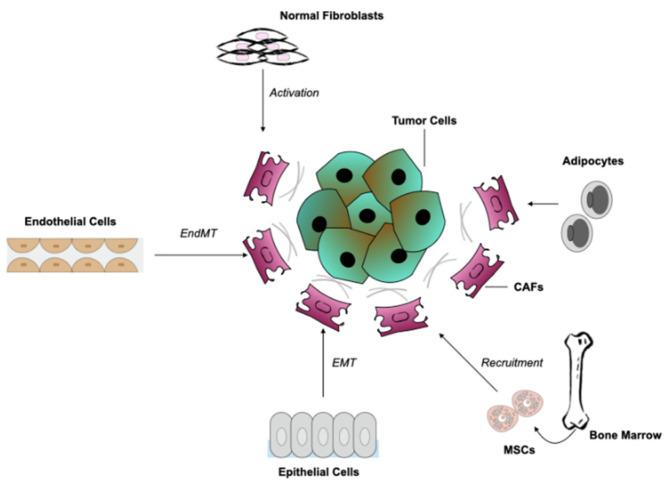
Cancer Associated Fibroblasts (CAFs) form a major component of the tumour microenvironment, they have a complex origin and execute diverse functions in tumour development and progression. As such, CAFs constitute an attractive target for novel therapeutic interventions that will aid both diagnosis and treatment of various cancers. There are, however, a few limitations in reaching successful translation of CAF targeted interventions from bench to bedside. Several approaches targeting CAFs have been investigated so far and a few CAF-targeting tracers have successfully been developed and applied. This includes tracers targeting Fibroblast Activation Protein (FAP) on CAFs. A number of FAP-targeting tracers have shown great promise in the clinic. In this review, we summarize our current knowledge of the functional heterogeneity and biology of CAFs in cancer. Moreover, we highlight the latest developments towards theranostic applications that will help tumour characterization, radioligand therapy and staging in cancers with a distinct CAF population.
癌症相关成纤维细胞(CAFs)是肿瘤微环境的主要组成部分,它们起源复杂,在肿瘤发生和发展过程中发挥着多种功能。因此,CAFs构成了新型治疗干预的一个有吸引力的靶点,这将有助于各种癌症的诊断和治疗。然而,将针对CAFs的干预措施从实验室成功转化到临床应用存在一些局限性。到目前为止,已经研究了几种针对CAFs的方法,并且已经成功开发并应用了一些靶向CAFs的示踪剂。这包括靶向CAFs上的成纤维细胞活化蛋白(FAP)的示踪剂。许多靶向FAP的示踪剂在临床上已显示出巨大的前景。在这篇综述中,我们总结了目前对癌症中CAFs的功能异质性和生物学的认识。此外,我们强调了治疗诊断应用的最新进展,这将有助于在具有独特CAF群体的癌症中进行肿瘤特征描述、放射性配体治疗和分期。


 Zotero 插件