
一种用于评估常氧和低氧条件下毒性的新型三维聚己内酯高通量系统。
A novel 3D polycaprolactone high-throughput system for evaluation of toxicity in normoxia and hypoxia.
作者信息
Malakpour-Permlid Atena, Oredsson Stina
机构信息
Department of Biology, Lund University, Lund, Sweden.
出版信息
Toxicol Rep. 2021 Mar 20;8:627-635. doi: 10.1016/j.toxrep.2021.03.015. eCollection 2021.
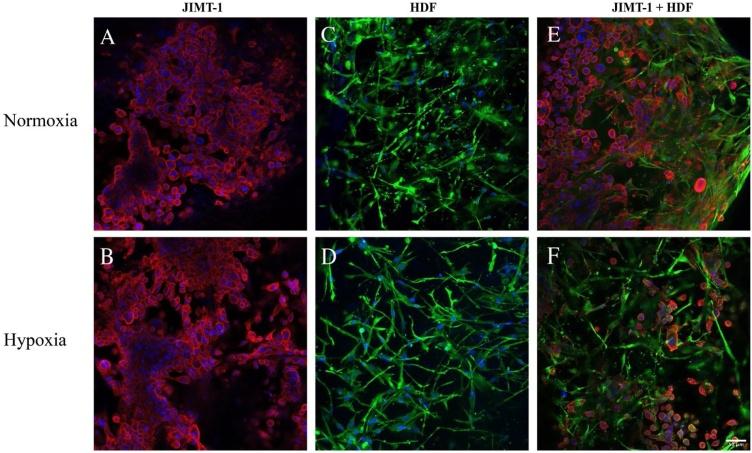
Two-dimensional (2D) culturing of cancer cells has been indispensable for the development of anti-cancer drugs. Drug development, however, is lengthy and costly with a high attrition rate, calling to mind that 2D culturing does not mimic the three-dimensional (3D) tumour microenvironment . Thus, began the development of 3D culture models for cancer research. We have constructed a 3D 96-well plate using electrospun fibres made of biocompatible polycaprolactone (PCL). Finely-cut PCL fibre pieces in water/ethanol solution was pipetted to the wells of hydrophobic 96-well plates. A fibrous network of approximately 200 μm thickness and high porosity was formed after crosslinking and drying. Human JIMT-1 breast cancer cells or fibroblasts were seeded into the network. Confocal microscopy shows that the cells grow throughout the fibre network. The toxicity of paclitaxel and an experimental salinomycin analogue was assessed and compared in 2D and 3D cultures incubated under conditions of normoxia and hypoxia often found in tumours. The toxicity of both compounds is lower when the cells are cultured in 3D compared to 2D in either normoxia or hypoxia. We conclude that our 96-well assay is a cost-efficient tool that may be used for high-throughput pre-clinical screening of potential anti-cancer compounds.
癌细胞的二维(2D)培养对于抗癌药物的开发一直不可或缺。然而,药物开发过程漫长且成本高昂,淘汰率也很高,这让人想到二维培养无法模拟三维(3D)肿瘤微环境。因此,癌症研究的三维培养模型开始得到发展。我们使用由生物相容性聚己内酯(PCL)制成的电纺纤维构建了一种三维96孔板。将水/乙醇溶液中的细切PCL纤维碎片吸移到疏水性96孔板的孔中。交联和干燥后形成了厚度约为200μm且孔隙率高的纤维网络。将人JIMT-1乳腺癌细胞或成纤维细胞接种到该网络中。共聚焦显微镜显示细胞在整个纤维网络中生长。在常氧和肿瘤中常见的缺氧条件下培养的二维和三维培养物中评估并比较了紫杉醇和一种实验性盐霉素类似物的毒性。与二维培养相比,在常氧或缺氧条件下三维培养细胞时,这两种化合物的毒性均较低。我们得出结论,我们的96孔测定法是一种经济高效的工具,可用于潜在抗癌化合物的高通量临床前筛选。




 Zotero 插件