
2020 年 3 月至 7 月期间美国的媒体使用模式、对新冠病毒阴谋论的信念强度与新冠病毒的预防:调查研究。
Patterns of Media Use, Strength of Belief in COVID-19 Conspiracy Theories, and the Prevention of COVID-19 From March to July 2020 in the United States: Survey Study.
机构信息
Annnenberg Public Policy Center, University of Pennsylvania, Philadelphia, PA, United States.
出版信息
J Med Internet Res. 2021 Apr 27;23(4):e25215. doi: 10.2196/25215.
BACKGROUND
Holding conspiracy beliefs regarding the COVID-19 pandemic in the United States has been associated with reductions in both actions to prevent the spread of the infection (eg, mask wearing) and intentions to accept a vaccine when one becomes available. Patterns of media use have also been associated with acceptance of COVID-19 conspiracy beliefs. Here we ask whether the type of media on which a person relies increased, decreased, or had no additional effect on that person's COVID-19 conspiracy beliefs over a 4-month period.
OBJECTIVE
We used panel data to explore whether use of conservative and social media in the United States, which were previously found to be positively related to holding conspiracy beliefs about the origins and prevention of COVID-19, were associated with a net increase in the strength of those beliefs from March to July of 2020. We also asked whether mainstream news sources, which were previously found to be negatively related to belief in pandemic-related conspiracies, were associated with a net decrease in the strength of such beliefs over the study period. Additionally, we asked whether subsequent changes in pandemic conspiracy beliefs related to the use of media were also related to subsequent mask wearing and vaccination intentions.
METHODS
A survey that we conducted with a national US probability sample in March of 2020 and again in July with the same 840 respondents assessed belief in pandemic-related conspiracies, use of various types of media information sources, actions taken to prevent the spread of the disease and intentions to vaccinate, and various demographic characteristics. Change across the two waves was analyzed using path analytic techniques.
RESULTS
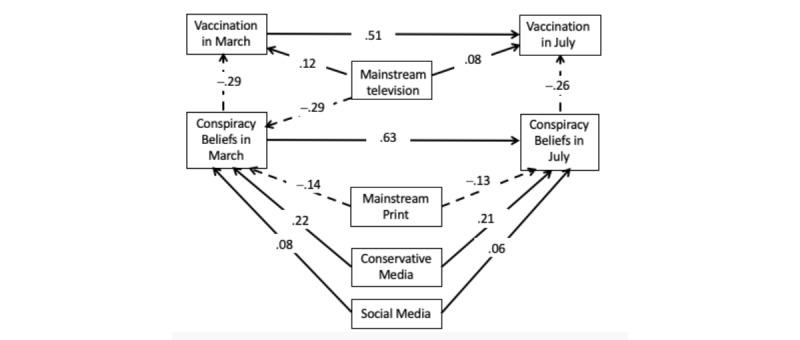
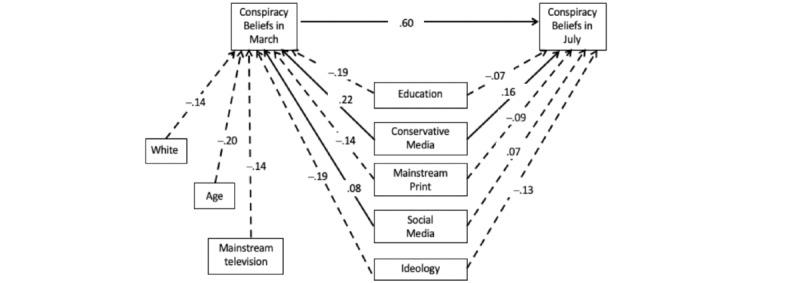
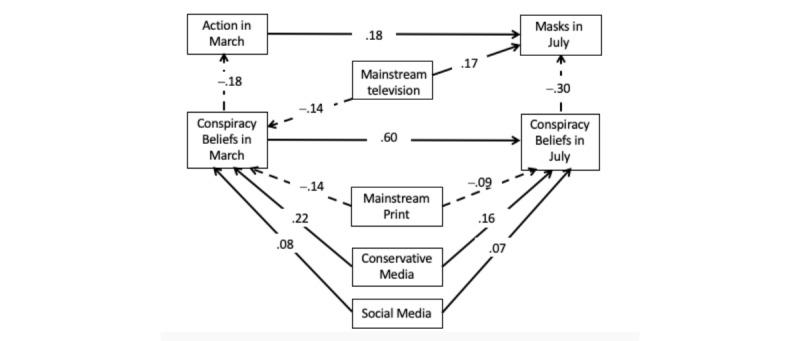
We found that conservative media use predicted an increase in conspiracy beliefs (β=.17, 99% CI .10-.25) and that reliance on mainstream print predicted a decrease in their belief (β=-.08, 99% CI -.14 to -.02). Although many social media platforms reported downgrading or removing false or misleading content, ongoing use of such platforms by respondents predicted growth in conspiracy beliefs as well (β=.072, 99% CI .018-.123). Importantly, conspiracy belief changes related to media use between the two waves of the study were associated with the uptake of mask wearing and changes in vaccination intentions in July. Unlike other media, use of mainstream broadcast television predicted greater mask wearing (β=.17, 99% CI .09-.26) and vaccination intention (β=.08, 95% CI .02-.14), independent of conspiracy beliefs.
CONCLUSIONS
The findings point to the need for greater efforts on the part of commentators, reporters, and guests on conservative media to report verifiable information about the pandemic. The results also suggest that social media platforms need to be more aggressive in downgrading, blocking, and counteracting claims about COVID-19 vaccines, claims about mask wearing, and conspiracy beliefs that have been judged problematic by public health authorities.
背景
在美国,人们对新冠疫情持阴谋论观点,这与预防感染的行为(例如戴口罩)减少以及在有疫苗时接受疫苗的意愿减少有关。媒体使用模式也与对新冠疫情阴谋论的接受程度有关。在这里,我们想知道,在 4 个月的时间里,一个人依赖的媒体类型是否会增加、减少或对其新冠疫情阴谋论观点没有任何额外影响。
目的
我们使用面板数据来探讨美国的保守派和社交媒体的使用情况,之前的研究发现这与对新冠疫情起源和预防的阴谋论观点有关,而在 2020 年 3 月至 7 月期间,这些媒体的使用情况是否与这些观点的强度呈净增加有关。我们还询问了主流新闻来源是否与研究期间此类观点强度的净减少有关,之前的研究发现主流新闻来源与对大流行相关阴谋论的信仰呈负相关。此外,我们还询问了与媒体使用相关的随后对大流行阴谋论观点的变化是否与随后的戴口罩和接种疫苗意愿有关。
方法
我们对美国全国概率样本进行了一项调查,在 2020 年 3 月进行了一次调查,然后在 7 月对同一 840 名受访者进行了再次调查,调查内容包括对大流行相关阴谋论的信仰、使用各种类型的媒体信息来源、为预防疾病传播而采取的行动以及接种疫苗的意愿,以及各种人口统计学特征。使用路径分析技术分析两次调查之间的变化。
结果
我们发现,保守派媒体的使用预示着阴谋论观点的增加(β=.17,99%CI.10-.25),而对主流印刷媒体的依赖预示着其信念的减少(β=-.08,99%CI.14 to -.02)。尽管许多社交媒体平台报告说已降级或删除了虚假或误导性内容,但受访者对这些平台的持续使用也预示着阴谋论观点的增长(β=.072,99%CI.018-.123)。重要的是,研究中两次调查之间的媒体使用变化与 7 月的口罩佩戴和疫苗接种意愿变化有关。与其他媒体不同,主流广播电视的使用与更大的口罩佩戴(β=.17,99%CI.09-.26)和接种意愿(β=.08,95%CI.02-.14)相关,而与阴谋论观点无关。
结论
这些发现表明评论员、记者和保守派媒体嘉宾需要加大力度,报告有关大流行的可核实信息。结果还表明,社交媒体平台需要更加积极地降级、屏蔽和反击有关新冠疫情疫苗、口罩佩戴和已被公共卫生当局判定为有问题的阴谋论观点的说法。
 Zotero 插件