
氧化还原稳态与自噬之间的交叉:对神经退行性变的宝贵见解
Intersection between Redox Homeostasis and Autophagy: Valuable Insights into Neurodegeneration.
作者信息
Park Hyungsun, Kim Jongyoon, Shin Chihoon, Lee Seongju
机构信息
Program in Biomedical Science & Engineering, Department of Anatomy, College of Medicine, Inha University, Incheon 22212, Korea.
出版信息
Antioxidants (Basel). 2021 Apr 28;10(5):694. doi: 10.3390/antiox10050694.
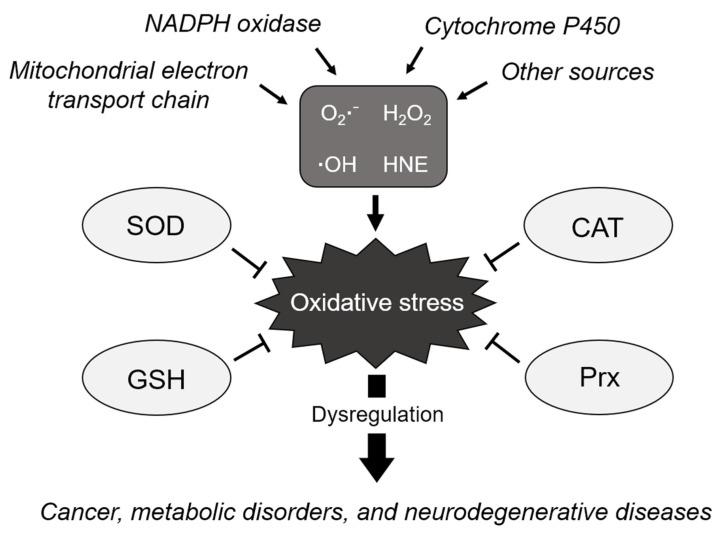
Autophagy, a main degradation pathway for maintaining cellular homeostasis, and redox homeostasis have recently been considered to play protective roles in neurodegenerative diseases such as Alzheimer's disease, Parkinson's disease, and amyotrophic lateral sclerosis. Increased levels of reactive oxygen species (ROS) in neurons can induce mitochondrial damage and protein aggregation, thereby resulting in neurodegeneration. Oxidative stress is one of the major activation signals for the induction of autophagy. Upon activation, autophagy can remove ROS, damaged mitochondria, and aggregated proteins from the cells. Thus, autophagy can be an effective strategy to maintain redox homeostasis in the brain. However, the interaction between redox homeostasis and autophagy is not clearly elucidated. In this review, we discuss recent studies on the relationship between redox homeostasis and autophagy associated with neurodegenerative diseases and propose that autophagy induction through pharmacological intervention or genetic activation might be a promising strategy to treat these disorders.
自噬是维持细胞稳态的主要降解途径,近期研究认为,自噬和氧化还原稳态在阿尔茨海默病、帕金森病和肌萎缩侧索硬化症等神经退行性疾病中发挥保护作用。神经元中活性氧(ROS)水平升高可诱导线粒体损伤和蛋白质聚集,进而导致神经退行性变。氧化应激是诱导自噬的主要激活信号之一。激活后,自噬可清除细胞内的ROS、受损线粒体和聚集蛋白。因此,自噬可能是维持大脑氧化还原稳态的有效策略。然而,氧化还原稳态与自噬之间的相互作用尚未完全阐明。在本综述中,我们讨论了近期关于氧化还原稳态与神经退行性疾病相关自噬之间关系的研究,并提出通过药物干预或基因激活诱导自噬可能是治疗这些疾病的一种有前景的策略。


 Zotero 插件