
胰蛋白酶口腔喷雾(Viruprotect/ColdZyme)是否能预防 COVID-19 和普通感冒或诱导突变?欧盟医疗器械法规中的注意事项。
Does Trypsin Oral Spray (Viruprotect/ColdZyme) Protect against COVID-19 and Common Colds or Induce Mutation? Caveats in Medical Device Regulations in the European Union.
机构信息
Independent Researcher, 1310 La Hulpe, Belgium.
Department of Virology, Institute of Tropical Medicine, 2000 Antwerp, Belgium.
出版信息
Int J Environ Res Public Health. 2021 May 11;18(10):5066. doi: 10.3390/ijerph18105066.
BACKGROUND
nasal or oral sprays are often marketed as medical devices (MDs) in the European Union to prevent common cold (CC), with ColdZyme/Viruprotect (trypsin/glycerol) mouth spray claiming to prevent colds and the COVID-19 virus from infecting host cells and to shorten/reduce CC symptoms as an example. We analyzed the published (pre)-clinical evidence.
METHODS
preclinical: comparison of in vitro tests with validated host cell models to determine viral infectivity. Clinical: efficacy, proportion of users protected against virus (compared with non-users) and safety associated with trypsin/glycerol.
RESULTS
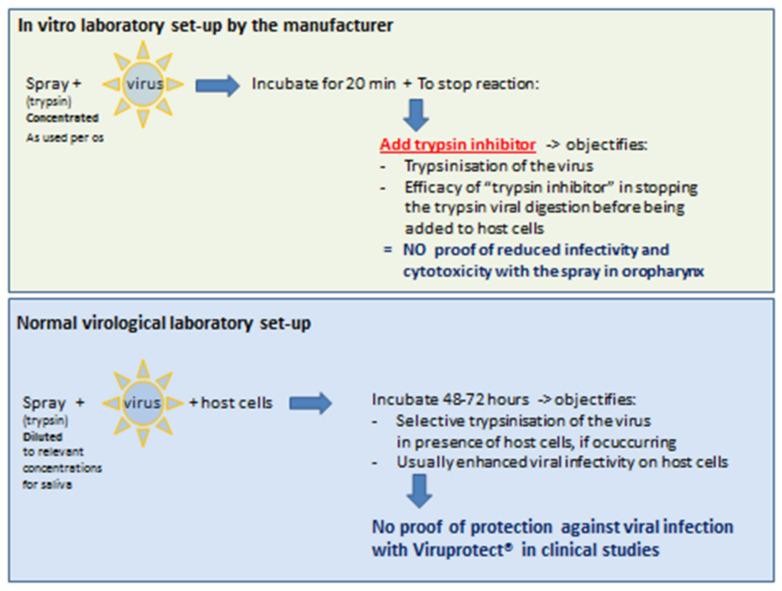
preclinical data showed that exogenous trypsin enhances SARS-CoV-2 infectivity and syncytia formation in host models, while culture passages in trypsin presence induce spike protein mutants. The manufacturer claims >98% SARS-CoV-2 deactivation, although clinically irrelevant as based on a tryptic viral digest, inserting trypsin inactivation before host cells exposure. Efficacy and safety were not adequately addressed in clinical studies or leaflets (no COVID-19 data). Protection was obtained among 9-39% of users, comparable to or lower than placebo-treated or non-users. Several potential safety risks (tissue digestion, bronchoconstriction) were identified.
CONCLUSIONS
the current European MD regulations may result in insufficient exploration of (pre)clinical proof of action. Exogenous trypsin exposure even raises concerns (higher SARS-CoV-2 infectivity, mutations), whereas its clinical protective performance against respiratory viruses as published remains poor and substandard.
背景
在欧盟,鼻腔或口腔喷雾常被作为医疗器械(MDs)销售,用于预防普通感冒(CC),例如 ColdZyme/Viruprotect(胰蛋白酶/甘油)口腔喷雾声称可预防感冒和 COVID-19 病毒感染宿主细胞,并缩短/减轻 CC 症状。我们分析了已发表的(临床前)证据。
方法
临床前:使用经验证的宿主细胞模型比较体外试验,以确定病毒感染力。临床:疗效、使用者相对于未使用者预防病毒的比例以及与胰蛋白酶/甘油相关的安全性。
结果
临床前数据表明,外源性胰蛋白酶增强了宿主模型中的 SARS-CoV-2 感染性和合胞体形成,而在胰蛋白酶存在下进行的培养传代会诱导刺突蛋白突变。制造商声称可实现 >98%的 SARS-CoV-2 失活,但基于胰蛋白酶消化病毒,这在临床上是无关紧要的,因为它是在宿主细胞暴露之前进行的胰蛋白酶失活。临床研究或说明书中未充分讨论疗效和安全性(无 COVID-19 数据)。在 9%-39%的使用者中获得了保护作用,与安慰剂治疗或未使用者相当或更低。确定了几种潜在的安全风险(组织消化、支气管收缩)。
结论
当前的欧盟 MD 法规可能导致对(临床前)作用的证据探索不足。外源性胰蛋白酶暴露甚至引起了关注(更高的 SARS-CoV-2 感染性、突变),而其已发表的针对呼吸道病毒的临床保护作用仍然较差且不符合标准。

 Zotero 插件