
2019年儿童冠状病毒病
Coronavirus Disease 2019 in Children.
作者信息
Borrelli Melissa, Corcione Adele, Castellano Fabio, Fiori Nastro Francesca, Santamaria Francesca
机构信息
Section of Pediatrics, Pediatric Pulmonology Unit, Department of Translational Medical Sciences, Università di Napoli Federico II, Naples, Italy.
出版信息
Front Pediatr. 2021 May 28;9:668484. doi: 10.3389/fped.2021.668484. eCollection 2021.
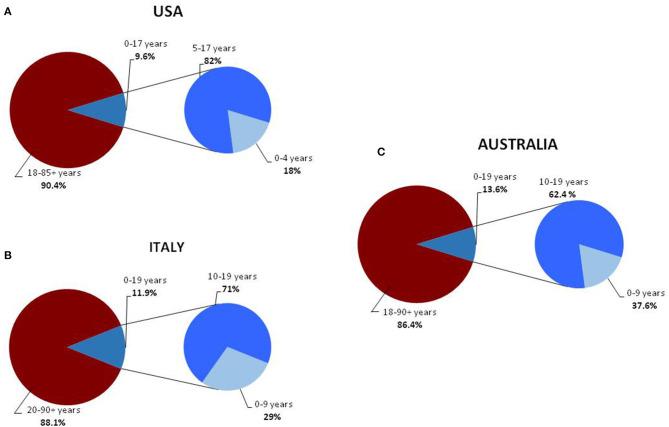
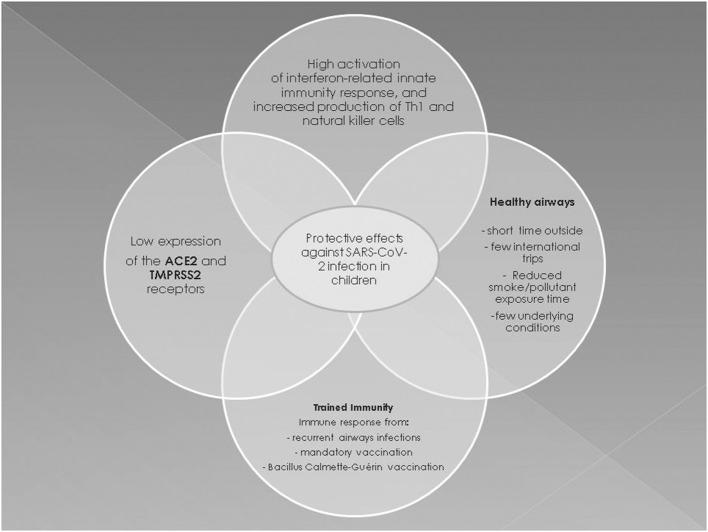
Since its appearance in Wuhan in mid-December 2019, acute respiratory syndrome coronavirus 2 (SARS-CoV-2) related 19 coronavirus disease (COVID-19) has spread dramatically worldwide. It soon became apparent that the incidence of pediatric COVID-19 was much lower than the adult form. Morbidity in children is characterized by a variable clinical presentation and course. Symptoms are similar to those of other acute respiratory viral infections, the upper airways being more affected than the lower airways. Thus far, over 90% of children who tested positive for the virus presented mild or moderate symptoms and signs. Most children were asymptomatic, and only a few cases were severe, unlike in the adult population. Deaths have been rare and occurred mainly in children with underlying morbidity. Factors as reduced angiotensin-converting enzyme receptor expression, increased activation of the interferon-related innate immune response, and trained immunity have been implicated in the relative resistance to COVID-19 in children, however the underlying pathogenesis and mechanism of action remain to be established. While at the pandemic outbreak, mild respiratory manifestations were the most frequently described symptoms in children, subsequent reports suggested that the clinical course of COVID-19 is more complex than initially thought. Thanks to the experience acquired in adults, the diagnosis of pediatric SARS-CoV-2 infection has improved with time. Data on the treatment of children are sparse, however, several antiviral trials are ongoing. The purpose of this narrative review is to summarize current understanding of pediatric SARS-CoV-2 infection and provide more accurate information for healthcare workers and improve the care of patients.
自2019年12月中旬在武汉出现以来,严重急性呼吸综合征冠状病毒2(SARS-CoV-2)引发的新型冠状病毒肺炎(COVID-19)已在全球范围内急剧传播。很快就明显看出,儿童COVID-19的发病率远低于成人形式。儿童发病的特点是临床表现和病程各异。症状与其他急性呼吸道病毒感染相似,上呼吸道比下呼吸道受影响更大。迄今为止,病毒检测呈阳性的儿童中,超过90%表现出轻度或中度症状和体征。大多数儿童无症状,与成人不同,只有少数病例病情严重。死亡病例很少见,主要发生在有基础疾病的儿童中。血管紧张素转换酶受体表达降低、干扰素相关先天免疫反应激活增加以及训练免疫等因素被认为与儿童对COVID-19的相对抵抗力有关,然而其潜在的发病机制和作用机制仍有待确定。在疫情爆发时,轻度呼吸道表现是儿童中最常描述的症状,但随后的报告表明,COVID-19的临床病程比最初认为的更为复杂。得益于在成人中积累的经验,儿童SARS-CoV-2感染的诊断随着时间的推移有所改善。关于儿童治疗的数据很少,不过,几项抗病毒试验正在进行中。本叙述性综述的目的是总结目前对儿童SARS-CoV-2感染的认识,并为医护人员提供更准确的信息,以改善患者的护理。


 Zotero 插件