
肠道微生物代谢产物短链脂肪酸可部分逆转手术和麻醉诱导的C57BL/6J小鼠行为缺陷。
Gut Microbial Metabolite Short-Chain Fatt Acids Partially Reverse Surgery and Anesthesia-Induced Behavior Deficits in C57BL/6J Mice.
作者信息
Xu Xiaohan, Wang Kexin, Cao Xuezhao, Li Zhe, Zhou Yongjian, Ren Jiancong, Liu Fang
机构信息
Department of Anesthesiology, The First Affiliated Hospital of China Medical University, Shenyang, China.
Department of Thyroid Surgery, The First Affiliated Hospital of Zhengzhou University, Zhengzhou, China.
出版信息
Front Neurosci. 2021 Jun 8;15:664641. doi: 10.3389/fnins.2021.664641. eCollection 2021.
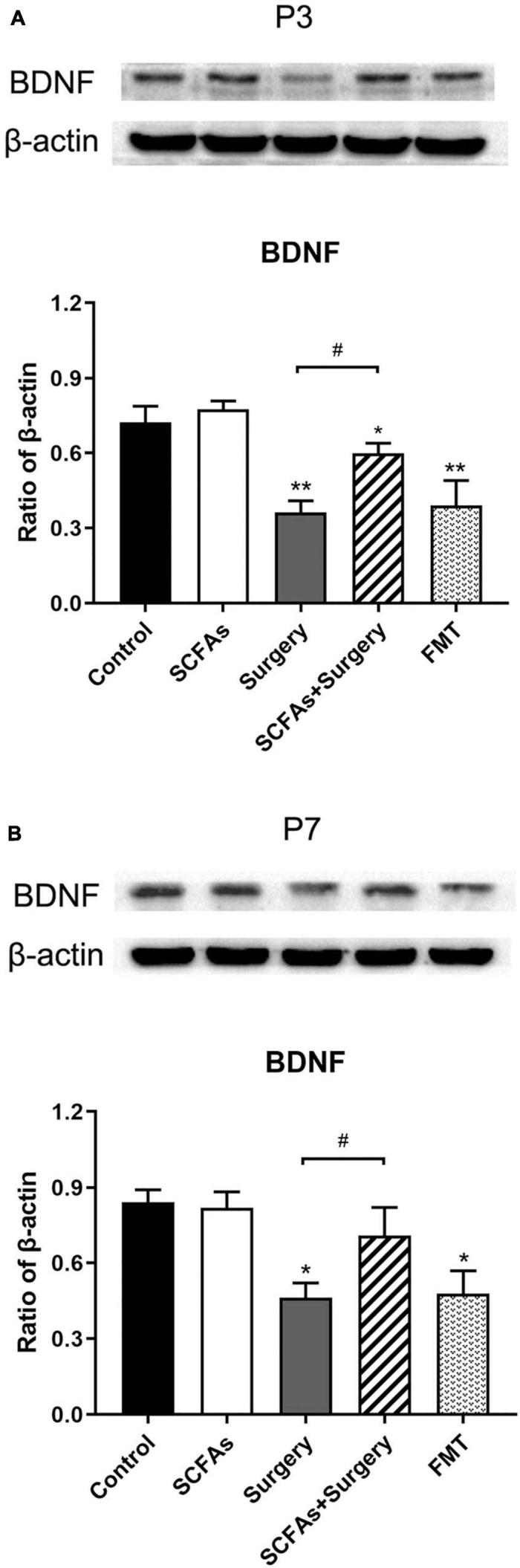
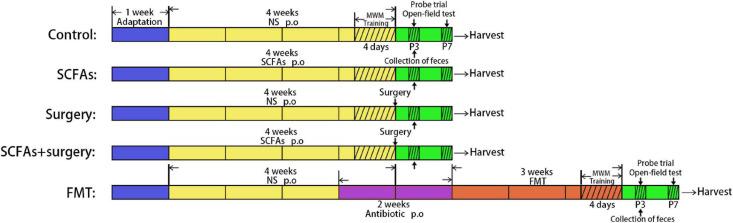
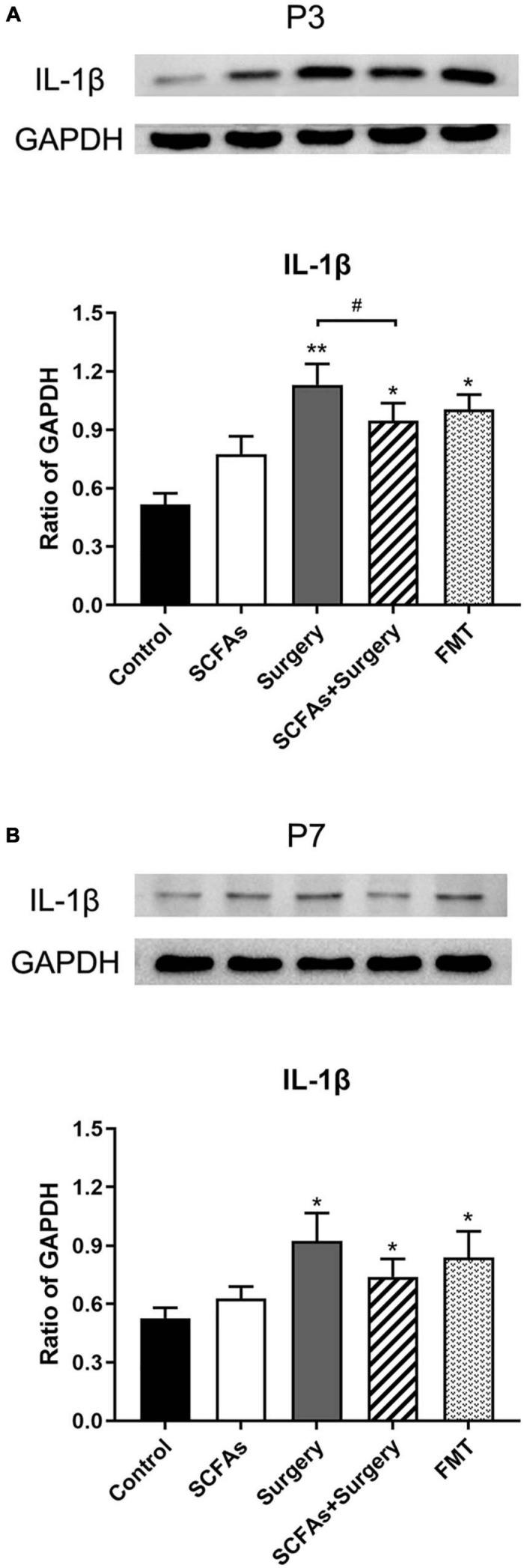
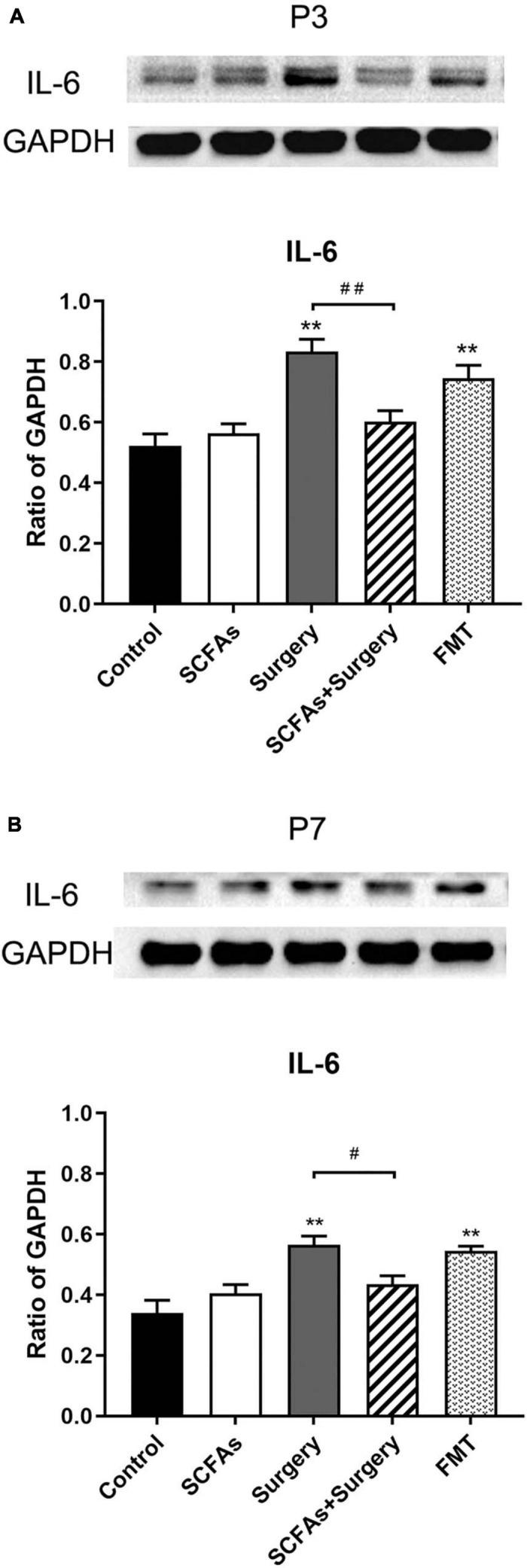
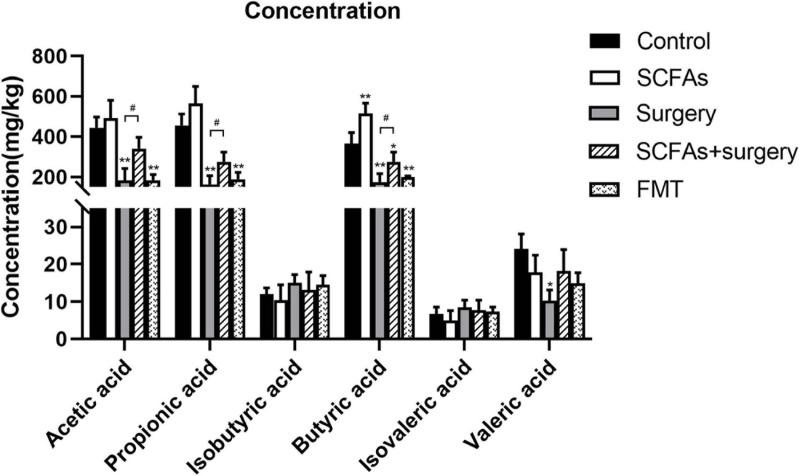
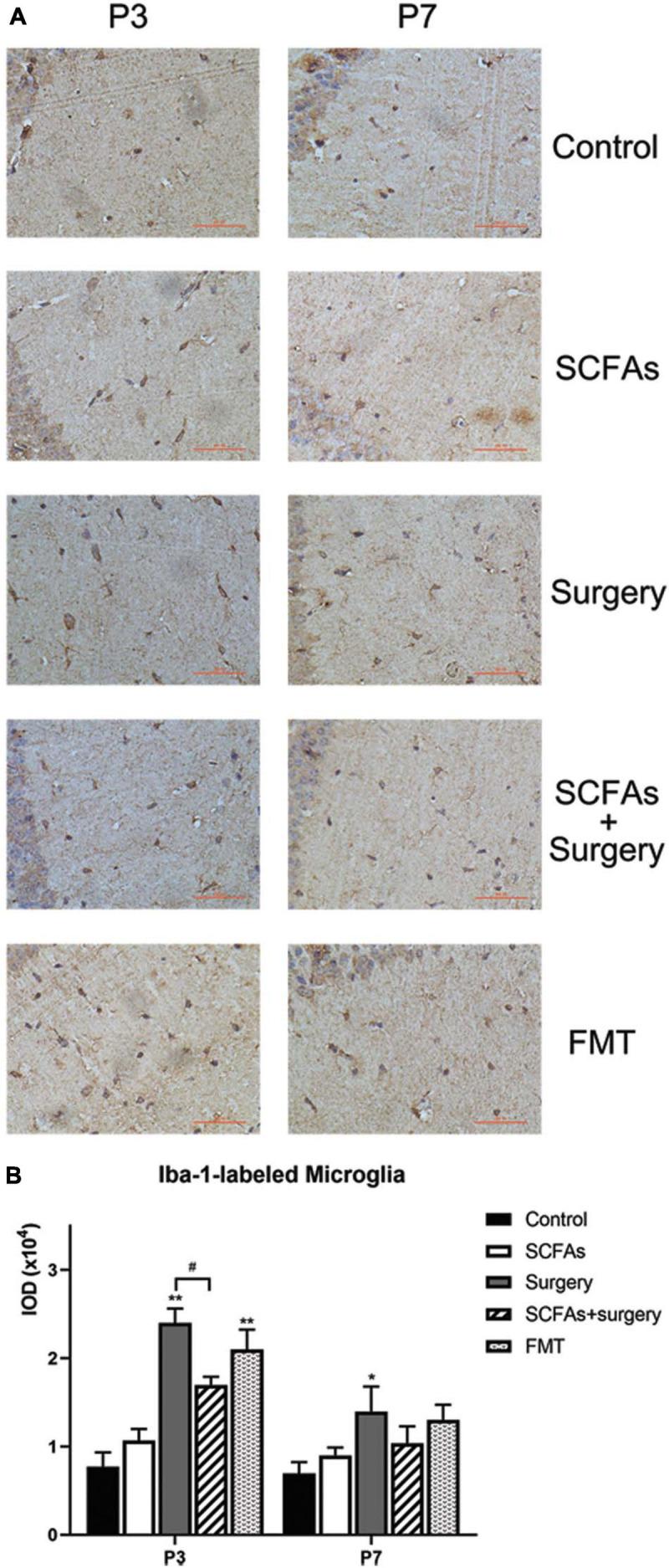
Accumulating evidence has demonstrated that damages of gut microbiota are strongly associated with central nervous system (CNS) diseases, such as perioperative neurocognitive disorders (PND). The present study investigated the role of gut microbial metabolite short-chain fatty acids (SCFAs) in surgery-induced cognitive deficits and neuroinflammation in the hippocampus. Adult male C57BL/6J mice received either SCFA mixture or saline orally for 4 weeks, and then partial hepatectomy was performed. The fecal supernatant of surgical mice was transplanted to normal mice for 3 weeks. The Morris water maze (MWM) and open-field tests were used to evaluate behavioral performance on postoperative or post-transplantation days 3 and 7. In the MWM test, pretreatment with exogenous SCFAs partially reversed surgery-induced impairments in crossing times and the time spent in the target quadrant on postoperative day 3 ( < 0.05, < 0.05, respectively). In the open-field test, compared with the surgical mice, exogenous SCFA administration prior to surgery partially improved the locomotor activity ( < 0.05) and anxiety-like behavior ( < 0.05) on postoperative day 3. Surgical trauma and anesthesia enhanced ionized calcium-binding adapter molecule 1 (Iba-1) expression ( < 0.001), increased the levels of interleukin (IL)-1β ( < 0.001) and IL-6 ( < 0.001), and inhibited SCFA production ( < 0.001) on postoperative day 3. The expression of the brain-derived neurotrophic factor (BDNF) was also decreased ( < 0.001). Overall, surgical trauma and anesthesia exacerbated cognitive impairment, enhanced neuroinflammatory responses, and inhibited SCFA production. Pretreatment with SCFAs attenuated these effects partially by reversing microglial overactivation, inhibiting neuroinflammatory responses, and enhancing BDNF expression.
越来越多的证据表明,肠道微生物群的损伤与中枢神经系统(CNS)疾病密切相关,如围手术期神经认知障碍(PND)。本研究调查了肠道微生物代谢产物短链脂肪酸(SCFAs)在手术诱导的认知缺陷和海马神经炎症中的作用。成年雄性C57BL/6J小鼠口服SCFA混合物或生理盐水4周,然后进行部分肝切除术。将手术小鼠的粪便上清液移植到正常小鼠体内3周。在术后或移植后第3天和第7天,使用莫里斯水迷宫(MWM)和旷场试验来评估行为表现。在MWM试验中,外源性SCFAs预处理在术后第3天部分逆转了手术诱导的穿越次数和在目标象限停留时间的损伤(分别为<0.05,<0.05)。在旷场试验中,与手术小鼠相比,术前给予外源性SCFAs在术后第3天部分改善了运动活动(<0.05)和焦虑样行为(<0.05)。手术创伤和麻醉在术后第3天增强了离子钙结合衔接分子1(Iba-1)的表达(<0.001),增加了白细胞介素(IL)-1β(<0.001)和IL-6(<0.001)的水平,并抑制了SCFA的产生(<0.001)。脑源性神经营养因子(BDNF)的表达也降低了(<0.001)。总体而言,手术创伤和麻醉加剧了认知障碍,增强了神经炎症反应,并抑制了SCFA的产生。SCFAs预处理通过逆转小胶质细胞过度激活、抑制神经炎症反应和增强BDNF表达部分减轻了这些影响。


 Zotero 插件