
免疫细胞对细胞外基质的调节作用有助于胰腺癌的发病机制。
Immune Cell Modulation of the Extracellular Matrix Contributes to the Pathogenesis of Pancreatic Cancer.
机构信息
Department of Surgery, West Virginia University, Morgantown, WV 26506, USA.
Department of Microbiology, Immunology and Cell Biology, West Virginia University, Morgantown, WV 26506, USA.
出版信息
Biomolecules. 2021 Jun 17;11(6):901. doi: 10.3390/biom11060901.
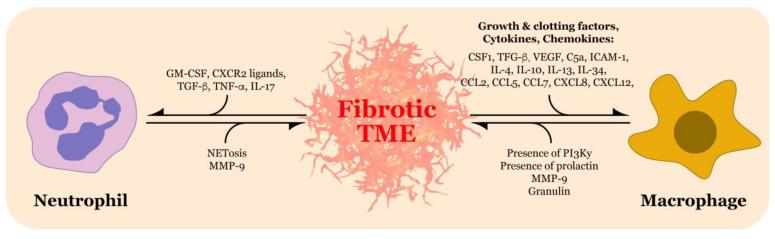
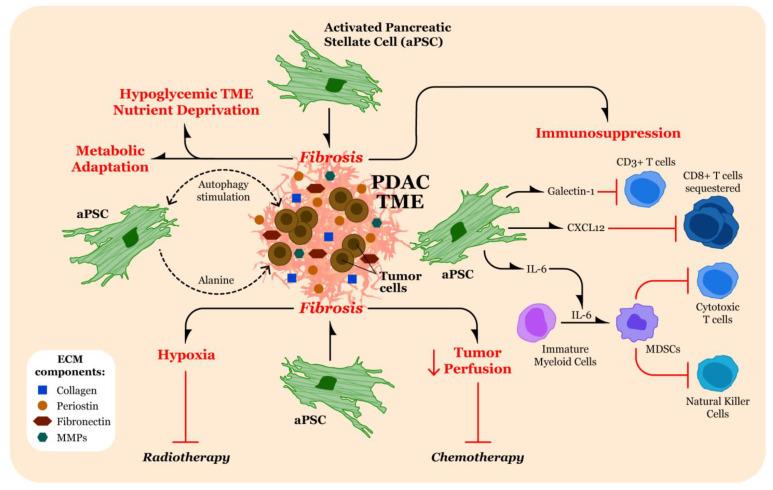
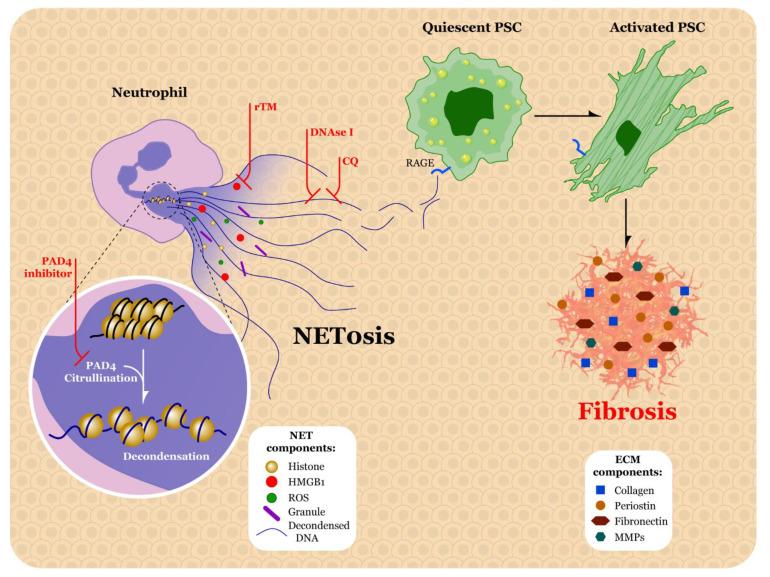
Pancreatic ductal adenocarcinoma (PDAC) is a highly lethal malignancy with a five-year survival rate of only 9%. PDAC is characterized by a dense, fibrotic stroma composed of extracellular matrix (ECM) proteins. This desmoplastic stroma is a hallmark of PDAC, representing a significant physical barrier that is immunosuppressive and obstructs penetration of cytotoxic chemotherapy agents into the tumor microenvironment (TME). Additionally, dense ECM promotes hypoxia, making tumor cells refractive to radiation therapy and alters their metabolism, thereby supporting proliferation and survival. In this review, we outline the significant contribution of fibrosis to the pathogenesis of pancreatic cancer, with a focus on the cross talk between immune cells and pancreatic stellate cells that contribute to ECM deposition. We emphasize the cellular mechanisms by which neutrophils and macrophages, specifically, modulate the ECM in favor of PDAC-progression. Furthermore, we investigate how activated stellate cells and ECM influence immune cells and promote immunosuppression in PDAC. Finally, we summarize therapeutic strategies that target the stroma and hinder immune cell promotion of fibrogenesis, which have unfortunately led to mixed results. An enhanced understanding of the complex interactions between the pancreatic tumor ECM and immune cells may uncover novel treatment strategies that are desperately needed for this devastating disease.
胰腺导管腺癌 (PDAC) 是一种高度致命的恶性肿瘤,五年生存率仅为 9%。PDAC 的特征是由细胞外基质 (ECM) 蛋白组成的密集纤维化基质。这种促结缔组织增生性基质是 PDAC 的标志,代表了一种重要的物理屏障,具有免疫抑制作用,并阻碍细胞毒性化疗药物渗透到肿瘤微环境 (TME) 中。此外,密集的 ECM 促进缺氧,使肿瘤细胞对放射治疗产生抗性,并改变其代谢,从而支持增殖和存活。在这篇综述中,我们概述了纤维化对胰腺癌发病机制的重要贡献,重点介绍了免疫细胞和胰腺星状细胞之间的相互作用,这些作用导致 ECM 的沉积。我们强调了中性粒细胞和巨噬细胞具体通过哪些细胞机制来调节 ECM,从而有利于 PDAC 的进展。此外,我们研究了活化的星状细胞和 ECM 如何影响免疫细胞,并在 PDAC 中促进免疫抑制。最后,我们总结了靶向基质和阻碍免疫细胞促进纤维化的治疗策略,但这些策略不幸导致了喜忧参半的结果。增强对胰腺肿瘤 ECM 与免疫细胞之间复杂相互作用的理解,可能会揭示出针对这种毁灭性疾病急需的新治疗策略。

 Zotero 插件