
利用菊头蝠物种的系统地理学分析推断与 SARS-CoV-2 密切相关的蝙蝠病毒的生态位。
Inferring the ecological niche of bat viruses closely related to SARS-CoV-2 using phylogeographic analyses of Rhinolophus species.
机构信息
Institut de Systématique, Évolution, Biodiversité (ISYEB), SU, MNHN, CNRS, EPHE, UA, Sorbonne Université, Paris, France.
Institute of Ecology and Biological Resources, Vietnam Academy of Science and Technology, No. 18, Hoang Quoc Viet Road, Cau Giay District, Hanoi, Vietnam.
出版信息
Sci Rep. 2021 Jul 12;11(1):14276. doi: 10.1038/s41598-021-93738-z.
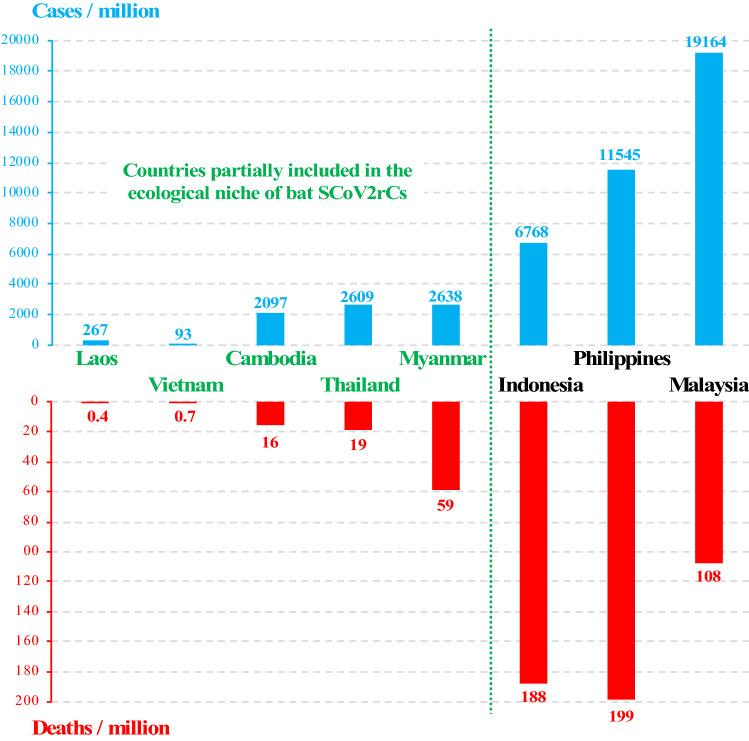
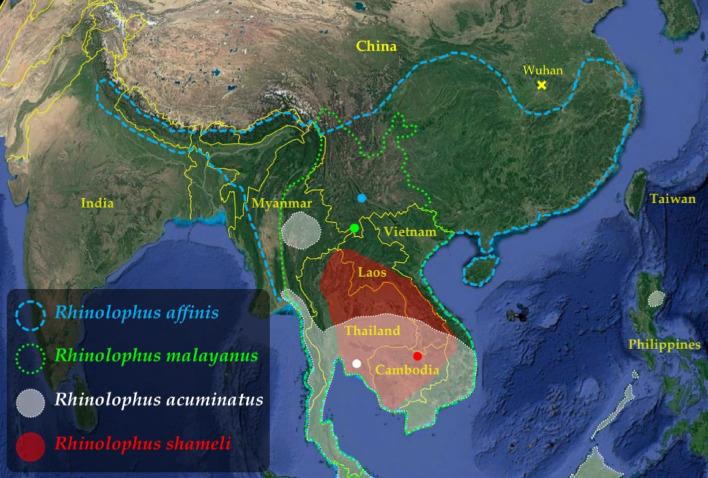
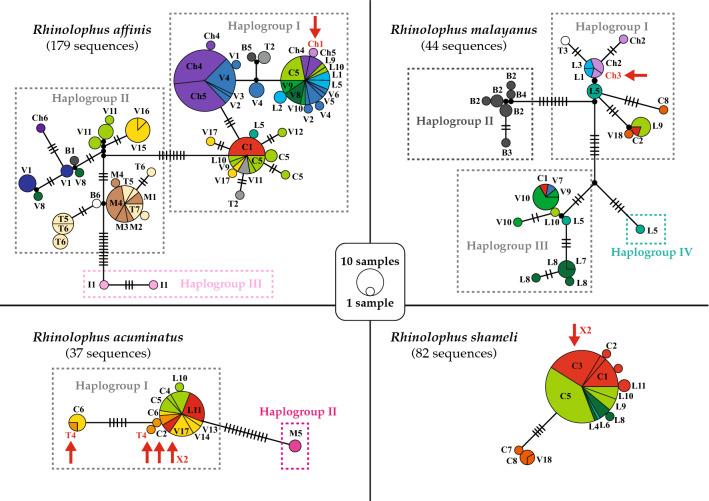
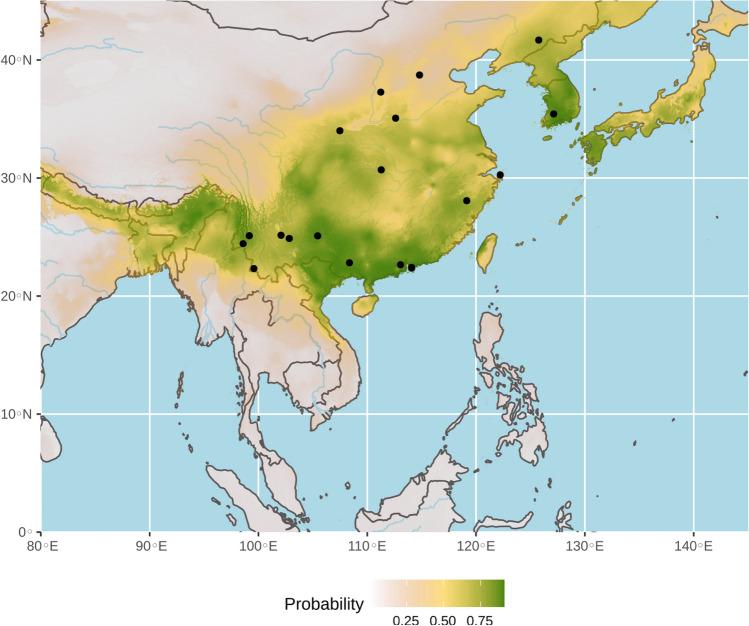
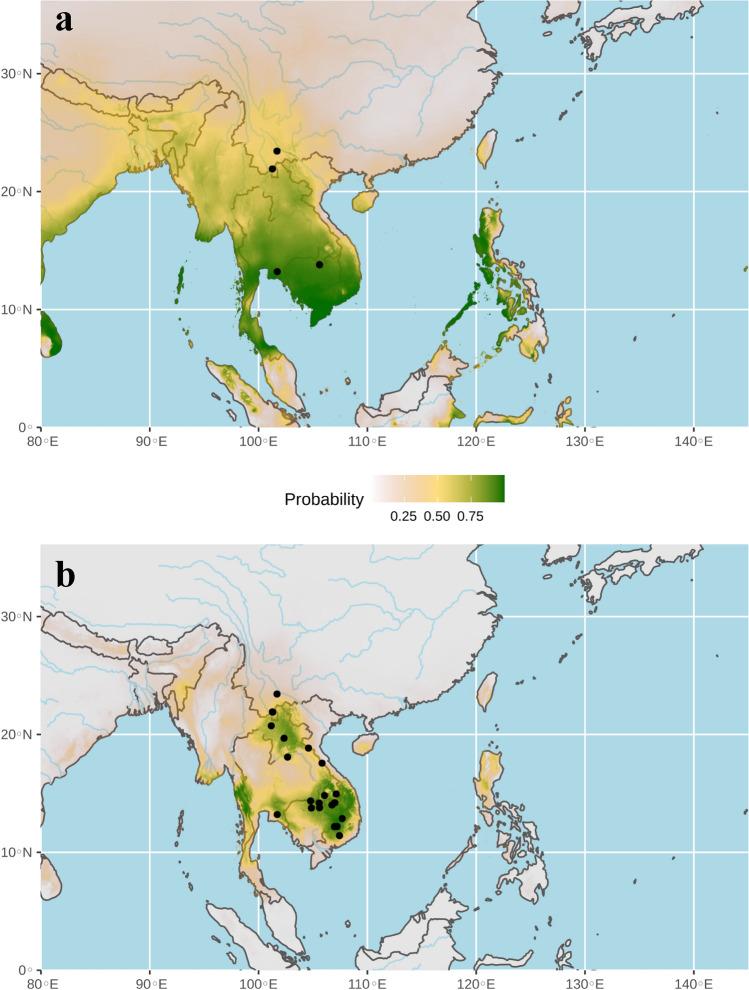
The Severe Acute Respiratory Syndrome coronavirus 2 (SARS-CoV-2) is the causal agent of the coronavirus disease 2019 (COVID-19) pandemic. To date, viruses closely related to SARS-CoV-2 have been reported in four bat species: Rhinolophus acuminatus, Rhinolophus affinis, Rhinolophus malayanus, and Rhinolophus shameli. Here, we analysed 343 sequences of the mitochondrial cytochrome c oxidase subunit 1 gene (CO1) from georeferenced bats of the four Rhinolophus species identified as reservoirs of viruses closely related to SARS-CoV-2. Haplotype networks were constructed in order to investigate patterns of genetic diversity among bat populations of Southeast Asia and China. No strong geographic structure was found for the four Rhinolophus species, suggesting high dispersal capacity. The ecological niche of bat viruses closely related to SARS-CoV-2 was predicted using the four localities in which bat viruses were recently discovered and the localities where bats showed the same CO1 haplotypes than virus-positive bats. The ecological niche of bat viruses related to SARS-CoV was deduced from the localities where bat viruses were previously detected. The results show that the ecological niche of bat viruses related to SARS-CoV2 includes several regions of mainland Southeast Asia whereas the ecological niche of bat viruses related to SARS-CoV is mainly restricted to China. In agreement with these results, human populations in Laos, Vietnam, Cambodia, and Thailand appear to be much less affected by the COVID-19 pandemic than other countries of Southeast Asia. In the climatic transitional zone between the two ecological niches (southern Yunnan, northern Laos, northern Vietnam), genomic recombination between highly divergent viruses is more likely to occur. Considering the limited data and the risk of recombinant bat-CoVs emergence as the source of new pandemics in humans, the bat populations in these regions should be under surveillance.
严重急性呼吸综合征冠状病毒 2 (SARS-CoV-2) 是导致 2019 年冠状病毒病 (COVID-19) 大流行的病原体。迄今为止,已在四种蝙蝠物种中报告了与 SARS-CoV-2 密切相关的病毒:尖吻蝠、印度蝠、马来亚蝠和沙氏果蝠。在这里,我们分析了从被鉴定为与 SARS-CoV-2 密切相关病毒的宿主蝙蝠物种——四种尖吻蝠中获得的 343 个线粒体细胞色素 c 氧化酶亚基 1 基因 (CO1) 的序列。构建单倍型网络,以调查东南亚和中国蝙蝠种群的遗传多样性模式。四种尖吻蝠均未发现强烈的地理结构,表明其具有较高的扩散能力。使用最近发现蝙蝠病毒的四个地点和与阳性蝙蝠具有相同 CO1 单倍型的蝙蝠地点,预测了与 SARS-CoV-2 密切相关的蝙蝠病毒的生态位。从先前检测到蝙蝠病毒的地点推断出与 SARS-CoV 相关的蝙蝠病毒的生态位。结果表明,与 SARS-CoV-2 相关的蝙蝠病毒的生态位包括东南亚大陆的几个地区,而与 SARS-CoV 相关的蝙蝠病毒的生态位主要局限于中国。与这些结果一致,老挝、越南、柬埔寨和泰国的人类似乎比东南亚其他国家受 COVID-19 大流行的影响要小得多。在两个生态位之间的气候过渡带(云南南部、老挝北部、越南北部),高度分化的病毒之间发生基因组重组的可能性更大。考虑到数据有限以及重组蝙蝠-CoV 作为人类新大流行来源出现的风险,这些地区的蝙蝠种群应受到监测。

 Zotero 插件