
COVID-19 大流行对台湾地区院外心脏骤停急救医疗服务反应的影响:一项回顾性观察研究。
Impact of the COVID-19 pandemic on emergency medical service response to out-of-hospital cardiac arrests in Taiwan: a retrospective observational study.
机构信息
Department of Emergency Medicine, China Medical University Hospital, Hsinchu, Taiwan.
College of Medicine, China Medical University, Taichung, Taiwan.
出版信息
Emerg Med J. 2021 Sep;38(9):679-684. doi: 10.1136/emermed-2020-210409. Epub 2021 Jul 14.
BACKGROUND
Emergency medical service (EMS) personnel have high COVID-19 risk during resuscitation. The resuscitation protocol for patients with out-of-hospital cardiac arrest (OHCA) was modified in response to the COVID-19 pandemic. However, how the adjustments in the EMS system affected patients with OHCA remains unclear.
METHODS
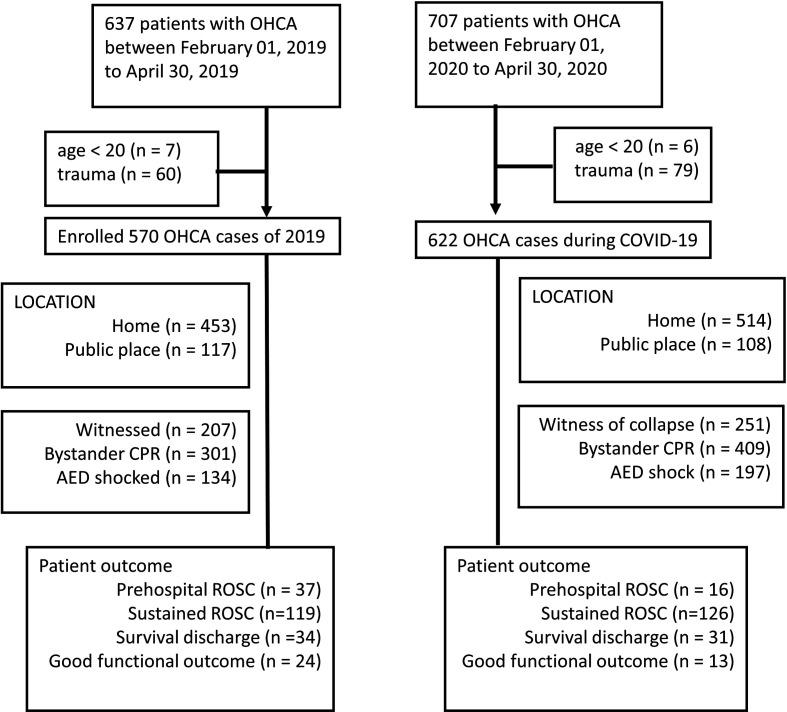
We analysed data from the Taichung OHCA registry system. We compared OHCA outcomes and rescue records for 622 cases during the COVID-19 outbreak period (1 February to 30 April 2020) with those recorded for 570 cases during the same period in 2019.
RESULTS
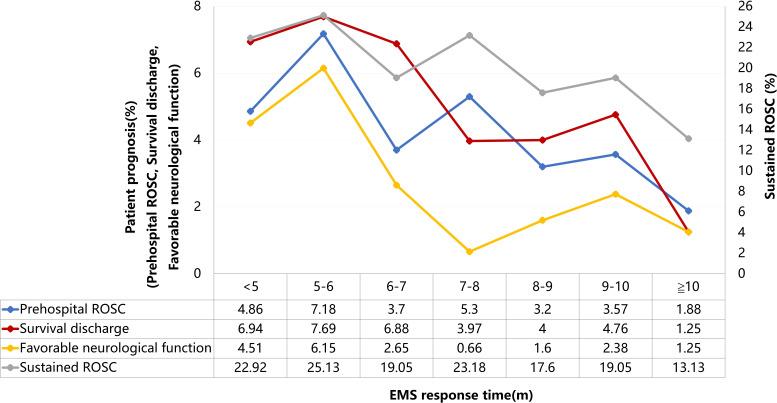
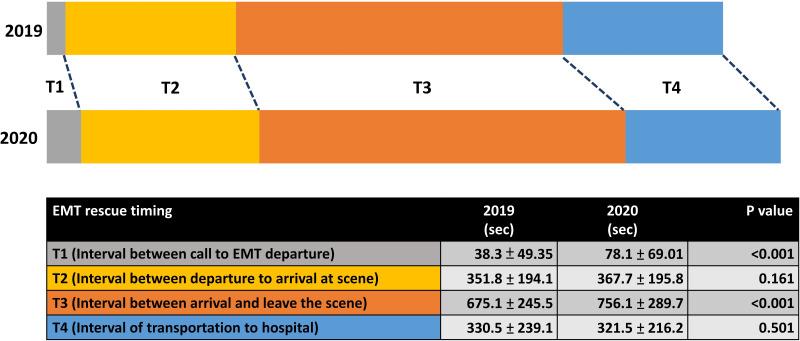
The two periods did not differ significantly with respect to patient age, patient sex, the presence of witnesses or OHCA location. Bystander cardiopulmonary resuscitation and defibrillation with automated external defibrillators were more common in 2020 (52.81% vs 65.76%, p<0.001%, and 23.51% vs 31.67%, p=0.001, respectively). The EMS response time was longer during the COVID-19 pandemic (445.8±210.2 s in 2020 vs 389.7±201.8 s in 2019, p<0.001). The rate of prehospital return of spontaneous circulation was lower in 2020 (6.49% vs 2.57%, p=0.001); 2019 and 2020 had similar rates of survival discharge (5.96% vs 4.98%). However, significantly fewer cases had favourable neurological function in 2020 (4.21% vs 2.09%, p=0.035).
CONCLUSION
EMS response time for patients with OHCA was prolonged during the COVID-19 pandemic. Early advanced life support by EMS personnel remains crucial for patients with OHCA.
背景
急救医疗服务(EMS)人员在复苏过程中面临高 COVID-19 风险。为应对 COVID-19 大流行,修改了院外心脏骤停(OHCA)患者的复苏方案。然而,EMS 系统的调整如何影响 OHCA 患者尚不清楚。
方法
我们分析了台中 OHCA 登记系统的数据。我们比较了 2020 年 COVID-19 爆发期间(2020 年 2 月 1 日至 4 月 30 日)的 622 例 OHCA 结局和救援记录,以及 2019 年同期的 570 例记录。
结果
两个时期在患者年龄、患者性别、目击者存在与否和 OHCA 位置方面没有显著差异。2020 年,旁观者心肺复苏和自动体外除颤器除颤更为常见(52.81%比 65.76%,p<0.001%,和 23.51%比 31.67%,p=0.001)。COVID-19 大流行期间 EMS 反应时间更长(2020 年为 445.8±210.2s,2019 年为 389.7±201.8s,p<0.001)。2020 年院前自主循环恢复率较低(6.49%比 2.57%,p=0.001);2019 年和 2020 年的存活率相似(5.96%比 4.98%)。然而,2020 年有良好神经功能的病例明显较少(4.21%比 2.09%,p=0.035)。
结论
COVID-19 大流行期间,OHCA 患者的 EMS 反应时间延长。EMS 人员尽早进行高级生命支持对 OHCA 患者仍然至关重要。
 Zotero 插件