
多状态分析中国老年人童年期饥饿对健康预期寿命的影响。
Multi-State Analysis of the Impact of Childhood Starvation on the Healthy Life Expectancy of the Elderly in China.
机构信息
Department of Public Health, Weifang Medical University, Weifang, China.
Department of Management, Weifang Medical University, Weifang, China.
出版信息
Front Public Health. 2021 Jul 5;9:690645. doi: 10.3389/fpubh.2021.690645. eCollection 2021.
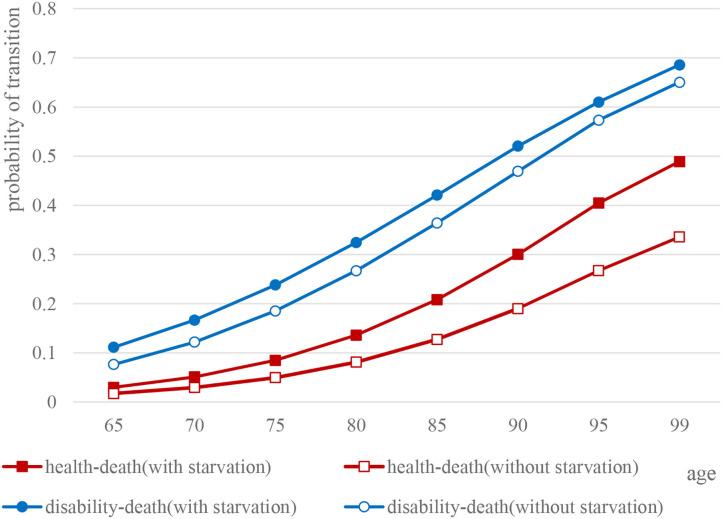
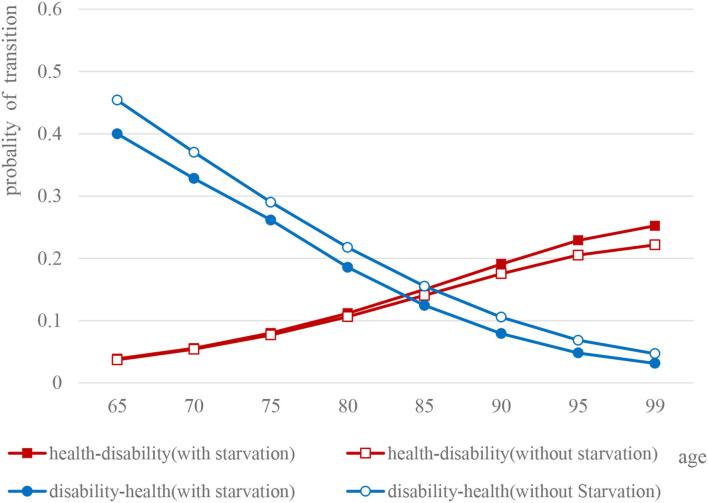
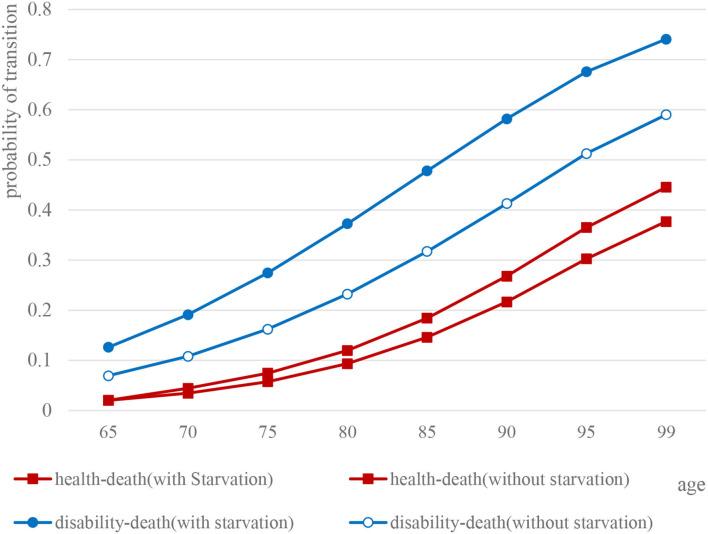
Child malnutrition is not only common in developing countries but also an important issue faced by developed countries. This study aimed to explore the influence and degree of childhood starvation on the health of the elderly, which provides a reference for formulating health-related policies under the concept of full lifecycle health. Based on the Chinese Longitudinal Healthy Longevity Survey (CLHLS) in 2008, 2011, and 2014, this study took a total of 13,185 elderly people aged 65-99 years as the target population. By IMaCH software, with gender and income level as the control variables, the average life expectancy and healthy life expectancy of the elderly were measured. The test was used to explore the differences in the socioeconomic status of elderly people with or without starvation in childhood. Statistical differences between average life expectancy and healthy life expectancy were analyzed by rank tests. (1) The results showed that there was a statistically significant difference in age, gender, residency, education level, and income level between the groups with or without starvation ( < 0.05). (2) Transition probabilities in health-disability, health-death, and disability-death all showed an upward trend with age ( < 0.05), where the elderly who experienced starvation in childhood were higher than those without such an experience ( < 0.05). However, the probability of disability-health recovery showed a downward trend with age ( < 0.05), in which the elderly who experienced starvation in childhood were lower than those without starvation ( < 0.05). (3) For the elderly who experienced starvation in childhood, the health indicators of the average life expectancy, healthy life expectancy, and healthy life expectancy proportion accounted for the remaining life were lower than those of the elderly without childhood starvation ( < 0.05). The average life expectancy and healthy life expectancy of the elderly with childhood starvation are lower than those without childhood starvation. It shows that the negative impact of childhood starvation on health through the life course till old age has a persistent negative cumulative effect on the quantity and quality of life. Therefore, it is important to pay attention to the nutritional status of children in poor families from the perspective of social policymaking.
儿童营养不良不仅在发展中国家很常见,也是发达国家面临的一个重要问题。本研究旨在探讨童年时期饥饿对老年人健康的影响和程度,为制定全生命周期健康理念下的健康相关政策提供参考。本研究基于 2008、2011 和 2014 年中国健康长寿调查(CLHLS),以 65-99 岁的 13185 名老年人为目标人群。采用 IMaCH 软件,以性别和收入水平为控制变量,测量老年人的平均预期寿命和健康预期寿命。采用检验方法,探讨了童年时期有无饥饿的老年人在社会经济地位方面的差异。采用秩检验分析平均预期寿命和健康预期寿命的统计差异。结果显示,有饥饿经历和无饥饿经历老年人的年龄、性别、居住地点、教育水平和收入水平差异均有统计学意义( < 0.05)。健康-失能、健康-死亡和失能-死亡的转移概率均随年龄增长呈上升趋势( < 0.05),有饥饿经历的老年人高于无饥饿经历的老年人( < 0.05)。但是,残疾-健康恢复的概率随年龄增长呈下降趋势( < 0.05),有饥饿经历的老年人低于无饥饿经历的老年人( < 0.05)。对于有饥饿经历的老年人,平均预期寿命、健康预期寿命和健康预期寿命占剩余寿命的健康指标均低于无饥饿经历的老年人( < 0.05)。有饥饿经历的老年人的平均预期寿命和健康预期寿命均低于无饥饿经历的老年人。这表明,童年时期饥饿对健康的负面影响通过整个生命周期一直持续到老年,对生活的数量和质量产生持续的负面累积效应。因此,从社会政策制定的角度关注贫困家庭儿童的营养状况非常重要。


 Zotero 插件